
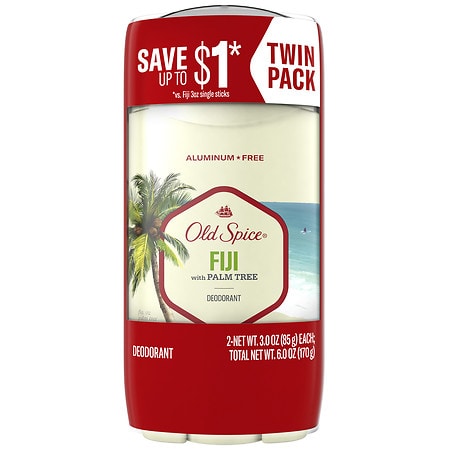

Old Spice Deodorant for Men Aluminum Free Invisible Solid Stick Fiji 3oz (2 Pack)
Summary
This deodorant is aluminum-free, which is a positive aspect for ingredient safety. However, it contains synthetic fragrance and propylene glycol, which are less desirable components. The presence of coconut oil is a redeeming quality, but the overall formulation includes several synthetic chemicals, impacting its overall rating.
At a glance
Key ingredients 10
Dipropylene Glycol
Dipropylene Glycol is a solvent and carrier used in cosmetics to help dissolve other ingredients. It is generally considered safe for use in personal care products. However, it is a synthetic compound derived from petroleum.
Risks
There is a potential for skin irritation in sensitive individuals.
Benefits
It helps in the even distribution of the product on the skin.
Water
Water is used as a solvent in many cosmetic products. It helps dissolve other ingredients and provides a base for the formulation. It is essential for the consistency and application of the product.
Risks
There are no significant risks associated with water in cosmetic formulations.
Benefits
Water hydrates the skin and helps in the smooth application of the product.
Propylene Glycol
Propylene Glycol is a common ingredient in cosmetics used as a humectant and solvent. It helps retain moisture in the skin and improves the texture of the product. However, it is derived from petroleum and can be an irritant.
Risks
It may cause skin irritation or allergic reactions in some individuals.
Benefits
It helps keep the skin hydrated and enhances the spreadability of the product.
Sodium Stearate
Sodium Stearate is a fatty acid salt used as a thickener and emulsifier in cosmetics. It helps stabilize the formulation and provides a solid structure to stick products. It is generally considered safe and non-irritating.
Risks
There are minimal risks associated with Sodium Stearate, though it can cause mild irritation in very sensitive skin.
Benefits
It contributes to the product's stability and helps maintain its solid form.
Poloxamine 1307
Poloxamine 1307 is a surfactant and emulsifier used to stabilize formulations. It helps mix oil and water components in the product. It is a synthetic compound with a good safety profile.
Risks
There is a low risk of skin irritation with prolonged use.
Benefits
It enhances the texture and consistency of the product.
Fragrance
Fragrance is added to personal care products to provide a pleasant scent. It is a complex mixture of natural and synthetic compounds. However, it can contain phthalates and other allergens.
Risks
Fragrance can cause allergic reactions and skin irritation in sensitive individuals.
Benefits
It improves the sensory experience of using the product.
PPG-3 Myristyl Ether
PPG-3 Myristyl Ether is used as an emollient and skin conditioning agent. It helps improve the texture and feel of the product on the skin. It is a synthetic compound with a low risk of irritation.
Risks
There is a potential for mild skin irritation in sensitive users.
Benefits
It provides a smooth and silky feel to the skin.
Cocos Nucifera (Coconut) Oil
Coconut Oil is a natural oil used for its moisturizing and nourishing properties. It is rich in fatty acids that help hydrate and protect the skin. It is considered a beneficial ingredient in personal care products.
Risks
There is a risk of pore clogging and breakouts in acne-prone skin.
Benefits
It deeply moisturizes the skin and provides a protective barrier.
Tetrasodium EDTA
Tetrasodium EDTA is a chelating agent used to improve the stability and shelf life of cosmetic products. It binds to metal ions, preventing them from affecting the product's performance. It is a synthetic compound with a good safety profile.
Risks
There is a low risk of skin irritation, especially in sensitive individuals.
Benefits
It enhances the stability and effectiveness of the product.
Blue 1
Blue 1 is a synthetic dye used to impart color to cosmetic products. It is approved for use in personal care products by regulatory agencies. However, it is a synthetic colorant that can cause allergic reactions.
Risks
There is a potential for allergic reactions and skin irritation.
Benefits
It provides a visually appealing color to the product.
Processing
Processed Foods
Get the full breakdown in the Scout app
Scan any product to see lab results, healthy alternatives, and your personalized analysis.
Download on theApp Store