
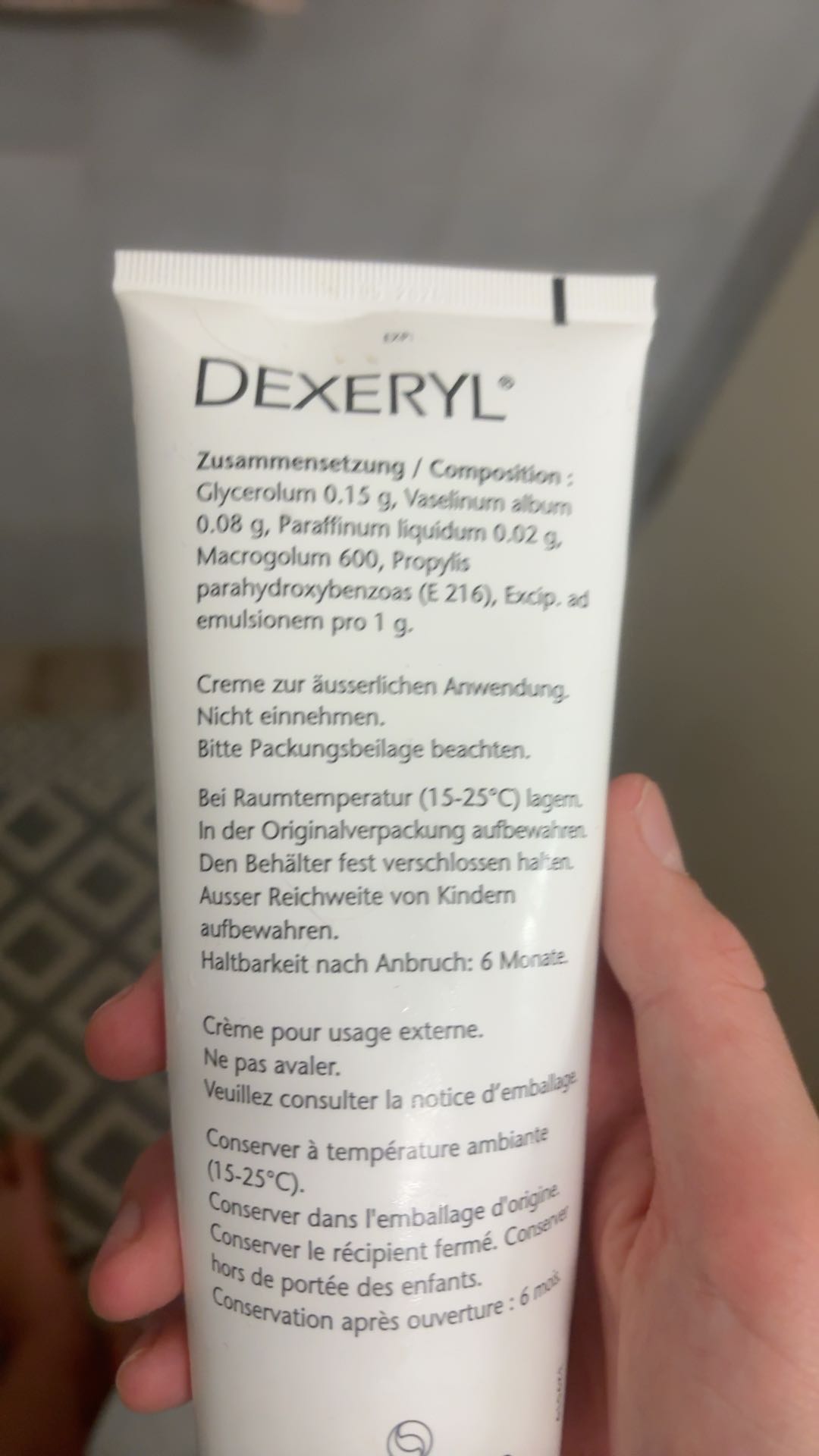


Dexeryl Cream 250g
Summary
Dexeryl Cream contains a mix of synthetic ingredients such as glycerol, vaseline, and dimethicone, which are common in skincare but not considered natural. The presence of acrylamide, a synthetic polymer, contributes to its processed nature. While it lacks harsh surfactants or parabens, the formulation is not based on natural oils or botanicals, which limits its score.
At a glance
Key ingredients 9
Glycerol
Glycerol, also known as glycerin, is a humectant that attracts moisture to the skin. It is commonly used in skincare products for its hydrating properties. It is generally considered safe and beneficial for most skin types.
Risks
There are minimal risks associated with glycerol, though it can cause irritation in very sensitive skin.
Benefits
Glycerol helps to maintain skin hydration and improve skin barrier function.
Vaseline
Vaseline, or petroleum jelly, is used as an occlusive agent to lock in moisture. It is effective in preventing moisture loss from the skin. However, it is derived from petroleum, which raises environmental and purity concerns.
Risks
Potential risks include pore clogging and concerns about impurities if not properly refined.
Benefits
Vaseline is excellent for creating a protective barrier on the skin to prevent moisture loss.
Liquid Paraffin
Liquid paraffin is a mineral oil used for its emollient properties. It helps to soften and smooth the skin. Like Vaseline, it is derived from petroleum, which can be a concern for some consumers.
Risks
There is a risk of skin irritation and pore clogging, especially in acne-prone skin.
Benefits
Liquid paraffin is effective in providing a smooth texture and retaining skin moisture.
Glycerol Monostearate
Glycerol monostearate is an emulsifier that helps to blend oil and water components in formulations. It also acts as a thickening agent. It is generally considered safe for use in cosmetics.
Risks
There are minimal risks, though it can cause irritation in sensitive individuals.
Benefits
It helps to stabilize formulations and improve texture.
Stearic Acid
Stearic acid is a fatty acid used as an emulsifier and thickener in cosmetics. It helps to stabilize formulations and improve texture. It is derived from natural sources like animal fats and vegetable oils.
Risks
Stearic acid is generally safe, but it can cause irritation in sensitive skin.
Benefits
It provides a creamy texture and helps to maintain product stability.
Dimethicone
Dimethicone is a silicone-based polymer used for its smoothing and conditioning properties. It forms a protective barrier on the skin. It is widely used in cosmetics for its ability to improve texture and spreadability.
Risks
There is a potential for skin irritation and pore clogging, particularly in sensitive or acne-prone skin.
Benefits
Dimethicone helps to smooth the skin and improve the feel of cosmetic products.
Macrogol 600
Macrogol 600, also known as polyethylene glycol (PEG), is used as a solvent and thickener in cosmetics. It helps to improve the texture and stability of formulations. It is generally considered safe, though there are concerns about contamination with impurities.
Risks
Potential risks include skin irritation and contamination with impurities like ethylene oxide.
Benefits
Macrogol 600 enhances product texture and stability.
Trolamine
Trolamine is used as a pH balancer and emulsifier in cosmetic formulations. It helps to stabilize products and maintain their consistency. However, it is an ethanolamine compound, which can be concerning due to potential formation of nitrosamines.
Risks
There is a risk of nitrosamine formation, which are potential carcinogens.
Benefits
Trolamine helps to stabilize formulations and maintain pH balance.
Acrylamide
Acrylamide is a chemical compound that can be used in the production of polyacrylamide, which is used in cosmetics as a thickener and binder. However, acrylamide itself is a known carcinogen and is heavily penalized in cosmetic formulations.
Risks
Acrylamide is a potential carcinogen and poses significant health risks.
Benefits
There are no significant benefits of acrylamide in cosmetics due to its associated risks.
Processing
Processed Foods
Get the full breakdown in the Scout app
Scan any product to see lab results, healthy alternatives, and your personalized analysis.
Download on theApp Store