
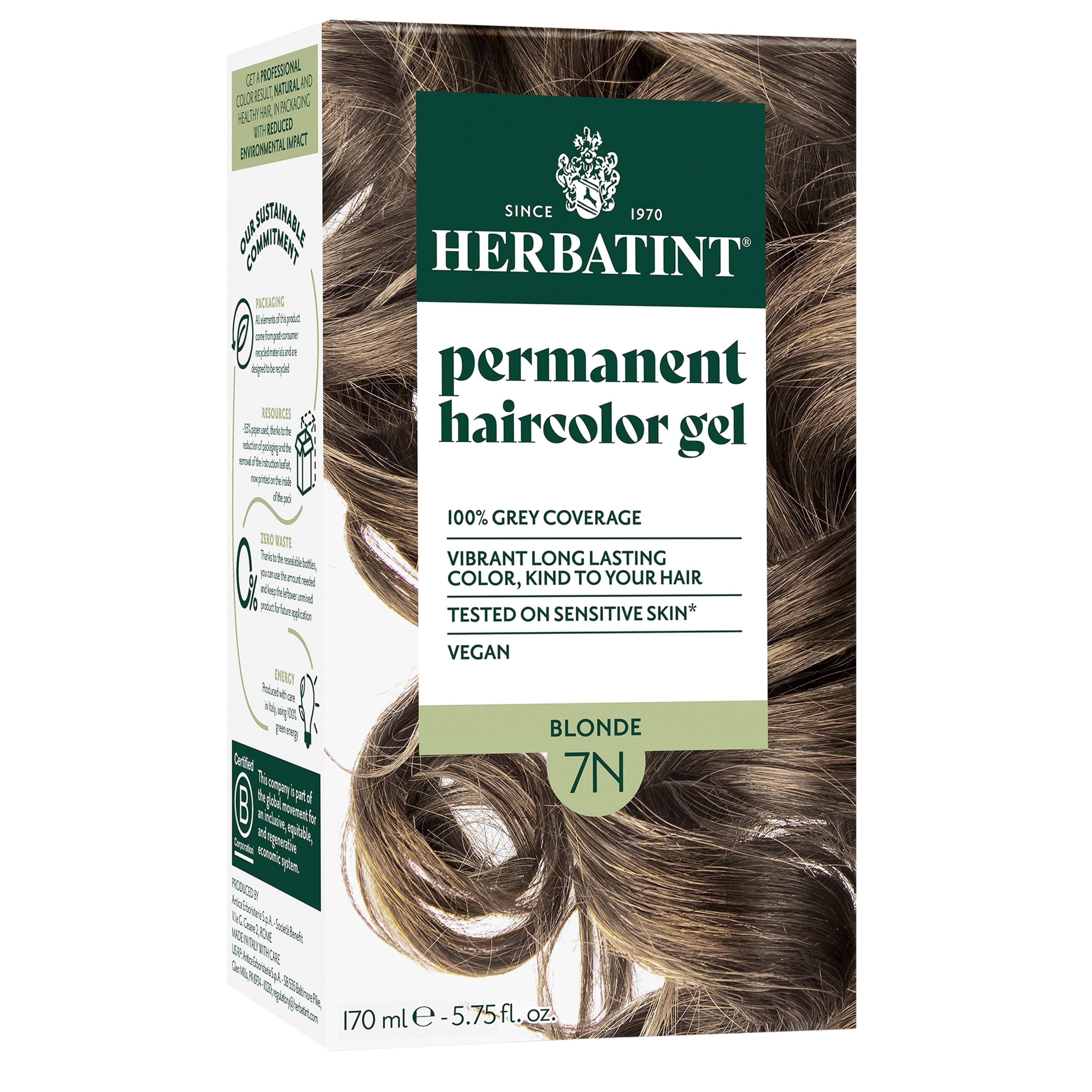


Herbatint Permanent Haircolor Gel 7N Blonde 1 Box
Summary
This hair color product contains a mix of natural and synthetic ingredients. While it avoids some harsh chemicals like ammonia, it includes synthetic preservatives and colorants that can be concerning for sensitive individuals. The presence of botanical extracts is a positive aspect, but the overall formulation still involves moderate processing and some synthetic components.
At a glance
Key ingredients 12
Laureth-4
Laureth-4 is a surfactant and emulsifier used to help blend ingredients. It is derived from ethoxylated lauryl alcohol. It can be mildly irritating to the skin and eyes.
Risks
Potential risks include skin irritation and contamination with 1,4-dioxane, a possible carcinogen.
Benefits
It helps in forming stable emulsions and enhances the texture of the product.
Propylene Glycol
Propylene Glycol is a humectant that helps retain moisture in the skin. It is widely used in cosmetics for its ability to improve skin hydration. It is generally considered safe but can cause irritation in sensitive individuals.
Risks
May cause skin irritation or allergic reactions in some people.
Benefits
It effectively hydrates the skin and enhances the absorption of other ingredients.
Aqua (Water)
Water is used as a solvent in cosmetic formulations. It helps dissolve other ingredients and provides a base for the product. It is essential for the consistency and application of the product.
Risks
There are no significant risks associated with water in cosmetics.
Benefits
It hydrates and acts as a carrier for other beneficial ingredients.
PEG-2 Oleamine
PEG-2 Oleamine is an emulsifying agent that helps blend water and oil-based ingredients. It is derived from oleic acid and ethylene oxide. It can be irritating to the skin and eyes.
Risks
Potential contamination with 1,4-dioxane, a possible carcinogen, and skin irritation.
Benefits
It stabilizes emulsions and improves the texture of the product.
Ethanolamine
Ethanolamine is used to adjust the pH of cosmetic products. It is an ethanolamine compound that can be irritating to the skin and eyes. It is considered a harmful substance in cosmetics.
Risks
May cause skin irritation and has been linked to potential carcinogenic effects.
Benefits
It helps maintain the stability and effectiveness of the product by adjusting pH levels.
P-Phenylenediamine
P-Phenylenediamine is a common hair dye ingredient used for its ability to provide long-lasting color. It is known for its strong coloring properties. However, it is a known allergen and can cause severe skin reactions.
Risks
High risk of allergic reactions and potential carcinogenic effects.
Benefits
Provides vibrant and long-lasting hair color.
Oleic Acid
Oleic Acid is a fatty acid that acts as an emulsifier and skin-conditioning agent. It is derived from natural sources like olive oil. It is generally considered safe and beneficial for skin hydration.
Risks
May cause mild irritation in sensitive individuals.
Benefits
Helps moisturize and soften the skin.
4-Chlororesorcinol
4-Chlororesorcinol is used in hair dyes for its coloring properties. It is effective in providing color to hair. However, it can be irritating to the skin and eyes.
Risks
Potential skin and eye irritation.
Benefits
Contributes to the hair dye's coloring effect.
Aloe Vera
Aloe Vera is a natural botanical known for its soothing and moisturizing properties. It is widely used in cosmetics for its skin benefits. It is considered a beneficial ingredient in hair and skin care products.
Risks
Generally safe with minimal risk of irritation.
Benefits
Soothes and hydrates the skin, reducing irritation.
Limnanthes Alba (Meadowfoam)
Meadowfoam seed oil is a natural oil used for its moisturizing properties. It is rich in fatty acids and antioxidants. It is considered a beneficial ingredient for skin and hair care.
Risks
Generally safe with minimal risk of irritation.
Benefits
Provides moisture and helps protect the skin and hair.
Betula Alba (White Birch)
White Birch extract is used for its astringent and anti-inflammatory properties. It is derived from the bark of the birch tree. It is considered beneficial for soothing and toning the skin.
Risks
Generally safe with minimal risk of irritation.
Benefits
Helps soothe and tone the skin, reducing inflammation.
Witch Hazel (Hamamelis)
Witch Hazel is a natural astringent known for its skin-soothing properties. It is commonly used in cosmetics for its ability to reduce inflammation and irritation. It is considered a beneficial ingredient for skin care.
Risks
Generally safe with minimal risk of irritation.
Benefits
Reduces skin irritation and inflammation, providing a soothing effect.
Processing
Processed Foods
Get the full breakdown in the Scout app
Scan any product to see lab results, healthy alternatives, and your personalized analysis.
Download on theApp Store