
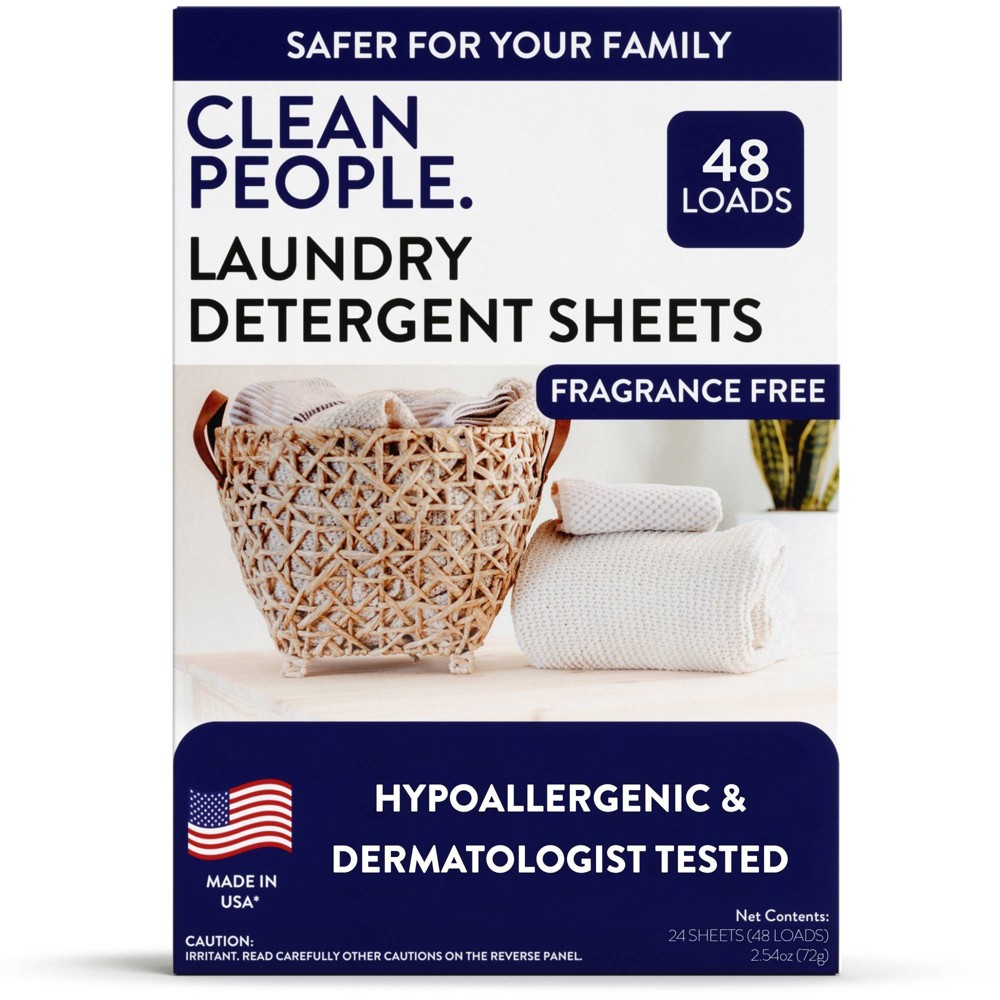
Clean People Laundry Detergent Sheets - Fragrance Free - 48 Loads: Hypoallergenic, Dye-Free, Paraben-Free, Vegan
Summary
This product is minimally processed and features a clean label with no synthetic fragrances, dyes, or parabens, making it hypoallergenic and suitable for sensitive users. The use of plant-based ingredients and the absence of harsh chemicals like SLS or SLES contribute to its high safety profile for indoor use and environmental friendliness.
At a glance
Key ingredients 8
Starch
Starch is a natural carbohydrate that is often used as a filler or thickening agent in various products. It is biodegradable and considered safe for use in cleaning products. It helps in binding the ingredients together in the detergent sheets.
Risks
There are minimal risks associated with starch as it is generally recognized as safe.
Benefits
Starch is biodegradable and environmentally friendly, making it a positive choice for eco-conscious consumers.
Vegetable Glycerin
Vegetable glycerin is a plant-derived humectant that helps to retain moisture. It is commonly used in cleaning products to improve texture and solubility. It is considered safe and non-toxic.
Risks
There are no significant risks associated with vegetable glycerin in cleaning products.
Benefits
Vegetable glycerin is biodegradable and helps to improve the solubility of other ingredients, enhancing the product's effectiveness.
Lauryl Glucoside
Lauryl glucoside is a mild, plant-derived surfactant used for its cleansing properties. It is derived from glucose and lauryl alcohol, making it a biodegradable and eco-friendly option. It is known for being gentle on the skin.
Risks
Lauryl glucoside is generally considered safe with minimal risk of irritation.
Benefits
As a plant-derived surfactant, lauryl glucoside is effective in cleaning while being gentle and environmentally friendly.
PVA
Polyvinyl alcohol (PVA) is a synthetic polymer used as a film-forming agent in detergent sheets. It helps to dissolve the sheets in water, releasing the active ingredients. PVA is considered safe for use in cleaning products.
Risks
PVA is generally safe, but there are concerns about its biodegradability in aquatic environments.
Benefits
PVA effectively dissolves in water, ensuring the detergent is released efficiently during washing.
Glycereth-6 Cocoate
Glycereth-6 cocoate is an ester of glycerin and coconut fatty acids, used as an emulsifier and surfactant. It helps to improve the texture and spreadability of the product. It is considered safe and non-toxic.
Risks
There are minimal risks associated with glycereth-6 cocoate, as it is generally recognized as safe.
Benefits
This ingredient is derived from coconut oil, contributing to the product's mildness and effectiveness.
Cocamidopropyl Betaine
Cocamidopropyl betaine is a surfactant derived from coconut oil, used for its foaming and cleansing properties. It is commonly used in personal care and cleaning products for its mildness. It is considered safe for use.
Risks
Some individuals may experience mild irritation, but it is generally considered safe.
Benefits
As a coconut-derived surfactant, it is effective in cleaning while being gentle on the skin.
Sodium Gluconate
Sodium gluconate is a chelating agent that helps to stabilize the product and improve its performance. It is derived from glucose and is biodegradable. It is considered safe for use in cleaning products.
Risks
There are minimal risks associated with sodium gluconate, as it is generally recognized as safe.
Benefits
Sodium gluconate is biodegradable and helps to enhance the cleaning efficiency of the product.
Propylene Glycol Dicaprylate/Dicaprate
Propylene glycol dicaprylate/dicaprate is an ester used as an emollient and solvent in cleaning products. It helps to improve the texture and spreadability of the product. It is considered safe for use.
Risks
There are minimal risks associated with this ingredient, as it is generally recognized as safe.
Benefits
This ingredient helps to improve the product's texture and application, enhancing user experience.
Processing
Unprocessed or Minimally Processed Foods
Get the full breakdown in the Scout app
Scan any product to see lab results, healthy alternatives, and your personalized analysis.
Download on theApp Store