
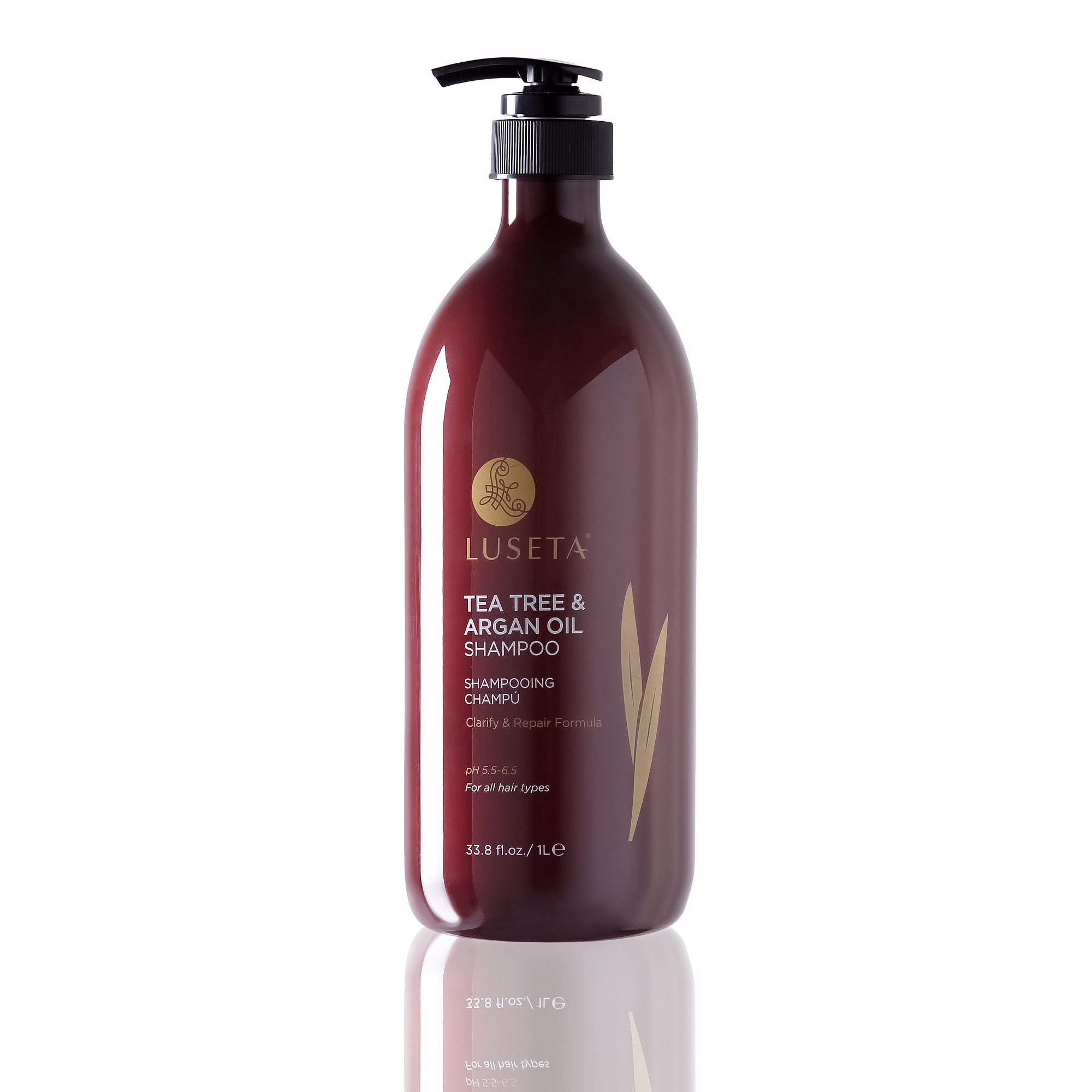


Luseta Beauty Tea Tree and Argan Oil Shampoo, 34.1 Ounce
Summary
This shampoo contains beneficial natural oils like tea tree and argan oil, which are known for their nourishing properties. However, the presence of synthetic fragrance and potentially irritating surfactants like sodium laureth sulfate affects its overall safety profile. The product is moderately processed, which impacts its rating despite the inclusion of some natural ingredients.
At a glance
Key ingredients 7
Water (Aqua)
Water is a universal solvent and is used as a base in many cosmetic formulations. It helps dissolve other ingredients and provides hydration. It is generally considered safe and non-irritating.
Risks
There are no significant risks associated with water in cosmetic formulations.
Benefits
Water provides hydration and helps in the even distribution of other ingredients.
Sodium Cocoyl Isethionate
Sodium Cocoyl Isethionate is a mild surfactant derived from coconut oil. It is used to create a rich lather and cleanse the skin without stripping natural oils. It is considered gentle and suitable for sensitive skin.
Risks
There are minimal risks, though some individuals may experience mild irritation.
Benefits
It provides effective cleansing while being gentle on the skin.
Cocamidopropyl Betaine
Cocamidopropyl Betaine is a surfactant and foam booster derived from coconut oil. It helps to cleanse the skin and hair by allowing water to mix with oil and dirt. It is generally considered mild and non-irritating.
Risks
Some individuals may experience allergic reactions or irritation.
Benefits
It enhances foam and improves the cleansing ability of formulations.
Cocamide MEA
Cocamide MEA is used as a foaming agent and thickener in cosmetic products. It is derived from coconut oil and helps stabilize emulsions. It is generally considered safe but can cause irritation in some cases.
Risks
There is a potential for skin irritation, especially in sensitive individuals.
Benefits
It improves the texture and stability of cosmetic formulations.
Dimethicone
Dimethicone is a type of silicone used to provide a smooth application and improve the texture of products. It forms a protective barrier on the skin, preventing moisture loss. It is generally considered safe and non-comedogenic.
Risks
It may cause build-up on the skin or hair with prolonged use.
Benefits
It provides a silky feel and helps to lock in moisture.
Sodium Chloride
Sodium Chloride, or table salt, is used as a thickening agent in shampoos and other personal care products. It helps to adjust the viscosity of formulations. It is generally considered safe in small amounts.
Risks
In high concentrations, it can be drying or irritating to the skin.
Benefits
It helps to thicken products and improve their texture.
Glycol
Glycol is often used as a humectant and solvent in cosmetic formulations. It helps to retain moisture and improve the spreadability of products. It is generally considered safe but can cause irritation in some individuals.
Risks
There is a potential for skin irritation, especially with prolonged exposure.
Benefits
It helps to maintain moisture levels in the skin and improve product application.
Processing
Processed Foods
Get the full breakdown in the Scout app
Scan any product to see lab results, healthy alternatives, and your personalized analysis.
Download on theApp Store