
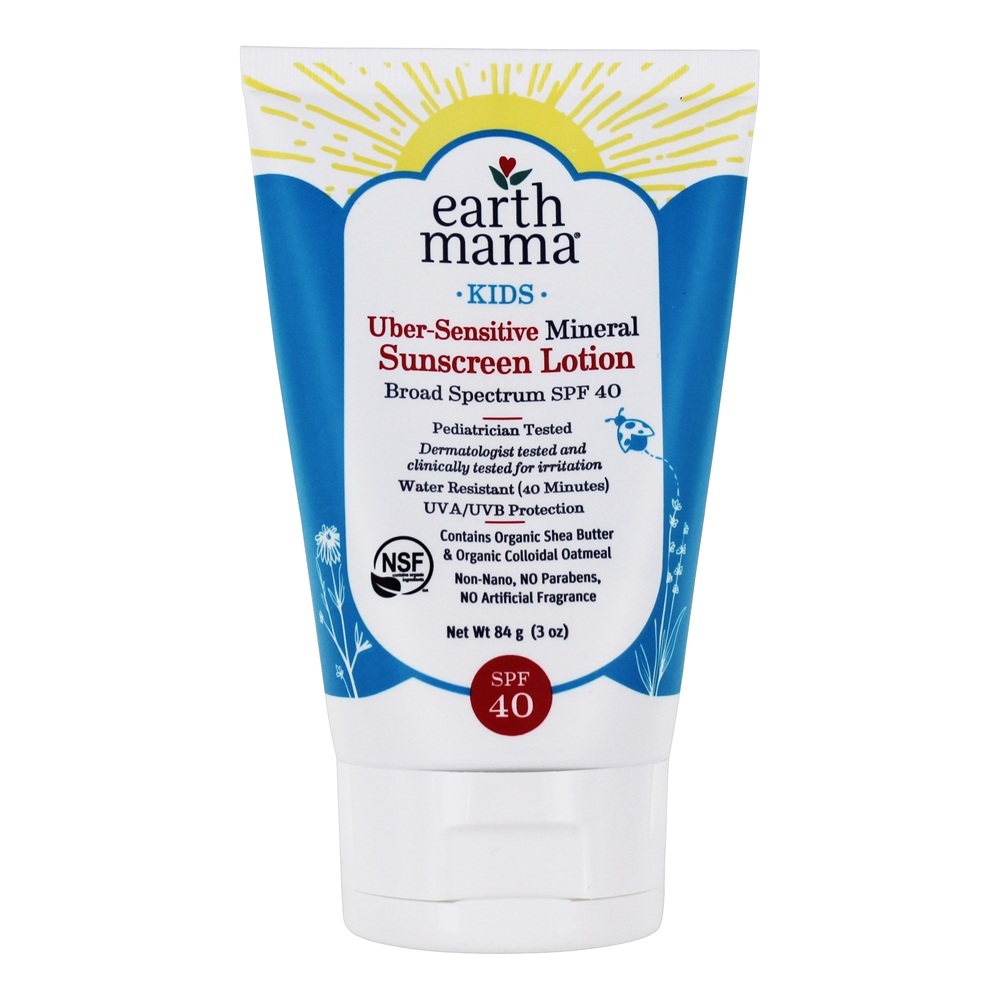
Earth Mama Kids Uber-Sensitive Mineral Sunscreen SPF 40 / CREAM
Summary
This sunscreen is formulated with mineral-based ingredients, including non-nano zinc oxide, which is a safe and effective UV filter. The product avoids harmful chemical UV filters and synthetic fragrances, contributing to its high safety profile. Its minimal processing and use of natural ingredients make it a strong choice for sensitive skin.
At a glance
Key ingredients 13
Aloe Barbadensis Leaf Juice
Aloe vera is known for its soothing and moisturizing properties, making it beneficial for sensitive skin. It helps to calm irritation and provides hydration. Its natural composition supports skin healing and protection.
Risks
There are minimal risks associated with aloe vera, though some individuals may experience allergic reactions.
Benefits
Aloe vera is highly beneficial for its anti-inflammatory and skin-soothing effects.
Avena Sativa (Oat Kernel) Flour
Oat kernel flour is recognized for its skin-soothing and anti-inflammatory properties. It is often used to relieve itching and irritation. Its natural composition makes it suitable for sensitive skin.
Risks
Oat allergies are rare but possible, which could lead to skin irritation.
Benefits
Oat kernel flour is beneficial for calming and protecting sensitive skin.
Beeswax (Cera Alba)
Beeswax acts as a natural barrier to protect the skin from environmental irritants. It helps to lock in moisture without clogging pores. Its emollient properties make it a valuable ingredient in skincare.
Risks
Beeswax is generally safe, but some individuals may have allergies to bee products.
Benefits
Beeswax is beneficial for its protective and moisturizing properties.
Butyrospermum Parkii (Shea) Butter
Shea butter is a rich emollient that deeply moisturizes and nourishes the skin. It contains vitamins and fatty acids that enhance skin barrier function. Its natural composition makes it ideal for dry and sensitive skin.
Risks
Shea butter is generally safe, though it may cause minor irritation in rare cases.
Benefits
Shea butter is highly beneficial for its moisturizing and skin-nourishing properties.
Calendula Officinalis Flower Extract
Calendula extract is known for its anti-inflammatory and healing properties. It helps to soothe irritated skin and promote wound healing. Its natural composition makes it suitable for sensitive skin.
Risks
Calendula is generally safe, but allergic reactions are possible in sensitive individuals.
Benefits
Calendula extract is beneficial for its soothing and healing effects on the skin.
Cocos Nucifera (Coconut) Oil
Coconut oil is a natural moisturizer that helps to hydrate and protect the skin. It contains fatty acids that support skin barrier function. Its antimicrobial properties also contribute to skin health.
Risks
Coconut oil may clog pores in some individuals, leading to acne.
Benefits
Coconut oil is beneficial for its moisturizing and protective properties.
Cocos Nucifera (Fractionated Coconut) Oil
Fractionated coconut oil is a lightweight moisturizer that absorbs quickly into the skin. It provides hydration without leaving a greasy residue. Its stable composition makes it suitable for sensitive skin.
Risks
Fractionated coconut oil is generally safe, though it may cause minor irritation in rare cases.
Benefits
Fractionated coconut oil is beneficial for its lightweight moisturizing properties.
Olea Europaea (Olive) Fruit Oil
Olive oil is a rich source of antioxidants and healthy fats that nourish and protect the skin. It helps to maintain skin elasticity and hydration. Its natural composition makes it ideal for dry and sensitive skin.
Risks
Olive oil may cause minor irritation or allergic reactions in some individuals.
Benefits
Olive oil is beneficial for its nourishing and protective effects on the skin.
Oryza Sativa (Rice) Bran Oil
Rice bran oil is known for its antioxidant and moisturizing properties. It helps to protect the skin from environmental damage and maintain hydration. Its natural composition makes it suitable for sensitive skin.
Risks
Rice bran oil is generally safe, though it may cause minor irritation in rare cases.
Benefits
Rice bran oil is beneficial for its antioxidant and moisturizing properties.
Rubus Idaeus (Red Raspberry) Seed Oil
Red raspberry seed oil is rich in antioxidants and essential fatty acids that protect and nourish the skin. It provides natural sun protection and supports skin barrier function. Its natural composition makes it ideal for sensitive skin.
Risks
Red raspberry seed oil is generally safe, though it may cause minor irritation in rare cases.
Benefits
Red raspberry seed oil is beneficial for its protective and nourishing properties.
Simmondsia Chinensis (Jojoba) Seed Oil
Jojoba oil closely resembles the skin's natural sebum, making it an excellent moisturizer. It helps to balance oil production and protect the skin. Its natural composition makes it suitable for all skin types.
Risks
Jojoba oil is generally safe, though it may cause minor irritation in rare cases.
Benefits
Jojoba oil is beneficial for its moisturizing and balancing properties.
Tocopherol (Vitamin E)
Vitamin E is a powerful antioxidant that helps to protect the skin from free radical damage. It supports skin healing and improves moisture retention. Its natural composition makes it beneficial for skin health.
Risks
Vitamin E is generally safe, though high concentrations may cause skin irritation.
Benefits
Vitamin E is beneficial for its antioxidant and skin-protective properties.
Zinc Oxide
Zinc oxide is a mineral sunscreen agent that provides broad-spectrum protection against UV rays. It is non-irritating and suitable for sensitive skin. Its natural composition makes it a preferred choice for physical sunscreens.
Risks
Zinc oxide is generally safe, though it may leave a white cast on the skin.
Benefits
Zinc oxide is beneficial for its effective sun protection and skin-friendly properties.
Processing
Unprocessed or Minimally Processed Foods
Get the full breakdown in the Scout app
Scan any product to see lab results, healthy alternatives, and your personalized analysis.
Download on theApp Store