
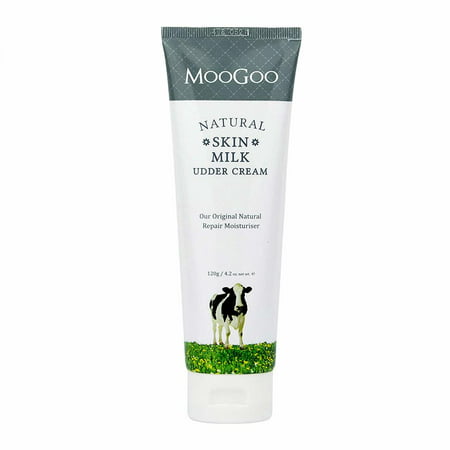



MooGoo Natural Skin Milk Udder Cream 120 g 4.2 oz
Summary
MooGoo Natural Skin Milk Udder Cream contains a mix of natural and synthetic ingredients. It includes beneficial components like natural oils and skin actives, which are generally safe and nourishing for the skin. However, the presence of some processed ingredients and the overall processing level prevent it from achieving a top-tier score. The product is mostly safe but not entirely free from synthetic content, which affects its rating.
At a glance
Key ingredients 17
Water
Water is a universal solvent and is used as a base in many cosmetic formulations. It helps dissolve other ingredients and provides hydration to the skin. It is generally considered safe and non-irritating.
Risks
There are no significant risks associated with water in cosmetics.
Benefits
Water hydrates the skin and helps in the absorption of other beneficial ingredients.
Prunus Amygdalus Dulcis Oil
Also known as sweet almond oil, this ingredient is a natural emollient that helps to soften and smooth the skin. It is rich in fatty acids and vitamins, which nourish the skin. It is well-tolerated by most skin types.
Risks
There is a minor risk of allergic reactions in individuals with nut allergies.
Benefits
Sweet almond oil provides deep moisturization and can improve skin tone and texture.
Cetearyl Alcohol
Cetearyl alcohol is a fatty alcohol used as an emollient and thickening agent in cosmetics. It helps to stabilize formulations and improve texture. It is not the same as drying alcohols and is generally considered safe.
Risks
Rarely, it may cause mild irritation in sensitive individuals.
Benefits
It helps to soften the skin and improve the spreadability of the product.
Olea Europaea Fruit Oil
Commonly known as olive oil, this ingredient is rich in antioxidants and fatty acids. It provides excellent moisturization and has anti-inflammatory properties. It is a natural and beneficial oil for skin care.
Risks
There is a low risk of clogging pores in acne-prone skin.
Benefits
Olive oil nourishes the skin and helps to maintain its natural barrier.
Aloe Barbadensis Leaf Juice
Aloe vera is known for its soothing and hydrating properties. It is often used to calm irritated skin and provide moisture. It is a natural ingredient with a long history of use in skin care.
Risks
Aloe vera is generally safe, but some individuals may experience allergic reactions.
Benefits
It soothes the skin and provides hydration, making it ideal for sensitive or sunburned skin.
Stearic Acid
Stearic acid is a fatty acid used as an emulsifier and thickener in cosmetics. It helps to stabilize formulations and improve texture. It is derived from natural sources and is generally considered safe.
Risks
There are minimal risks associated with stearic acid, though it may cause mild irritation in sensitive skin.
Benefits
It helps to maintain the consistency of the product and provides a smooth application.
Polysorbate 60
Polysorbate 60 is an emulsifier that helps to mix oil and water-based ingredients. It is commonly used in cosmetics to stabilize formulations. It is generally considered safe for use in personal care products.
Risks
There is a potential for mild skin irritation in sensitive individuals.
Benefits
It ensures a uniform texture and consistency in the product.
Oryza Sativa Bran Oil
Rice bran oil is rich in antioxidants and vitamins, providing nourishment and protection to the skin. It is a natural emollient that helps to moisturize and soften the skin. It is well-tolerated by most skin types.
Risks
There are minimal risks associated with rice bran oil.
Benefits
It provides antioxidant protection and helps to improve skin elasticity.
Tocopherol
Tocopherol, or Vitamin E, is a powerful antioxidant that helps to protect the skin from free radical damage. It is commonly used in cosmetics for its skin-conditioning properties. It is generally considered safe and beneficial.
Risks
There is a low risk of skin irritation in very sensitive individuals.
Benefits
Vitamin E helps to nourish and protect the skin, improving its overall health.
Piroctone Olamine
Piroctone olamine is an antifungal agent used to treat dandruff and other skin conditions. It helps to maintain a healthy scalp and skin environment. It is considered effective and safe for use in cosmetics.
Risks
There is a potential for mild irritation in sensitive skin.
Benefits
It helps to control fungal growth and maintain skin health.
Allantoin
Allantoin is a skin-soothing agent that helps to calm and protect the skin. It is often used in cosmetics for its ability to promote skin healing and reduce irritation. It is considered safe and beneficial for most skin types.
Risks
There are minimal risks associated with allantoin.
Benefits
It soothes and protects the skin, promoting a healthy skin barrier.
P-Anisic Acid
P-Anisic acid is used as a preservative and fragrance ingredient in cosmetics. It helps to maintain the product's stability and prevent microbial growth. It is generally considered safe for use in personal care products.
Risks
There is a potential for mild irritation in sensitive individuals.
Benefits
It helps to preserve the product and maintain its quality.
Coco-Caprylate
Coco-caprylate is an emollient derived from coconut oil, used to provide a silky feel to the skin. It is often used in cosmetics for its moisturizing properties. It is considered safe and beneficial for most skin types.
Risks
There are minimal risks associated with coco-caprylate.
Benefits
It provides a smooth, non-greasy feel and helps to moisturize the skin.
Guar Hydroxypropyltrimonium Chloride
This ingredient is a conditioning agent derived from guar gum, used to improve the texture and feel of hair and skin products. It helps to reduce static and improve manageability. It is generally considered safe for use in cosmetics.
Risks
There is a potential for mild irritation in sensitive individuals.
Benefits
It conditions the skin and hair, improving texture and manageability.
Hydrolyzed Milk Protein
Hydrolyzed milk protein is used in cosmetics for its moisturizing and conditioning properties. It helps to strengthen and protect the skin and hair. It is generally considered safe and beneficial.
Risks
There is a low risk of allergic reactions in individuals with milk allergies.
Benefits
It provides nourishment and helps to improve skin and hair health.
Parfum
Parfum, or fragrance, is used to add scent to cosmetic products. It is a common ingredient in personal care products but can be a source of irritation for sensitive individuals. It is often criticized for its potential to cause allergic reactions.
Risks
Fragrance can cause skin irritation and allergic reactions, especially in sensitive individuals.
Benefits
It provides a pleasant scent to the product, enhancing the user experience.
Humulus Lupulus Extract
Humulus lupulus extract, or hops extract, is used in cosmetics for its soothing and anti-inflammatory properties. It is a natural ingredient that can help to calm irritated skin. It is generally considered safe and beneficial.
Risks
There are minimal risks associated with hops extract.
Benefits
It soothes and calms the skin, reducing redness and irritation.
Processing
Processed Foods
Get the full breakdown in the Scout app
Scan any product to see lab results, healthy alternatives, and your personalized analysis.
Download on theApp Store