
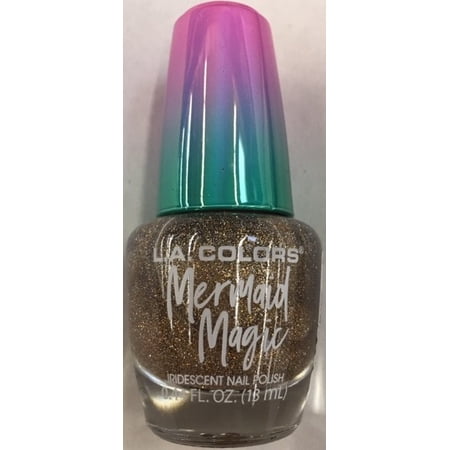


L.A. COLORS Mermaid Magic Nail Polish, Golden Sand, 0.44 Fl. Oz.
Summary
This nail polish contains synthetic ingredients typical of cosmetic products, which can include potential skin irritants and allergens. While it does not contain the most harmful chemicals like formaldehyde releasers or parabens, the presence of synthetic polymers and solvents contributes to its processed nature. The product's formulation is typical for nail polishes, balancing performance with safety, but it lacks the natural ingredients that would elevate its safety profile.
At a glance
Key ingredients 8
Ethyl Acetate
Ethyl Acetate is a solvent commonly used in nail polish to dissolve other ingredients and ensure smooth application. It evaporates quickly, helping the polish to dry faster. It is generally considered safe in cosmetics but can be irritating to the eyes and skin.
Risks
Potential risks include skin and eye irritation, especially with prolonged exposure.
Benefits
It helps in achieving a smooth and even application of nail polish.
Butyl Acetate
Butyl Acetate is another solvent used in nail polish to help dissolve other ingredients and improve application. It contributes to the polish's quick-drying properties. While generally safe, it can cause irritation if it comes into contact with the skin or eyes.
Risks
Exposure can lead to skin and eye irritation.
Benefits
It aids in the quick drying of nail polish, enhancing user experience.
Nitrocellulose
Nitrocellulose is a film-forming agent that provides the glossy finish in nail polishes. It is essential for creating a durable and shiny coating. Although it is effective, it can be flammable and may cause irritation.
Risks
Flammability and potential skin irritation are concerns.
Benefits
It provides a durable, glossy finish to nail polish.
Phthalic Anhydride
Phthalic Anhydride is used as a plasticizer in nail polish to increase flexibility and prevent chipping. It helps maintain the polish's integrity over time. However, it can be irritating to the skin and respiratory system.
Risks
It may cause skin and respiratory irritation.
Benefits
It enhances the flexibility and durability of nail polish.
Trimellitic Anhydride
Trimellitic Anhydride is used in nail polish formulations to improve adhesion and flexibility. It helps the polish adhere better to the nail surface. Despite its benefits, it can be a respiratory irritant.
Risks
Potential respiratory irritation is a concern.
Benefits
It improves adhesion and flexibility of the nail polish.
Glycols Copolymer
Glycols Copolymer is used in nail polish to enhance texture and consistency. It helps in forming a smooth, even layer on the nails. While generally safe, it can cause mild irritation in sensitive individuals.
Risks
Mild irritation may occur in sensitive individuals.
Benefits
It contributes to a smooth and even application of nail polish.
Isopropyl Alcohol
Isopropyl Alcohol is used in nail polish as a solvent and antiseptic. It helps in the quick drying of the polish and ensures a clean application. However, it can be drying to the skin and nails.
Risks
It can cause skin and nail dryness with frequent use.
Benefits
It aids in quick drying and provides antiseptic properties.
Dipropylene Glycol
Dipropylene Glycol is used as a solvent and viscosity-decreasing agent in nail polish. It helps maintain the polish's consistency and stability. It is generally considered safe but can cause mild irritation.
Risks
Mild irritation is possible with exposure.
Benefits
It helps maintain the consistency and stability of nail polish.
Processing
Processed Foods
Get the full breakdown in the Scout app
Scan any product to see lab results, healthy alternatives, and your personalized analysis.
Download on theApp Store