
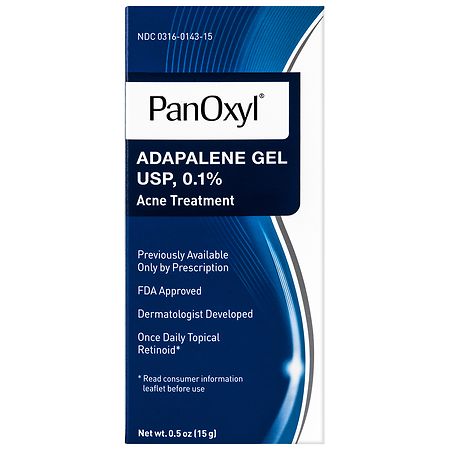

PanOxyl Adapalene 0.1% Leave-On Gel 0.5 oz
Summary
This face wash contains adapalene, a synthetic retinoid, which is effective for acne treatment but is a processed chemical. The product also includes other synthetic ingredients that contribute to its processing level, which limits its score. While it does not contain harsh surfactants or known endocrine disruptors, the presence of synthetic components and the processing level prevent it from achieving a higher rating.
At a glance
Key ingredients 8
Adapalene 0.1%
Adapalene is a synthetic retinoid used in acne treatment. It helps to regulate skin cell turnover and reduce inflammation. It is effective in preventing clogged pores.
Risks
Potential risks include skin irritation, dryness, and increased sensitivity to sunlight.
Benefits
It is beneficial for reducing acne lesions and improving skin texture.
Carbomer Homopolymer Type C
Carbomer is a thickening agent used to stabilize emulsions. It helps to create a smooth gel texture. It is commonly used in cosmetic formulations.
Risks
There are minimal risks, but it can cause mild irritation in sensitive individuals.
Benefits
It provides a desirable consistency and enhances the product's application.
Disodium EDTA
Disodium EDTA is a chelating agent that binds metal ions. It helps to improve the stability and shelf life of the product. It prevents metal ions from affecting the product's performance.
Risks
It can cause irritation in some individuals and is not biodegradable.
Benefits
It enhances the product's stability and effectiveness.
Methylparaben
Methylparaben is a preservative used to prevent microbial growth. It is effective in extending the shelf life of cosmetic products. It is widely used due to its low cost and efficacy.
Risks
Parabens have been associated with endocrine disruption and allergic reactions.
Benefits
It helps maintain product safety by preventing contamination.
Poloxamer 182
Poloxamer 182 is a surfactant and emulsifying agent. It helps to mix oil and water components in formulations. It is used to improve the texture and spreadability of products.
Risks
It is generally considered safe, but can cause mild irritation in sensitive skin.
Benefits
It enhances the product's texture and application.
Propylene Glycol
Propylene Glycol is a humectant that attracts moisture to the skin. It is used to improve skin hydration and texture. It also helps to stabilize formulations.
Risks
It can cause irritation and allergic reactions in some individuals.
Benefits
It enhances skin hydration and improves product stability.
Purified Water
Purified Water is used as a solvent in cosmetic formulations. It helps to dissolve other ingredients and create a uniform product. It is essential for the formulation of gels and creams.
Risks
There are no significant risks associated with purified water.
Benefits
It acts as a base for the formulation and aids in ingredient dispersion.
Sodium Hydroxide
Sodium Hydroxide is used to adjust the pH of cosmetic products. It helps to maintain the stability and efficacy of the formulation. It is used in small amounts to ensure product safety.
Risks
In high concentrations, it can be corrosive and cause skin irritation.
Benefits
It ensures the product has the correct pH for optimal performance.
Processing
Processed Foods
Get the full breakdown in the Scout app
Scan any product to see lab results, healthy alternatives, and your personalized analysis.
Download on theApp Store