
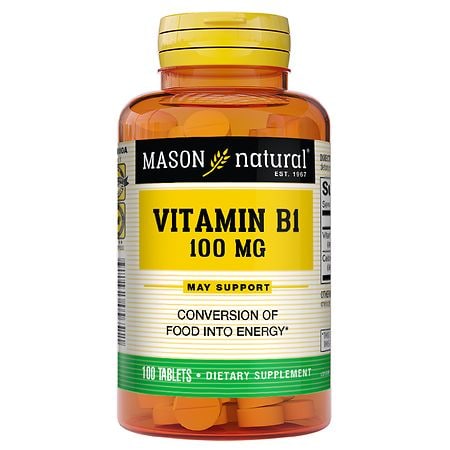

Mason Natural Vitamin B1 (Thiamin) 100 Tablets
Analysis updated July 2026 · How Scout scores
At a glance
Summary
This vitamin B1 supplement contains essential thiamin, but the formulation includes several additives such as colloidal silica, croscarmellose sodium, and magnesium stearate, which are common in tablet manufacturing but not beneficial. While these additives are not harmful in small amounts, they contribute to a moderate level of processing, which slightly impacts the overall score. The absence of harmful substances like artificial dyes or sweeteners is a positive aspect of this product.
Key ingredients 6
Colloidal SilicaNeutral
Colloidal silica is used as an anti-caking agent to prevent clumping in supplements. It is generally recognized as safe and does not contribute any nutritional value. Its inert nature means it does not interact with other ingredients.
Croscarmellose SodiumNeutral
Croscarmellose sodium is a disintegrant that helps tablets dissolve quickly in the digestive tract. It is widely used in the pharmaceutical industry and considered safe in small amounts. Its primary role is functional, aiding in the delivery of the active ingredient.
See more about Croscarmellose Sodium →Magnesium StearateNeutral
Magnesium stearate is a common flow agent used to prevent ingredients from sticking to manufacturing equipment. It is generally recognized as safe when used in small quantities. It does not provide nutritional benefits but ensures consistent tablet quality.
See more about Magnesium Stearate →Stearic AcidNeutral
Stearic acid is a fatty acid used as a lubricant in tablet manufacturing. It is naturally occurring and considered safe for consumption. Its role is primarily functional, aiding in the manufacturing process.
See more about Stearic Acid →Microcrystalline CelluloseNeutral
Microcrystalline cellulose is a refined wood pulp used as a bulking agent in supplements. It is inert and does not affect the nutritional profile of the product. Its primary function is to provide structure to tablets.
See more about Microcrystalline Cellulose →Silicon DioxideNeutral
Silicon dioxide is used as an anti-caking agent to maintain the free-flowing nature of powdered ingredients. It is considered safe and does not contribute to the nutritional content of the product. Its inert nature ensures it does not interact with other ingredients.
See more about Silicon Dioxide →Processing
Processed Foods
Get the full breakdown in the Scout appTake Scout shopping
Scan any product to see lab results, healthy alternatives, and your personalized analysis.
Download on theApp Store GET IT ONGoogle PlayAmazon pricing & content
Amazon price as of . Product prices and availability are accurate as of the date/time indicated and are subject to change. Any price and availability information displayed on Amazon.com at the time of purchase will apply to the purchase of this product.
CERTAIN CONTENT THAT APPEARS ON THIS SITE COMES FROM AMAZON. THIS CONTENT IS PROVIDED “AS IS” AND IS SUBJECT TO CHANGE OR REMOVAL AT ANY TIME.