
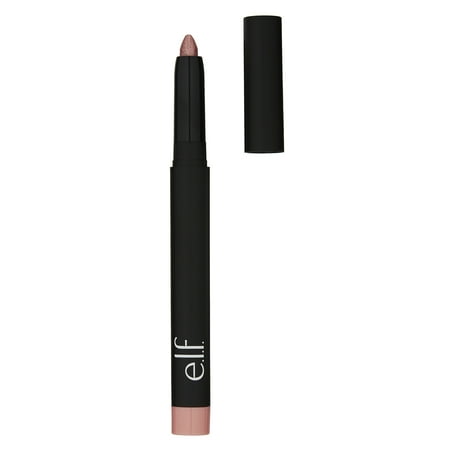

e.l.f. No Budge Shadow Stick Rose Gold
Summary
This eye shadow stick contains a mix of synthetic and natural ingredients. While it avoids harsh surfactants and major endocrine disruptors, it includes some synthetic preservatives and colorants that are common in cosmetics. The presence of these ingredients, along with its processed nature, influences its overall safety and quality rating.
At a glance
Key ingredients 11
Cyclopentasiloxane
Cyclopentasiloxane is a type of silicone that provides a smooth application and helps to spread the product evenly. It is commonly used in cosmetics for its lightweight and non-greasy feel. It evaporates quickly, leaving a silky finish on the skin.
Risks
There are concerns about its potential to bioaccumulate in the environment.
Benefits
It enhances the texture and spreadability of the product, making it more pleasant to use.
Trimethylsiloxysilicate
Trimethylsiloxysilicate is a film-forming silicone that helps the product adhere to the skin and resist water. It is often used in long-wear cosmetics for its ability to increase durability. This ingredient contributes to the 'no budge' claim of the product.
Risks
There are minimal risks associated with its use in cosmetics.
Benefits
It provides long-lasting wear and water resistance, enhancing the product's performance.
Mica
Mica is a natural mineral used to add shimmer and shine to cosmetics. It is widely used in makeup products for its reflective properties. Mica is considered safe for use in cosmetics.
Risks
There are concerns about ethical sourcing and potential contamination with heavy metals.
Benefits
It provides a luminous finish, enhancing the visual appeal of the product.
Polyethylene
Polyethylene is a synthetic polymer used as a thickening agent and film former in cosmetics. It helps to stabilize the product and improve its texture. Polyethylene is generally considered safe for use in cosmetics.
Risks
There are environmental concerns regarding its non-biodegradable nature.
Benefits
It enhances the product's consistency and stability, improving user experience.
Ozokerite
Ozokerite is a naturally occurring wax used to thicken and stabilize cosmetic formulations. It helps to provide structure and consistency to the product. Ozokerite is commonly used in lipsticks and other stick products.
Risks
There are minimal risks associated with its use in cosmetics.
Benefits
It contributes to the product's solid form and enhances its application.
Microcrystalline Wax (Cera Microcristallina)
Microcrystalline wax is a refined petroleum wax used to improve texture and stability in cosmetics. It helps to create a smooth and even application. This wax is widely used in stick formulations for its binding properties.
Risks
There are concerns about its petroleum origin, but it is considered safe for use in cosmetics.
Benefits
It enhances the product's texture and application, providing a smooth finish.
Synthetic Beeswax
Synthetic beeswax is a vegan alternative to natural beeswax, used to provide structure and consistency in cosmetics. It helps to thicken and stabilize formulations. This ingredient is beneficial for those seeking animal-free products.
Risks
There are minimal risks associated with its use in cosmetics.
Benefits
It provides a similar texture and performance to natural beeswax without animal-derived components.
Lauroyl
Lauroyl is a fatty acid derivative used as an emollient and thickening agent in cosmetics. It helps to improve the texture and feel of the product. Lauroyl compounds are generally considered safe for use in cosmetics.
Risks
There are minimal risks associated with its use in cosmetics.
Benefits
It enhances the product's texture and provides a smooth application.
Phenyl Trimethicone
Phenyl Trimethicone is a silicone used to provide a silky, smooth feel and enhance shine in cosmetics. It helps to improve the spreadability and texture of the product. This ingredient is commonly used in hair and skin products for its conditioning properties.
Risks
There are minimal risks associated with its use in cosmetics.
Benefits
It enhances the product's texture and provides a glossy finish.
Silica
Silica is a mineral used to improve the texture and absorb excess oil in cosmetics. It helps to provide a matte finish and enhance the product's feel. Silica is widely used in makeup products for its oil-absorbing properties.
Risks
There are minimal risks associated with its use in cosmetics.
Benefits
It provides a matte finish and helps control shine, improving the product's performance.
Aluminum Starch
Aluminum starch is used as a thickening agent and absorbent in cosmetics. It helps to improve the texture and feel of the product. This ingredient is commonly used in powder and cream formulations for its oil-absorbing properties.
Risks
There are minimal risks associated with its use in cosmetics.
Benefits
It enhances the product's texture and helps control oil, improving the overall performance.
Processing
Processed Foods
Get the full breakdown in the Scout app
Scan any product to see lab results, healthy alternatives, and your personalized analysis.
Download on theApp Store