
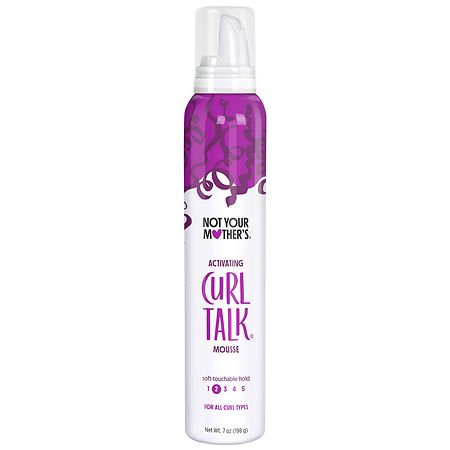

Not Your Mother's Curl Talk Curl Activating Mousse - 7oz: Paraben-Free, Silicone-Free, Sulfate-Free
Summary
This product contains a mix of synthetic ingredients, including benzophenone-4, which is a UV filter with potential endocrine-disrupting properties. While it is free from parabens, silicones, and sulfates, it includes phenoxyethanol and tetrasodium EDTA, which are preservatives that can be irritating to some individuals. The presence of these synthetic chemicals and preservatives, despite the absence of more harmful substances, results in a moderate safety rating.
At a glance
Key ingredients 17
Water (Aqua)Neutral
Water is a common solvent used in cosmetic formulations. It helps dissolve other ingredients and provides a base for the product. It is generally considered safe and non-reactive.
Risks
There are no significant risks associated with water in cosmetics.
Benefits
Water helps in the application and spreadability of the product.
Polyquaternium-46Neutral
Polyquaternium-46 is a conditioning agent that helps improve the texture and manageability of hair. It forms a film on the hair surface, providing smoothness and reducing static. It is generally considered safe for use in cosmetics.
Risks
There are minimal risks associated with Polyquaternium-46, though some individuals may experience mild irritation.
Benefits
It enhances hair texture and reduces frizz, making hair more manageable.
IsobutaneNeutral
Isobutane is used as a propellant in aerosol products. It helps dispense the product in a fine mist. It is generally considered safe when used in cosmetics under controlled conditions.
Risks
Inhalation of isobutane in large quantities can be harmful, but it is typically used in small amounts in cosmetics.
Benefits
It allows for even distribution of the product as a spray or mousse.
PropaneNeutral
Propane is another propellant used in aerosol products. It helps in the delivery of the product from the container. It is considered safe for use in cosmetics when used appropriately.
Risks
Like isobutane, inhalation of propane in large amounts can be harmful, but it is used in small, controlled amounts in cosmetics.
Benefits
It aids in the effective dispensing of the product.
Propylene GlycolNeutral
Propylene Glycol is a humectant that helps retain moisture in the hair and skin. It is widely used in cosmetics for its moisturizing properties. It is generally considered safe for use in cosmetics.
Risks
Some individuals may experience skin irritation or allergic reactions to Propylene Glycol.
Benefits
It helps maintain moisture levels in the hair, preventing dryness.
Cetrimonium ChlorideNeutral
Cetrimonium Chloride is a conditioning agent that helps detangle hair and reduce static. It is commonly used in hair care products for its smoothing properties. It is generally considered safe for use in cosmetics.
Risks
In rare cases, it may cause skin or eye irritation.
Benefits
It improves hair manageability and reduces frizz.
Sodium Lauroyl SarcosinateNeutral
Sodium Lauroyl Sarcosinate is a mild surfactant used for its cleansing properties. It is less irritating than traditional sulfates and is considered safe for use in cosmetics.
Risks
There is a low risk of irritation compared to harsher surfactants.
Benefits
It provides gentle cleansing without stripping natural oils.
Oleth-20Neutral
Oleth-20 is an emulsifier that helps blend oil and water-based ingredients. It is commonly used in cosmetics to stabilize formulations. It is generally considered safe for use in cosmetics.
Risks
There is a potential risk of skin irritation in sensitive individuals.
Benefits
It helps maintain the stability and consistency of the product.
TocopherolVery Good
Tocopherol, also known as Vitamin E, is an antioxidant that helps protect the skin and hair from damage caused by free radicals. It is widely used in cosmetics for its nourishing properties. It is considered safe and beneficial for use in cosmetics.
Risks
There are minimal risks associated with Tocopherol, though excessive use may cause skin irritation in sensitive individuals.
Benefits
It provides antioxidant protection and helps maintain healthy skin and hair.
Benzophenone-4Very Bad
Benzophenone-4 is a UV filter used to protect products from degradation. However, it is a potential endocrine disruptor and can cause skin irritation. It is considered a harmful ingredient in cosmetics.
Risks
It may cause skin irritation and has potential endocrine-disrupting effects.
Benefits
It helps protect the product from UV degradation, extending its shelf life.
PropanediolNeutral
Propanediol is a solvent and humectant that helps improve the texture and moisture retention of products. It is considered safe for use in cosmetics and is often used as an alternative to Propylene Glycol.
Risks
There are minimal risks associated with Propanediol, though some individuals may experience mild irritation.
Benefits
It enhances the texture and moisture retention of the product.
PhenylpropanolNeutral
Phenylpropanol is used as a fragrance ingredient and preservative in cosmetics. It helps improve the scent and stability of the product. It is generally considered safe for use in cosmetics.
Risks
There is a potential risk of skin irritation or allergic reactions in sensitive individuals.
Benefits
It enhances the fragrance and preservation of the product.
Hexylene GlycolNeutral
Hexylene Glycol is a solvent and viscosity agent used to improve the texture and spreadability of products. It is considered safe for use in cosmetics.
Risks
There is a low risk of skin irritation with Hexylene Glycol.
Benefits
It improves the texture and application of the product.
EthylhexylglycerinNeutral
Ethylhexylglycerin is a preservative and skin conditioning agent. It helps enhance the efficacy of other preservatives and provides moisturizing benefits. It is generally considered safe for use in cosmetics.
Risks
There is a low risk of skin irritation with Ethylhexylglycerin.
Benefits
It enhances preservation and provides moisturizing benefits.
Caprylyl GlycolNeutral
Caprylyl Glycol is a skin conditioning agent and preservative. It helps improve the texture and moisture retention of products. It is considered safe for use in cosmetics.
Risks
There is a low risk of skin irritation with Caprylyl Glycol.
Benefits
It enhances the texture and moisture retention of the product.
PhenoxyethanolBad
Phenoxyethanol is a preservative used to prevent microbial growth in cosmetics. However, it can cause skin irritation and has been associated with allergic reactions. It is considered a potentially harmful ingredient in cosmetics.
Risks
It may cause skin irritation and allergic reactions in sensitive individuals.
Benefits
It helps preserve the product by preventing microbial growth.
Tetrasodium EDTANeutral
Tetrasodium EDTA is a chelating agent that helps improve the stability and efficacy of cosmetic formulations. It binds to metal ions, preventing them from affecting the product's performance. It is generally considered safe for use in cosmetics.
Risks
There is a low risk of skin irritation with Tetrasodium EDTA.
Benefits
It enhances the stability and performance of the product.
Processing
Processed Foods
Get the full breakdown in the Scout app
Scan any product to see lab results, healthy alternatives, and your personalized analysis.
Download on theApp Store