
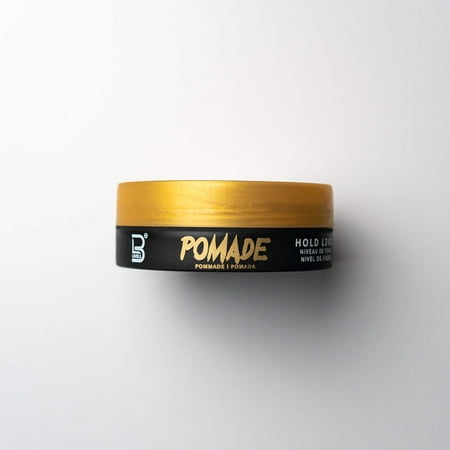


Hair Styling Pomade
Summary
The hair styling pomade contains a mix of natural oils and synthetic ingredients. While it includes beneficial components like jojoba oil and beeswax, which are nourishing and safe, it also contains synthetic fragrance, which can be a skin irritant. The product is moderately processed, which affects its overall rating, but the presence of natural ingredients provides some redeeming qualities.
At a glance
Key ingredients 11
Aqua
Aqua, or water, is a common solvent used in cosmetic formulations. It helps dissolve other ingredients and provides a base for the product. It is generally considered safe and non-irritating.
Risks
There are no significant risks associated with water in cosmetics.
Benefits
Water hydrates and helps in the even distribution of other ingredients.
Ceteareth-25
Ceteareth-25 is an emulsifying agent that helps blend oil and water-based ingredients. It is commonly used in cosmetics for its ability to stabilize formulations. However, it is derived from ethoxylation, which can lead to contamination with 1,4-dioxane.
Risks
Potential contamination with 1,4-dioxane, a possible human carcinogen, is a concern.
Benefits
It effectively stabilizes and thickens cosmetic products.
Glycerin
Glycerin is a humectant that attracts moisture to the skin, helping to keep it hydrated. It is widely used in skincare and haircare products for its moisturizing properties. It is considered safe and beneficial for most skin types.
Risks
There are minimal risks associated with glycerin, though it can be sticky.
Benefits
Glycerin helps maintain skin hydration and improves texture.
Parfum
Parfum, or fragrance, is used to impart a pleasant scent to cosmetic products. It is a common ingredient but can be composed of many undisclosed chemicals. Fragrances are known to cause allergic reactions and sensitivities in some individuals.
Risks
Potential for allergic reactions and skin irritation.
Benefits
Provides a pleasant scent to the product.
Benzyl Alcohol
Benzyl Alcohol is used as a preservative and solvent in cosmetics. It helps prevent microbial growth, extending the shelf life of products. However, it can cause skin irritation in sensitive individuals.
Risks
May cause skin irritation or allergic reactions in sensitive individuals.
Benefits
Acts as a preservative to maintain product integrity.
PPG-2 Methyl Ether
PPG-2 Methyl Ether is a solvent that helps dissolve other ingredients in cosmetic formulations. It is used to improve the texture and spreadability of products. While generally considered safe, it can cause irritation in some cases.
Risks
Potential for skin irritation with prolonged use.
Benefits
Improves product texture and application.
PEG-40 Hydrogenated Castor Oil
PEG-40 Hydrogenated Castor Oil is an emulsifier and surfactant that helps mix oil and water components. It is commonly used in cosmetics for its ability to improve texture and stability. However, it is derived from ethoxylation, which can lead to contamination with 1,4-dioxane.
Risks
Potential contamination with 1,4-dioxane, a possible human carcinogen.
Benefits
Enhances product stability and texture.
2-Bromo-2-Nitropropane-1,3-Diol
2-Bromo-2-Nitropropane-1,3-Diol is a preservative used to prevent microbial growth in cosmetics. It is effective in low concentrations but can release formaldehyde, a known irritant and potential carcinogen. Its use is restricted in some regions due to safety concerns.
Risks
Releases formaldehyde, which can cause irritation and has carcinogenic potential.
Benefits
Prevents microbial contamination, extending product shelf life.
Citral
Citral is a fragrance component that provides a lemon-like scent to cosmetic products. It is naturally occurring in the essential oils of plants like lemongrass. However, it can cause allergic reactions in sensitive individuals.
Risks
Potential for allergic reactions and skin irritation.
Benefits
Adds a fresh, citrus scent to products.
Coumarin
Coumarin is a fragrance ingredient used to impart a sweet, vanilla-like scent. It is naturally found in some plants but can cause allergic reactions. Its use is regulated due to potential toxicity at high concentrations.
Risks
May cause allergic reactions and is toxic at high concentrations.
Benefits
Provides a pleasant fragrance to cosmetic products.
Hydrolyzed Soy Protein
Hydrolyzed Soy Protein is used in cosmetics for its conditioning properties. It helps improve hair texture and strength by providing amino acids. It is generally considered safe and beneficial for hair care.
Risks
There are minimal risks, though soy allergies should be considered.
Benefits
Strengthens and conditions hair, improving texture.
Processing
Processed Foods
Get the full breakdown in the Scout app
Scan any product to see lab results, healthy alternatives, and your personalized analysis.
Download on theApp Store