
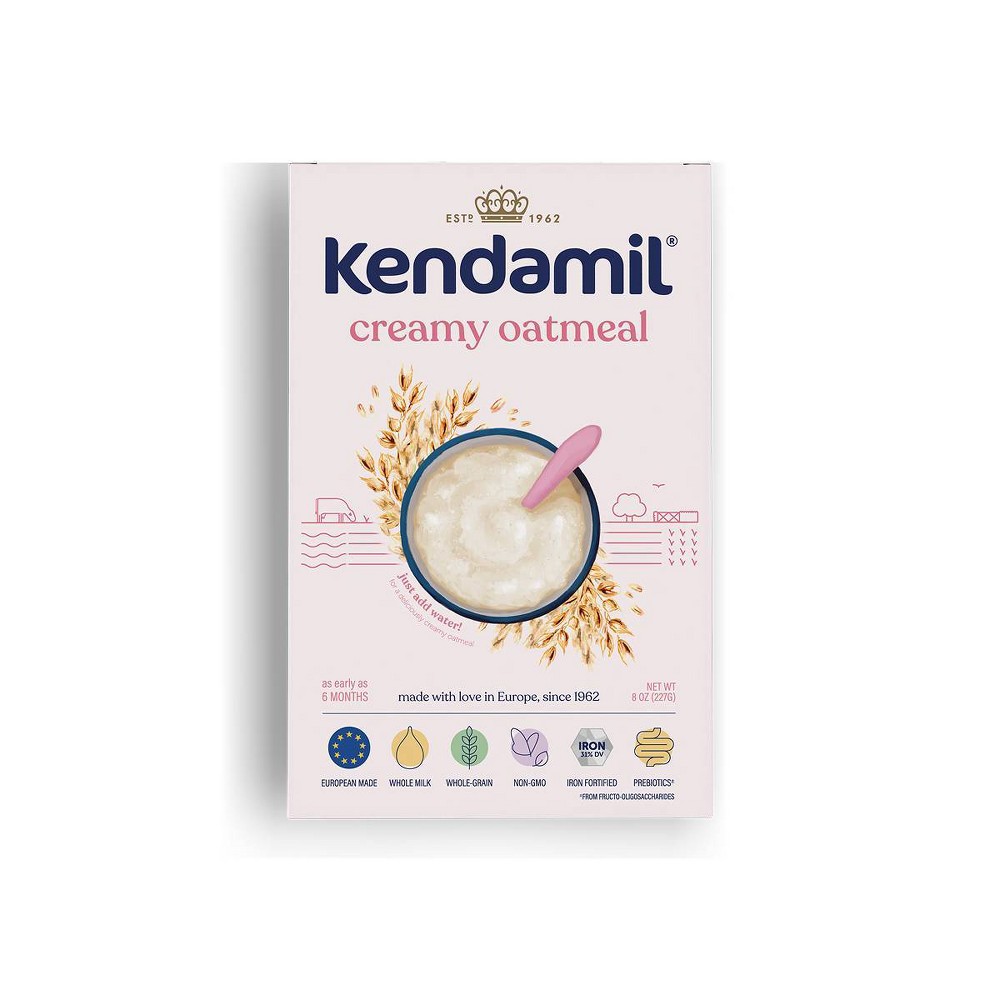
Kendamil Baby Cereal Creamy Oatmeal - 8oz: Age Level 6 Months and Up, 1st Stage, Mix, Baby Cereals
Summary
This baby cereal contains beneficial ingredients like whole grain oat flour, whole milk powder, and whey powder, which provide essential nutrients for infants. However, it is classified as ultra-processed due to the inclusion of hydrolyzed wheat flour and multiple added vitamins and minerals, which limits its score. The presence of added sugars also contributes to a lower rating, despite the overall nutritional benefits.
At a glance
Key ingredients 12
Whole grain oat flourGood
Whole grain oat flour is a nutritious source of carbohydrates and fiber. It is minimally processed, retaining most of its natural nutrients. It provides a slow release of energy, which is beneficial for sustained energy levels.
Benefits
Rich in dietary fiber, which supports digestive health and provides a source of sustained energy.
Hydrolyzed wheat flourNeutral
Hydrolyzed wheat flour is processed to break down proteins, making it easier to digest. It is often used to improve texture and digestibility in baby foods. However, it may not provide the same nutritional benefits as whole wheat flour.
Risks
May pose a risk for individuals with wheat allergies or gluten intolerance.
Benefits
Easier to digest due to the breakdown of proteins, which can be beneficial for infants.
Whole milk powderGood
Whole milk powder is a source of high-quality protein and essential fats. It retains most of the nutrients found in fresh milk, including calcium and vitamin D. It provides a rich source of energy and supports growth and development in infants.
Risks
May cause allergic reactions in individuals with milk allergies.
Benefits
Provides essential nutrients such as calcium and vitamin D, supporting bone health and development.
Skimmed milk powderGood
Skimmed milk powder offers a low-fat source of protein and calcium. It is processed to remove most of the fat content while retaining essential nutrients. It is beneficial for providing protein without added fats.
Risks
May cause allergic reactions in individuals with milk allergies.
Benefits
Provides protein and calcium without the added fat, supporting muscle and bone health.
Whey powderGood
Whey powder is a high-quality protein source derived from milk. It contains all essential amino acids and is easily digestible. It supports muscle growth and repair, making it beneficial for infants' development.
Risks
May cause allergic reactions in individuals with milk allergies.
Benefits
Rich in essential amino acids, supporting muscle growth and repair.
InulinGood
Inulin is a prebiotic fiber that supports gut health by promoting the growth of beneficial bacteria. It is extracted from plants like chicory root and is minimally processed. It can improve digestive health and enhance nutrient absorption.
Risks
Excessive consumption may cause digestive discomfort in some individuals.
Benefits
Supports gut health by promoting beneficial bacteria and improving digestion.
Barley malt extractNeutral
Barley malt extract is used as a natural sweetener and flavor enhancer. It is derived from barley grains and undergoes minimal processing. While it adds flavor, it does not provide significant nutritional benefits.
Risks
May contain gluten, posing a risk for individuals with celiac disease or gluten sensitivity.
Benefits
Adds natural sweetness and flavor without artificial additives.
Calcium carbonateNeutral
Calcium carbonate is used as a calcium supplement to fortify foods. It is a common and safe source of calcium, though it is not as easily absorbed as other forms. It helps meet dietary calcium needs, especially in fortified foods.
Risks
Excessive intake may lead to hypercalcemia or kidney stones.
Benefits
Provides a source of calcium, supporting bone health and development.
Zinc sulfateNeutral
Zinc sulfate is used to fortify foods with zinc, an essential mineral. It is a common form of zinc supplementation, though it may cause gastrointestinal discomfort in some. It supports immune function and growth.
Risks
High doses may cause nausea or gastrointestinal upset.
Benefits
Supports immune function and is essential for growth and development.
Iron pyrophosphateNeutral
Iron pyrophosphate is used to fortify foods with iron, an essential mineral for blood health. It is a less soluble form of iron, which may affect absorption. It helps prevent iron deficiency anemia, especially in infants.
Risks
Excessive iron intake can lead to toxicity and gastrointestinal issues.
Benefits
Helps prevent iron deficiency anemia by providing a source of iron.
Vitamin A acetateNeutral
Vitamin A acetate is a synthetic form of vitamin A used to fortify foods. It is stable and effective in providing vitamin A, though it lacks the natural form's full spectrum of benefits. It supports vision and immune function.
Risks
Excessive intake can lead to hypervitaminosis A, causing toxicity.
Benefits
Supports vision and immune function by providing vitamin A.
Vitamin DNeutral
Vitamin D is essential for calcium absorption and bone health. It is often added to foods to ensure adequate intake, especially in infants. It supports bone development and immune function.
Risks
Excessive intake can lead to hypercalcemia and associated health issues.
Benefits
Supports bone health and immune function by enhancing calcium absorption.
Processing
Ultra-Processed Foods
Get the full breakdown in the Scout app
Scan any product to see lab results, healthy alternatives, and your personalized analysis.
Download on theApp Store