
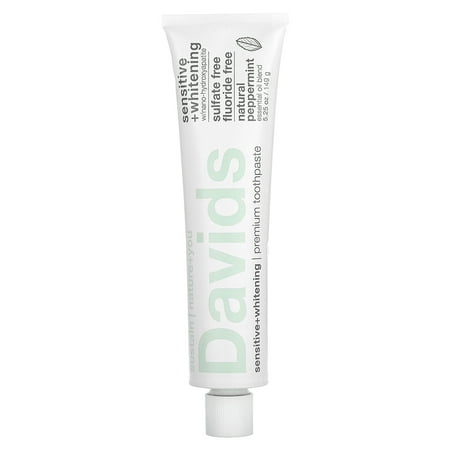
Davids Natural Toothpaste Premium Toothpaste Sensitive + Whitening Natural Peppermint 5.25 oz (149 g)
Summary
This toothpaste features a clean formula with beneficial ingredients like xylitol and hydroxyapatite, which support oral health by reducing cavity-causing bacteria and remineralizing enamel. The absence of harmful chemicals such as SLS, fluoride, and artificial additives contributes to its high rating. Its minimal processing and use of natural mint oils further enhance its safety and effectiveness for oral care.
At a glance
Key ingredients 14
calcium carbonateNeutral
Calcium carbonate is a common abrasive used in toothpaste to help remove plaque and surface stains. It is generally considered safe and effective for oral care. However, it does not provide any additional antimicrobial or remineralizing benefits.
Risks
There are no significant risks associated with calcium carbonate in toothpaste.
Benefits
It helps in cleaning teeth by acting as a mild abrasive.
vegetable glycerinNeutral
Vegetable glycerin is used in toothpaste as a humectant to retain moisture and prevent the paste from drying out. It is derived from plant oils and is generally considered safe. It does not contribute to oral health directly but aids in maintaining the product's texture.
Risks
There are no significant risks associated with vegetable glycerin in toothpaste.
Benefits
It helps maintain the moisture and consistency of the toothpaste.
purified waterNeutral
Purified water is used as a solvent in toothpaste formulations. It helps dissolve other ingredients and provides the necessary consistency for the paste. It does not have any direct impact on oral health.
Risks
There are no risks associated with purified water in toothpaste.
Benefits
It acts as a solvent and helps in mixing other ingredients.
sodium bicarbonate
Sodium bicarbonate, or baking soda, is a gentle abrasive that helps in cleaning teeth and neutralizing acids in the mouth. It is known for its ability to help whiten teeth and freshen breath. It is considered safe and beneficial for oral care.
Risks
There are minimal risks associated with sodium bicarbonate, though excessive use can lead to enamel wear.
Benefits
It acts as a gentle abrasive and neutralizes acids, promoting oral health.
xylitolVery Good
Xylitol is a natural sweetener that has been shown to reduce cavity-causing bacteria in the mouth. It helps in maintaining oral health by inhibiting the growth of harmful bacteria. It is considered highly beneficial in toothpaste formulations.
Risks
There are no significant risks associated with xylitol in toothpaste.
Benefits
It reduces cavity-causing bacteria and promotes oral health.
hydrated silicaNeutral
Hydrated silica is used as an abrasive in toothpaste to help remove plaque and surface stains. It is generally considered safe for use in oral care products. However, it does not provide any additional antimicrobial or remineralizing benefits.
Risks
Excessive use of hydrated silica can lead to enamel wear over time.
Benefits
It helps in cleaning teeth by acting as an abrasive.
hydroxyapatiteVery Good
Hydroxyapatite is a biomimetic mineral that helps in remineralizing tooth enamel. It is considered highly beneficial for oral health as it strengthens teeth and reduces sensitivity. It is a safe and effective alternative to fluoride.
Risks
There are no significant risks associated with hydroxyapatite in toothpaste.
Benefits
It remineralizes enamel and strengthens teeth, reducing sensitivity.
sodium cocoyl glutamateNeutral
Sodium cocoyl glutamate is a mild surfactant derived from coconut oil and glutamic acid. It is used to help the toothpaste foam and spread evenly in the mouth. It is considered safe and gentle for oral care.
Risks
There are no significant risks associated with sodium cocoyl glutamate in toothpaste.
Benefits
It helps in foaming and spreading the toothpaste evenly.
carrageenanNeutral
Carrageenan is used as a thickening agent in toothpaste to provide the desired texture and consistency. It is derived from seaweed and is generally considered safe for use in oral care products. It does not have any direct impact on oral health.
Risks
There are no significant risks associated with carrageenan in toothpaste.
Benefits
It acts as a thickening agent, providing the desired texture.
mentha piperita (peppermint oil)
Peppermint oil is used in toothpaste for its natural antimicrobial properties and ability to freshen breath. It is considered beneficial for oral health as it helps reduce bacteria and provides a refreshing taste. It is a safe and effective ingredient in oral care products.
Risks
There are no significant risks associated with peppermint oil in toothpaste.
Benefits
It provides antimicrobial benefits and freshens breath.
mentha viridis (spearmint oil)
Spearmint oil is used in toothpaste for its natural antimicrobial properties and ability to freshen breath. It is considered beneficial for oral health as it helps reduce bacteria and provides a refreshing taste. It is a safe and effective ingredient in oral care products.
Risks
There are no significant risks associated with spearmint oil in toothpaste.
Benefits
It provides antimicrobial benefits and freshens breath.
pimpinella anisum (anise oil)Neutral
Anise oil is used in toothpaste for its flavoring properties. It provides a unique taste and can help freshen breath. It does not have significant antimicrobial or remineralizing benefits.
Risks
There are no significant risks associated with anise oil in toothpaste.
Benefits
It provides flavor and helps freshen breath.
gaultheria procumbens (wintergreen oil)Neutral
Wintergreen oil is used in toothpaste for its flavoring properties and ability to freshen breath. It provides a unique taste and can help improve the sensory experience of brushing. It does not have significant antimicrobial or remineralizing benefits.
Risks
There are no significant risks associated with wintergreen oil in toothpaste.
Benefits
It provides flavor and helps freshen breath.
stevia
Stevia is a natural sweetener used in toothpaste to provide a pleasant taste without contributing to tooth decay. It is considered safe and beneficial as it does not promote cavities. It is a suitable alternative to artificial sweeteners.
Risks
There are no significant risks associated with stevia in toothpaste.
Benefits
It provides sweetness without promoting cavities.
Processing
Processed Culinary Ingredients
Get the full breakdown in the Scout app
Scan any product to see lab results, healthy alternatives, and your personalized analysis.
Download on theApp Store