
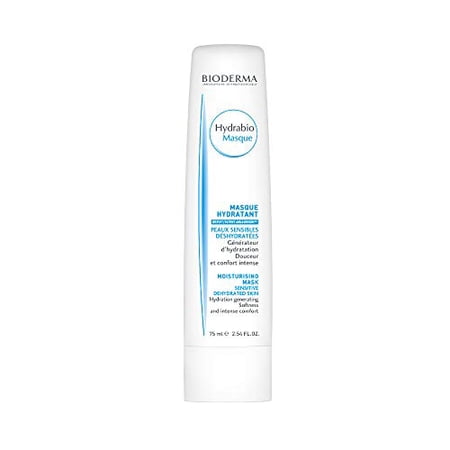
Bioderma - Hydrabio - Mask - Face Moisturizer - Generates Softness and Comfort - for Dehydrated Sensitive Skin
Summary
This face moisturizer contains a mix of beneficial and synthetic ingredients. It includes skin-friendly components like niacinamide and glycerin, which help hydrate and soothe the skin. However, the presence of synthetic preservatives and emulsifiers, which are common in processed skincare products, slightly lowers its overall safety profile. The product is moderately processed, which impacts its score.
At a glance
Key ingredients 9
Aqua
Aqua, or water, is a common solvent used in cosmetics to dissolve other ingredients. It helps in the application and absorption of the product. It is generally considered safe and non-irritating.
Risks
There are no significant risks associated with water in cosmetics.
Benefits
Water helps to hydrate the skin and acts as a carrier for other beneficial ingredients.
Glycerin
Glycerin is a humectant that attracts moisture to the skin, helping to keep it hydrated. It is widely used in skincare products for its moisturizing properties. It is generally well-tolerated and non-irritating.
Risks
In rare cases, glycerin can cause irritation if used in high concentrations.
Benefits
Glycerin helps to maintain skin hydration and improve skin barrier function.
Cyclopentasiloxane
Cyclopentasiloxane is a silicone-based compound used to provide a smooth application and silky feel. It helps to temporarily fill in fine lines and wrinkles. It is considered safe for use in cosmetics.
Risks
There are concerns about its environmental impact as it is not biodegradable.
Benefits
It enhances the texture of the product and provides a smooth, non-greasy finish.
Dicaprylyl Ether
Dicaprylyl Ether is an emollient that helps to soften and smooth the skin. It is used to improve the spreadability of products. It is generally considered safe and non-irritating.
Risks
There are minimal risks associated with its use in cosmetics.
Benefits
It provides a lightweight, non-greasy feel and enhances the skin's softness.
Dimethicone
Dimethicone is a silicone-based polymer used to create a barrier on the skin, preventing moisture loss. It is commonly used in skincare products for its smoothing properties. It is considered safe and non-irritating.
Risks
There are concerns about its occlusive nature potentially trapping dirt and bacteria.
Benefits
It helps to protect the skin from moisture loss and improves the texture of the product.
Xylitol
Xylitol is a sugar alcohol used as a humectant and skin conditioning agent. It helps to retain moisture in the skin. It is generally considered safe and beneficial for skin hydration.
Risks
There are minimal risks associated with its use in cosmetics.
Benefits
Xylitol enhances skin hydration and can improve skin barrier function.
Glycol Palmitate
Glycol Palmitate is an ester used as an emollient and thickening agent in cosmetics. It helps to improve the texture and consistency of products. It is generally considered safe for use in cosmetics.
Risks
There are minimal risks associated with its use in cosmetics.
Benefits
It provides a smooth, creamy texture and enhances the skin's softness.
Cyclohexasiloxane
Cyclohexasiloxane is a silicone used to provide a silky, smooth feel to the skin. It helps to improve the spreadability of products. It is considered safe for use in cosmetics.
Risks
There are concerns about its environmental impact as it is not biodegradable.
Benefits
It enhances the texture of the product and provides a smooth, non-greasy finish.
Corn Starch
Corn Starch is used as an absorbent and thickening agent in cosmetics. It helps to absorb excess oil and improve the texture of products. It is generally considered safe and non-irritating.
Risks
There are minimal risks associated with its use in cosmetics.
Benefits
It provides a matte finish and helps to control oiliness on the skin.
Processing
Processed Foods
Get the full breakdown in the Scout app
Scan any product to see lab results, healthy alternatives, and your personalized analysis.
Download on theApp Store