
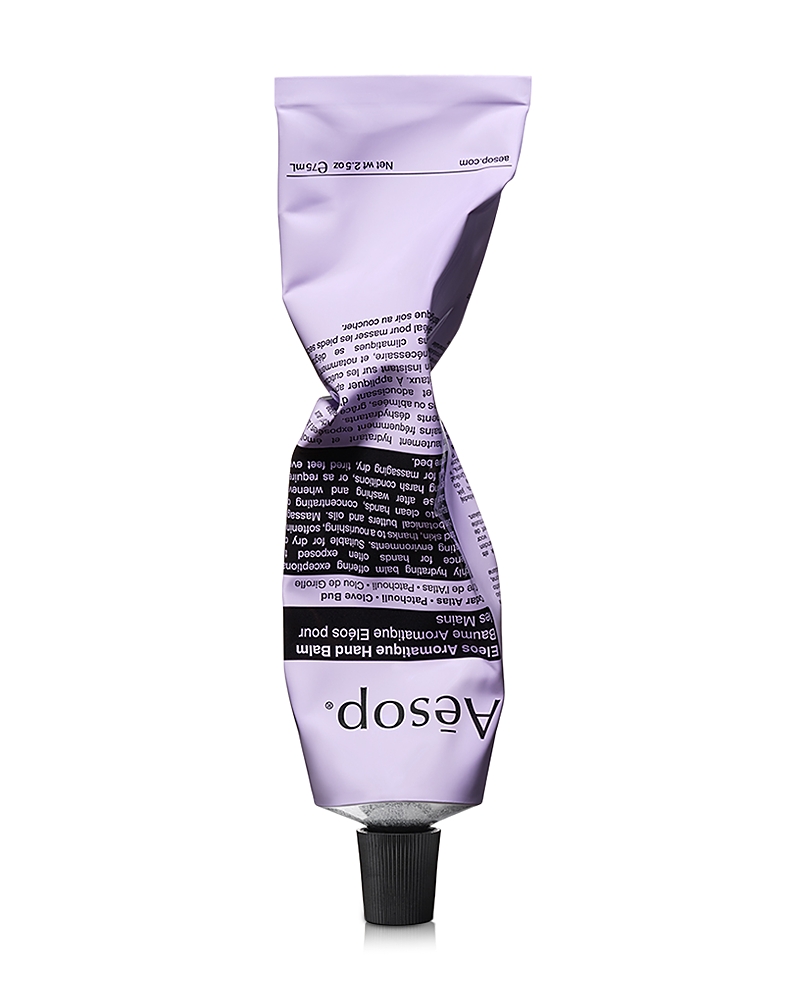


Aesop Eleos Aromatique Hand Balm 2.5 oz.
Summary
The Aesop Eleos Aromatique Hand Balm contains a mix of natural and synthetic ingredients. While it includes beneficial botanicals and natural oils that are good for skin hydration and nourishment, the presence of synthetic fragrance and other processed components lowers its score. The product is moderately processed, which impacts its overall rating, despite having some redeeming natural elements.
At a glance
Key ingredients 9
Water
Water is a universal solvent used in cosmetics to dissolve other ingredients. It helps in the application and absorption of the product. It is essential for hydrating the skin.
Risks
There are no significant risks associated with water in cosmetics.
Benefits
Water hydrates the skin and helps in the absorption of other beneficial ingredients.
Glycerin
Glycerin is a humectant that attracts moisture to the skin, keeping it hydrated. It is commonly used in skincare products for its moisturizing properties. It helps to maintain the skin's water balance.
Risks
There are minimal risks associated with glycerin, though it can be sticky in high concentrations.
Benefits
Glycerin helps to keep the skin moisturized and can improve skin barrier function.
Pentylene Glycol
Pentylene Glycol is used as a moisturizer and solvent in cosmetics. It enhances the absorption of other ingredients into the skin. It also has antimicrobial properties that can help preserve the product.
Risks
In rare cases, it may cause skin irritation, especially in sensitive individuals.
Benefits
Pentylene Glycol helps to hydrate the skin and improve the efficacy of other active ingredients.
Butyrospermum Parkii Butter
Butyrospermum Parkii Butter, also known as Shea Butter, is a natural fat extracted from the nuts of the shea tree. It is rich in vitamins and fatty acids, making it an excellent moisturizer. It helps to soothe and nourish dry skin.
Risks
There are minimal risks, though individuals with nut allergies should patch test before use.
Benefits
Shea Butter deeply moisturizes and nourishes the skin, providing a protective barrier.
Castor Seed Oil
Castor Seed Oil is a vegetable oil obtained from the seeds of the Ricinus communis plant. It is known for its emollient properties, helping to soften and soothe the skin. It also has anti-inflammatory and antimicrobial properties.
Risks
It may cause allergic reactions in some individuals, so a patch test is recommended.
Benefits
Castor Seed Oil helps to moisturize and protect the skin, reducing inflammation and irritation.
Candelilla Wax
Candelilla Wax is a plant-based wax derived from the leaves of the Candelilla shrub. It is used as a thickening agent and emollient in cosmetics. It helps to create a protective barrier on the skin.
Risks
There are minimal risks associated with Candelilla Wax.
Benefits
Candelilla Wax provides a protective barrier and helps to lock in moisture.
Atlas Cedar
Atlas Cedar is an essential oil derived from the wood of the Cedrus atlantica tree. It is used for its aromatic properties and potential skin benefits. It may help to soothe and calm the skin.
Risks
Essential oils can cause irritation or allergic reactions in sensitive individuals.
Benefits
Atlas Cedar may provide a calming effect and contribute to the product's fragrance.
Patchouli
Patchouli is an essential oil obtained from the leaves of the Pogostemon cablin plant. It is used for its fragrance and potential skin benefits. It may help to soothe and balance the skin.
Risks
Patchouli oil can cause skin irritation in some individuals, especially in high concentrations.
Benefits
Patchouli oil provides a distinctive fragrance and may have soothing properties for the skin.
Clove Bud
Clove Bud is an essential oil derived from the flower buds of the clove tree. It is known for its strong aroma and potential antimicrobial properties. It may help to invigorate and refresh the skin.
Risks
Clove oil can be irritating to the skin and should be used in moderation.
Benefits
Clove Bud oil provides a warm, spicy fragrance and may offer antimicrobial benefits.
Processing
Processed Foods
Get the full breakdown in the Scout app
Scan any product to see lab results, healthy alternatives, and your personalized analysis.
Download on theApp Store