
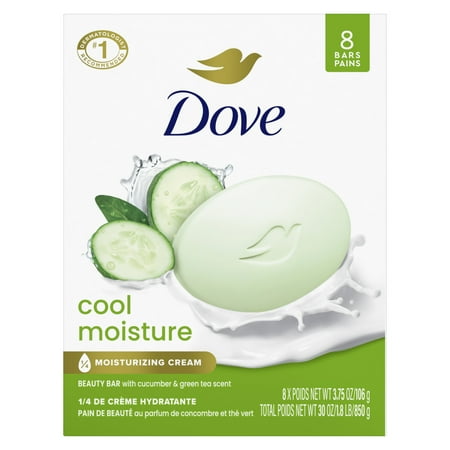

Dove Beauty Bar Women s Bath Soap Cool Moisture Cucumber & Green Tea Scent 3.75 oz 8 Bars
Summary
This beauty bar contains synthetic ingredients and fragrances, which can be potential skin irritants and are not as clean as natural alternatives. The product is moderately processed, which affects its overall rating, and lacks the inclusion of beneficial natural oils or butters that could enhance its safety and effectiveness. While it does not contain the most harmful chemicals, the presence of synthetic components and the level of processing prevent it from scoring higher.
At a glance
Key ingredients 17
Sodium Lauroyl Isethionate
Sodium Lauroyl Isethionate is a mild surfactant used to create a creamy lather. It is less irritating than traditional sulfates. It helps to cleanse the skin without stripping natural oils.
Risks
May cause mild irritation in sensitive individuals.
Benefits
Provides gentle cleansing and is suitable for sensitive skin.
Stearic Acid
Stearic Acid is a fatty acid used as an emulsifier and thickener. It helps to stabilize formulations and improve texture. It is derived from natural sources like vegetable oils.
Risks
Generally considered safe, but may cause minor irritation in some cases.
Benefits
Helps to maintain product consistency and provides a smooth application.
Sodium Oleate
Sodium Oleate is a surfactant and emulsifying agent. It helps to cleanse the skin by breaking down oils and dirt. It is derived from oleic acid, a fatty acid found in natural oils.
Risks
Can cause skin irritation if used in high concentrations.
Benefits
Effective in cleansing and maintaining product stability.
Sodium Stearate
Sodium Stearate is a common soap ingredient that acts as a surfactant and thickener. It helps to create a solid bar form and provides cleansing properties. It is derived from stearic acid.
Risks
May cause dryness or irritation with prolonged use.
Benefits
Contributes to the solid form and cleansing ability of the soap.
Water (Eau)
Water is used as a solvent in cosmetic formulations. It helps to dissolve other ingredients and provides hydration. It is a fundamental component in most personal care products.
Benefits
Essential for dissolving ingredients and providing moisture.
Sodium Isethionate
Sodium Isethionate is a mild surfactant used for its cleansing properties. It is less irritating than traditional sulfates and helps to create a creamy lather. It is often used in formulations for sensitive skin.
Risks
May cause mild irritation in sensitive individuals.
Benefits
Provides gentle cleansing suitable for sensitive skin.
Lauric Acid
Lauric Acid is a fatty acid used for its cleansing and emulsifying properties. It is derived from coconut oil and helps to stabilize formulations. It is known for its antimicrobial properties.
Risks
Can cause irritation in high concentrations.
Benefits
Provides cleansing and antimicrobial benefits.
Sodium C14-16 Olefin Sulfonate
Sodium C14-16 Olefin Sulfonate is a surfactant used for its strong cleansing properties. It helps to remove oils and dirt from the skin. It is often used as an alternative to sulfates.
Risks
Can be drying and irritating to the skin with frequent use.
Benefits
Effective in removing oils and dirt from the skin.
Sodium Laurate
Sodium Laurate is a surfactant and emulsifier used in soap formulations. It helps to cleanse the skin by breaking down oils. It is derived from lauric acid, a fatty acid found in coconut oil.
Risks
May cause skin irritation in sensitive individuals.
Benefits
Provides effective cleansing and helps to stabilize formulations.
Fragrance (Parfum)
Fragrance is used to impart a pleasant scent to the product. It is a blend of aromatic compounds. Fragrance can enhance the user experience.
Risks
Can cause allergic reactions and skin irritation in sensitive individuals.
Benefits
Improves the sensory experience of the product.
Dipropylene Glycol
Dipropylene Glycol is a solvent and humectant used to improve texture and moisture retention. It helps to dissolve other ingredients and provides a smooth application. It is commonly used in personal care products.
Risks
Generally considered safe, but may cause irritation in sensitive individuals.
Benefits
Enhances texture and helps to retain moisture in the skin.
Tetrasodium Etidronate
Tetrasodium Etidronate is a chelating agent used to stabilize formulations. It helps to prevent the deterioration of the product by binding metal ions. It is commonly used in soap and detergent formulations.
Risks
May cause irritation in sensitive individuals.
Benefits
Helps to maintain product stability and extend shelf life.
Tetrasodium EDTA
Tetrasodium EDTA is a chelating agent used to improve product stability. It binds metal ions to prevent them from affecting the product's performance. It is widely used in personal care products.
Risks
Can cause skin irritation in sensitive individuals.
Benefits
Enhances product stability and prevents spoilage.
Sodium Chloride
Sodium Chloride is used as a thickening agent and to adjust the viscosity of formulations. It is commonly known as table salt. It helps to improve the texture of the product.
Risks
Generally safe, but excessive use can lead to dryness.
Benefits
Contributes to the product's texture and consistency.
Titanium Dioxide (CI 77891)
Titanium Dioxide is a mineral used as a whitening agent and UV filter. It helps to provide opacity and sun protection. It is commonly used in cosmetics for its reflective properties.
Risks
Inhalation of fine particles can be harmful, but topical use is generally safe.
Benefits
Provides sun protection and improves product appearance.
Yellow 5 (CI 19140)
Yellow 5 is a synthetic dye used to impart color to the product. It is commonly used in cosmetics and personal care products. It helps to enhance the visual appeal of the product.
Risks
May cause allergic reactions in sensitive individuals.
Benefits
Improves the visual appeal of the product.
Blue 1 (CI 42090)
Blue 1 is a synthetic dye used to provide color to the product. It is widely used in cosmetics and personal care products. It enhances the product's visual appeal.
Risks
Can cause allergic reactions in sensitive individuals.
Benefits
Enhances the visual appeal of the product.
Processing
Processed Foods
Get the full breakdown in the Scout app
Scan any product to see lab results, healthy alternatives, and your personalized analysis.
Download on theApp Store