
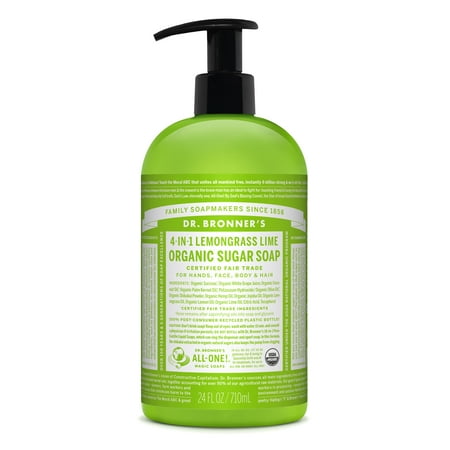


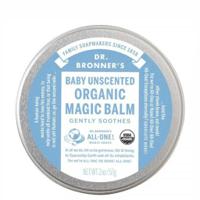
Dr. Bronner s Organic Sugar Soap – Lemongrass Lime – 24 oz
Dr. Bronner'sAnalysis updated July 2026 · How Scout scores
At a glance
Summary
Dr. Bronner's Organic Sugar Soap features a clean ingredient list with natural oils and botanicals, such as organic coconut, olive, and hemp oils, which are beneficial for skin health. The product avoids harsh chemicals like SLS, parabens, and synthetic fragrances, contributing to its high score. Its minimal processing and use of organic ingredients further enhance its safety and appeal.
Key ingredients 7
organic coconut oilVery Good
Organic coconut oil is a natural emollient that helps to moisturize and soften the skin. It is rich in fatty acids that support the skin barrier. Its antimicrobial properties can also benefit skin health.
Risks
Coconut oil may clog pores in some individuals, leading to breakouts.
Benefits
It provides deep hydration and can improve skin texture and barrier function.
organic olive oilVery Good
Organic olive oil is a nourishing oil rich in vitamins and antioxidants. It helps to moisturize and protect the skin. Its anti-inflammatory properties can soothe irritated skin.
Risks
There is a low risk of allergic reaction, though it is generally well-tolerated.
Benefits
It provides deep hydration and supports skin health with its antioxidant content.
organic white grape juiceGood
Organic white grape juice contains antioxidants that can help protect the skin from oxidative stress. It is a natural ingredient that is generally well-tolerated. Its use in cosmetics is primarily for its antioxidant properties.
Risks
There is a low risk of irritation or allergic reaction, particularly in individuals with grape allergies.
Benefits
The antioxidants in grape juice can help to protect the skin from environmental damage and support skin health.
organic palm kernel oilGood
Organic palm kernel oil is used for its moisturizing properties and ability to create a creamy lather. It is rich in lauric acid, which has antimicrobial properties. It is generally considered safe for topical use.
Risks
Sustainability concerns exist with palm oil production, though organic sourcing mitigates some environmental impact.
Benefits
It helps to moisturize the skin and can contribute to a rich lather in cleansing products.
organic shikakai powderGood
Organic shikakai powder is a natural cleanser that is gentle on the skin. It is traditionally used in Ayurvedic practices for its cleansing and conditioning properties. It is generally safe and beneficial for skin and hair care.
Risks
There is a low risk of irritation, particularly in individuals with sensitive skin.
Benefits
It helps to cleanse the skin without stripping natural oils, leaving it soft and conditioned.
organic sucroseNeutral
Organic sucrose is a natural sugar used for its gentle exfoliating properties. It is generally considered safe for topical use. However, it does not provide significant skin benefits beyond exfoliation.
Risks
There are minimal risks associated with topical use of sucrose, though it may cause irritation in sensitive individuals.
Benefits
Sucrose can help to gently remove dead skin cells, promoting a smoother skin texture.
potassium hydroxideNeutral
Potassium hydroxide is used in small amounts to adjust the pH of cosmetic products. It is a strong alkali that can be irritating in high concentrations. In properly formulated products, it is safe and effective.
Risks
In high concentrations, it can cause skin irritation or burns.
Benefits
It helps to maintain the stability and effectiveness of the product by ensuring the correct pH.
Get the full breakdown in the Scout appTake Scout shopping
Scan any product to see lab results, healthy alternatives, and your personalized analysis.
Download on theApp Store GET IT ONGoogle PlayAmazon pricing & content
Amazon price as of . Product prices and availability are accurate as of the date/time indicated and are subject to change. Any price and availability information displayed on Amazon.com at the time of purchase will apply to the purchase of this product.
CERTAIN CONTENT THAT APPEARS ON THIS SITE COMES FROM AMAZON. THIS CONTENT IS PROVIDED “AS IS” AND IS SUBJECT TO CHANGE OR REMOVAL AT ANY TIME.