
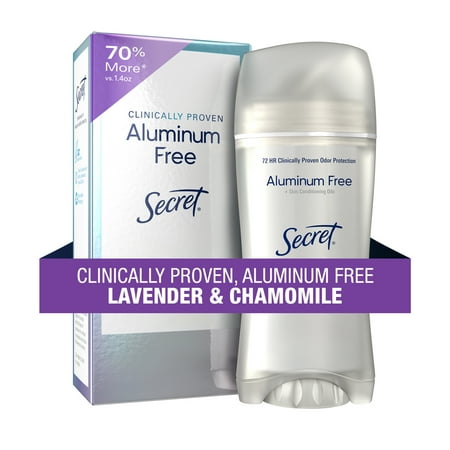
Secret Clinically Proven Aluminum Free Deodorant Stick for Women Lavender & Chamomile 2.4oz
Summary
This deodorant is aluminum-free, which is a positive aspect for those avoiding aluminum compounds. It contains magnesium hydroxide, a beneficial ingredient for odor control, and lavender oil, which is naturally derived. However, the presence of synthetic fragrance and mineral oil, along with other processed ingredients, slightly lowers its overall rating compared to more natural alternatives.
At a glance
Key ingredients 14
CYCLOPENTASILOXANEBad
Cyclopentasiloxane is a silicone-based compound used for its smooth application properties. It is considered very persistent and bioaccumulative in the environment. Its use is restricted in some regions due to these environmental concerns.
Risks
Potential environmental persistence and bioaccumulation.
Benefits
Provides a smooth application and quick-drying effect.
STEARYL ALCOHOLNeutral
Stearyl alcohol is a fatty alcohol used as an emollient and thickener. It is generally considered safe for use in cosmetics. It does not pose significant health risks.
Risks
Minimal risk of skin irritation.
Benefits
Helps to stabilize and thicken formulations.
MAGNESIUM HYDROXIDEVery Good
Magnesium hydroxide is a natural mineral used for its odor-neutralizing properties. It raises the pH of the skin, which helps to inhibit the growth of odor-causing bacteria. It is a gentle alternative to baking soda.
Risks
Generally considered safe with minimal risks.
Benefits
Effective natural odor neutralizer without causing irritation.
MINERAL OILNeutral
Mineral oil is a byproduct of petroleum distillation used for its moisturizing properties. It forms a barrier on the skin to prevent moisture loss. It is non-comedogenic and generally safe for use.
Risks
Potential for contamination with impurities if not properly refined.
Benefits
Provides effective moisture retention.
PPG-14 BUTYL ETHERBad
PPG-14 Butyl Ether is a synthetic compound used as a solvent and emollient. It is derived from petrochemicals and can cause skin irritation in some individuals. Its environmental impact is also a concern.
Risks
Potential skin irritant and environmental pollutant.
Benefits
Improves the spreadability of the product.
HYDROGENATED CASTOR OILNeutral
Hydrogenated castor oil is used as an emollient and thickening agent. It is derived from castor oil and is generally considered safe for use in cosmetics. It helps to improve the texture of the product.
Risks
Low risk of skin irritation.
Benefits
Enhances product texture and stability.
CYCLODEXTRINNeutral
Cyclodextrin is a carbohydrate used to encapsulate and release fragrance over time. It is derived from starch and is considered safe for use. It helps to control odor by trapping and releasing fragrance.
Risks
Minimal risk of irritation.
Benefits
Provides controlled fragrance release.
PETROLATUMNeutral
Petrolatum is a semi-solid mixture of hydrocarbons used for its occlusive properties. It helps to lock in moisture and protect the skin barrier. It is generally considered safe when properly refined.
Risks
Potential contamination with impurities if not properly refined.
Benefits
Effective in preventing moisture loss.
FRAGRANCEBad
Fragrance is a complex mixture of aromatic compounds used to impart scent. It can contain phthalates and other allergens, posing risks of skin irritation and endocrine disruption. Its composition is often undisclosed, leading to transparency concerns.
Risks
Potential skin irritant and endocrine disruptor.
Benefits
Provides a pleasant scent.
MAGNESIUM CARBONATEGood
Magnesium carbonate is used for its moisture-absorbing properties. It helps to keep the skin dry and reduce odor. It is a natural mineral and is generally considered safe for use.
Risks
Minimal risk of irritation.
Benefits
Helps to absorb moisture and control odor.
PIROCTONE OLAMINENeutral
Piroctone olamine is an antifungal agent used to control dandruff and odor. It is effective against fungi and bacteria that cause odor. It is generally considered safe for use in cosmetics.
Risks
Low risk of skin irritation.
Benefits
Helps to control odor-causing microorganisms.
BEHENYL ALCOHOLNeutral
Behenyl alcohol is a fatty alcohol used as an emollient and thickener. It is derived from natural sources and is considered safe for use. It helps to improve the texture and stability of the product.
Risks
Minimal risk of skin irritation.
Benefits
Enhances product texture and stability.
CORN STARCH/ MALTODextrin CROSSPOLYMERGood
Corn starch/maltodextrin crosspolymer is used for its moisture-absorbing properties. It helps to keep the skin dry and reduce odor. It is derived from natural sources and is generally considered safe for use.
Risks
Minimal risk of irritation.
Benefits
Effective in absorbing moisture and controlling odor.
LAVANDULA ANGUSTIFOLIA (LAVENDER) OILGood
Lavender oil is a natural essential oil known for its antimicrobial and soothing properties. It helps to control odor and provides a calming scent. It is generally considered safe for use in cosmetics.
Risks
Potential allergen for sensitive individuals.
Benefits
Provides antimicrobial benefits and a pleasant scent.
Processing
Processed Foods
Get the full breakdown in the Scout app
Scan any product to see lab results, healthy alternatives, and your personalized analysis.
Download on theApp Store