
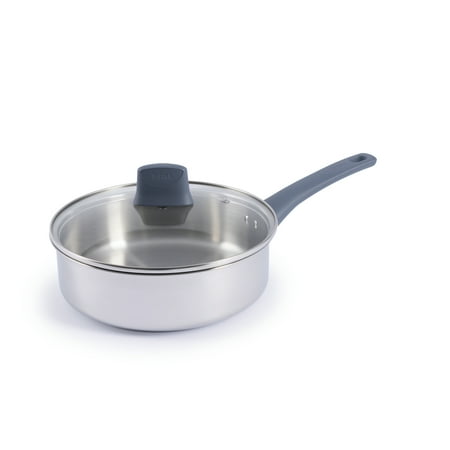
T-fal Daily Cook Stainless Steel Cookware Collection 3.5 Quart Sauté Pan With Lid Ocean Blue Handle
Summary
This cookware is made from stainless steel, which is a safe and durable material for food contact. It does not contain any harmful coatings or plastics, making it an excellent choice for health-conscious cooking. The use of stainless steel ensures minimal risk of leaching harmful substances into food.
At a glance
Key ingredients 6
Stainless Steel
Stainless steel is a durable and non-reactive material commonly used in cookware. It is resistant to rust and corrosion, making it ideal for food contact. It does not leach harmful chemicals into food.
Risks
There are minimal risks associated with stainless steel, though it may contain trace amounts of nickel and chromium.
Benefits
Stainless steel is considered very good for food contact due to its durability and non-reactive nature.
Chromium
Chromium is an essential component of stainless steel, contributing to its corrosion resistance. It forms a passive layer on the surface that prevents rusting. It is generally safe in the amounts used in stainless steel.
Risks
Excessive exposure to chromium can be harmful, but the amounts in stainless steel are typically safe.
Benefits
Chromium enhances the durability and longevity of stainless steel cookware.
Nickel
Nickel is added to stainless steel to improve its corrosion resistance and enhance its appearance. It helps maintain the structural integrity of the cookware. It is generally safe in the amounts used in stainless steel.
Risks
Some individuals may have allergic reactions to nickel, though exposure from stainless steel is minimal.
Benefits
Nickel contributes to the strength and corrosion resistance of stainless steel.
Iron
Iron is a primary component of stainless steel, providing strength and durability. It is a stable element that does not react with food. It is safe for use in cookware.
Risks
There are no significant risks associated with iron in stainless steel cookware.
Benefits
Iron contributes to the overall strength and durability of stainless steel cookware.
Manganese
Manganese is used in stainless steel to improve its hardness and resistance to wear. It is a stable element that does not leach into food. It is safe for use in cookware.
Risks
Excessive exposure to manganese can be harmful, but the amounts in stainless steel are typically safe.
Benefits
Manganese enhances the hardness and wear resistance of stainless steel.
Phosphorus
Phosphorus is occasionally used in stainless steel to improve its machinability. It is present in very small amounts and does not pose a risk to food safety. It is generally considered safe in cookware.
Risks
There are no significant risks associated with phosphorus in stainless steel cookware.
Benefits
Phosphorus can improve the machinability of stainless steel, aiding in the manufacturing process.
Processing
Unprocessed or Minimally Processed Foods
Get the full breakdown in the Scout app
Scan any product to see lab results, healthy alternatives, and your personalized analysis.
Download on theApp Store