
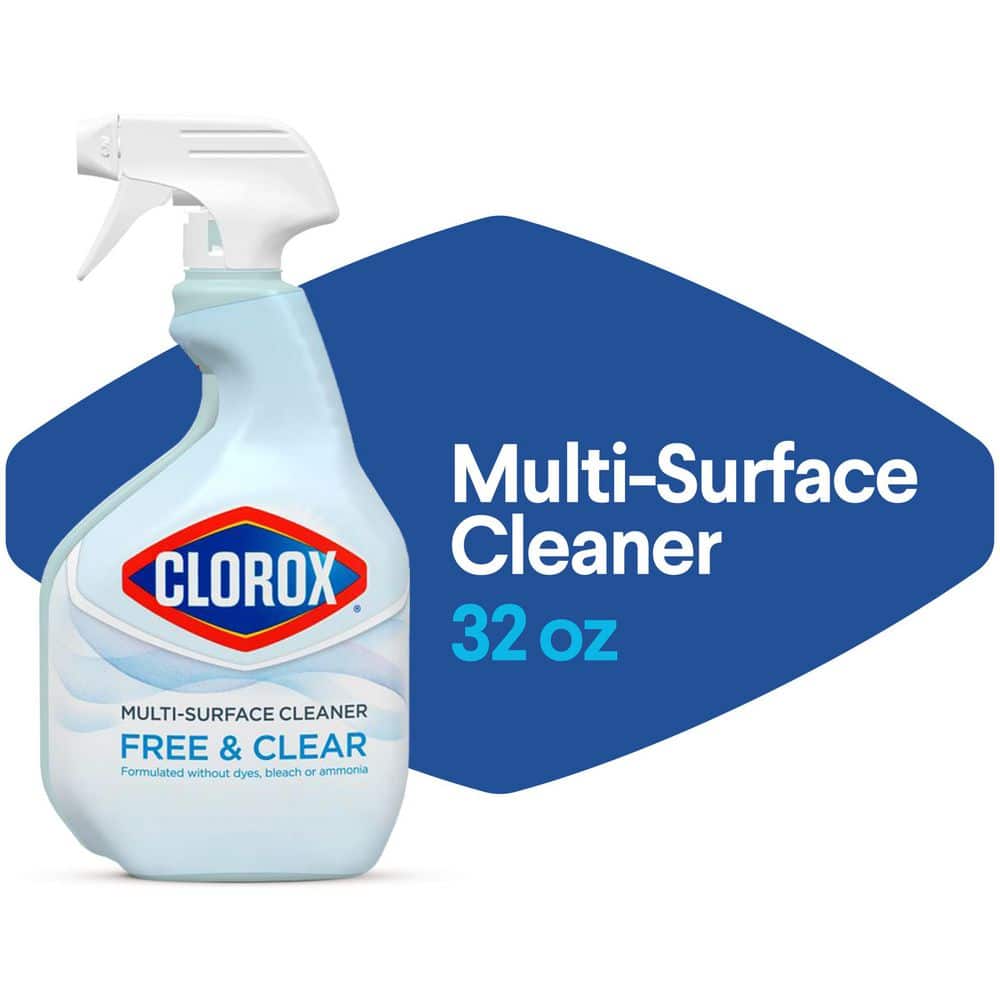

Clorox Free & Clear Multi Surface Cleaner Spray Bottle Fragrance Free 32 fl oz
Summary
This cleaning product is fragrance-free and contains no harsh chemicals like sodium lauryl sulfate or synthetic fragrances, which are often associated with indoor air quality concerns. Its formulation is based on safer, plant-derived ingredients, making it suitable for those seeking environmentally friendly and non-toxic cleaning solutions. The minimal processing and absence of harmful additives contribute to its high safety and environmental score.
At a glance
Key ingredients 9
Water
Water is a universal solvent and is used as a base in many cleaning products. It helps dissolve other ingredients and facilitates the cleaning process. It is generally considered safe and non-toxic.
Risks
There are no significant risks associated with water in cleaning products.
Benefits
Water is essential for diluting other ingredients and ensuring they are evenly distributed on surfaces.
Caprylyl/Capryl Glucoside
Caprylyl/Capryl Glucoside is a mild, plant-derived surfactant used for its cleaning and foaming properties. It is derived from coconut oil and glucose, making it biodegradable and environmentally friendly. It is considered safe for use in cleaning products.
Risks
There are minimal risks associated with this ingredient, though it may cause mild irritation in sensitive individuals.
Benefits
This ingredient is effective in breaking down oils and dirt, making it a beneficial component in cleaning formulations.
Lauryl Glucoside
Lauryl Glucoside is a non-ionic surfactant derived from natural sources like coconut oil and glucose. It is known for its mildness and is often used in eco-friendly cleaning products. It is biodegradable and considered safe for use.
Risks
It may cause mild irritation if it comes into contact with sensitive skin or eyes.
Benefits
Lauryl Glucoside is effective at removing dirt and grease without being harsh on surfaces or the environment.
Citric Acid
Citric Acid is a natural acid found in citrus fruits and is used in cleaning products for its ability to break down limescale and mineral deposits. It is biodegradable and considered safe for use. It also acts as a pH adjuster in formulations.
Risks
In high concentrations, it can cause irritation to the skin and eyes.
Benefits
Citric Acid is effective in removing hard water stains and enhancing the cleaning power of formulations.
Ethanol
Ethanol is a common solvent and disinfectant used in cleaning products. It is effective at killing bacteria and viruses, making it a valuable component in sanitizing formulations. It evaporates quickly, leaving no residue.
Risks
Ethanol is flammable and can cause irritation if inhaled or if it comes into contact with skin.
Benefits
Ethanol enhances the antimicrobial properties of cleaning products and helps in quick drying.
Sodium Gluconate
Sodium Gluconate is a chelating agent that helps to stabilize cleaning formulations by binding to metal ions. It is biodegradable and considered safe for use in cleaning products. It enhances the effectiveness of surfactants.
Risks
There are minimal risks associated with Sodium Gluconate, though it may cause mild irritation in sensitive individuals.
Benefits
It improves the performance of cleaning agents by preventing metal ions from interfering with their action.
Potassium Citrate
Potassium Citrate is used as a buffering agent to maintain the pH balance of cleaning products. It is derived from citric acid and is biodegradable. It helps to enhance the stability and effectiveness of the formulation.
Risks
There are minimal risks associated with Potassium Citrate, though it may cause mild irritation if it comes into contact with skin or eyes.
Benefits
It helps to maintain the desired pH level, ensuring the product remains effective over time.
Potassium Carbonate
Potassium Carbonate is used as a pH adjuster and water softener in cleaning products. It helps to enhance the cleaning power by preventing the formation of insoluble salts. It is generally considered safe for use.
Risks
In high concentrations, it can cause irritation to the skin and eyes.
Benefits
It improves the effectiveness of cleaning agents by softening water and maintaining an optimal pH level.
Sodium Hydroxide
Sodium Hydroxide is a strong alkaline compound used to adjust the pH of cleaning products. It is effective at breaking down grease and organic matter. It is used in controlled amounts to ensure safety.
Risks
Sodium Hydroxide can be corrosive and cause severe irritation or burns if not handled properly.
Benefits
In small, controlled amounts, it enhances the cleaning power of formulations by breaking down tough stains and residues.
Processing
Unprocessed or Minimally Processed Foods
Get the full breakdown in the Scout app
Scan any product to see lab results, healthy alternatives, and your personalized analysis.
Download on theApp Store