
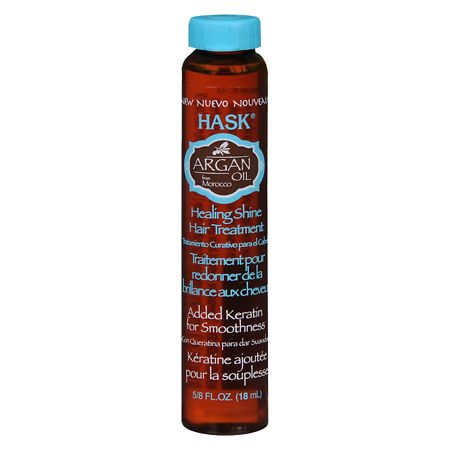
Hask Argan Oil Healing Shine Hair Treatment 0.63 FL OZ
Summary
This hair treatment contains beneficial natural oils like argan and grape seed oil, which are known for their nourishing properties. However, it also includes synthetic preservatives and dyes, such as phenoxyethanol and CI 26100, which can cause skin irritation and allergic reactions. The presence of these synthetic ingredients and the processing level of the product contribute to a moderate score, balancing the beneficial and potentially harmful components.
At a glance
Key ingredients 18
C13-14 IsoalkaneNeutral
C13-14 Isoalkane is a synthetic hydrocarbon used as an emollient and solvent. It is derived from petroleum and undergoes significant processing to ensure purity and safety. It is generally considered safe for topical use but offers no direct health benefits.
DimethiconolNeutral
Dimethiconol is a silicone-based polymer used for its conditioning properties in hair care products. It is synthesized through chemical processes that ensure its stability and effectiveness. While it provides a smooth feel, it does not offer nutritional benefits.
See more about Dimethiconol →C10-11 IsoalkaneNeutral
C10-11 Isoalkane is a synthetic emollient and solvent similar to C13-14 Isoalkane. It is produced through refining processes to achieve a high level of purity. It is safe for use in cosmetics but does not provide health benefits.
Argania Spinosa (Argan) Kernel OilVery Good
Argan oil is a natural oil extracted from the kernels of the Argan tree, known for its moisturizing and nourishing properties. It is minimally processed to retain its beneficial fatty acids and antioxidants. This oil is highly valued for its ability to improve hair health and shine.
Benefits
Rich in essential fatty acids and vitamin E, which support hair health and provide antioxidant protection.
Keratin Amino AcidsGood
Keratin amino acids are derived from the hydrolysis of keratin, a protein that strengthens hair. They are processed to enhance absorption and effectiveness in hair care products. These amino acids help repair and strengthen hair fibers.
Benefits
Contributes to hair strength and repair by replenishing lost proteins.
Glycine Soja (Soybean) OilGood
Soybean oil is a natural oil extracted from soybeans, used for its emollient properties. It is processed to remove impurities and enhance stability. This oil provides essential fatty acids that nourish and condition hair.
Benefits
Contains essential fatty acids that help moisturize and condition hair.
Vitis Vinifera (Grape) Seed OilGood
Grape seed oil is a lightweight oil extracted from grape seeds, known for its antioxidant properties. It is cold-pressed to preserve its beneficial compounds. This oil helps protect hair from oxidative stress and adds shine.
Benefits
Rich in antioxidants and vitamin E, which help protect and nourish hair.
Citrus Aurantium Dulcis (Orange) OilGood
Orange oil is a natural essential oil extracted from orange peels, used for its fragrance and potential antimicrobial properties. It is obtained through cold pressing to maintain its aromatic compounds. This oil can provide a refreshing scent and mild antimicrobial benefits.
Risks
May cause skin irritation in sensitive individuals.
Benefits
Offers a pleasant fragrance and potential antimicrobial properties.
TocopherolVery Good
Tocopherol, also known as vitamin E, is a natural antioxidant used to protect the product from oxidation. It is derived from natural sources and minimally processed to retain its efficacy. This ingredient helps protect hair and skin from free radical damage.
Benefits
Acts as an antioxidant, protecting hair and skin from oxidative stress.
Aqua/Water/EauNeutral
Water is used as a solvent and carrier for other ingredients in the formulation. It is purified to remove impurities and ensure safety. While essential for formulation, it does not provide direct health benefits.
See more about Aqua/Water/Eau →Butylene GlycolNeutral
Butylene glycol is a synthetic alcohol used as a solvent and conditioning agent. It is produced through chemical synthesis to ensure purity and effectiveness. It helps improve the texture and spreadability of the product.
See more about Butylene Glycol →PhenoxyethanolBad
Phenoxyethanol is a synthetic preservative used to prevent microbial growth in cosmetics. It is chemically synthesized and considered effective at low concentrations. However, it can cause skin irritation and allergic reactions in some individuals.
Risks
Potential skin irritant and allergen, especially in sensitive individuals.
EthylhexylglycerinNeutral
Ethylhexylglycerin is a synthetic compound used as a preservative and skin conditioning agent. It is produced through chemical processes to ensure stability and effectiveness. It enhances the efficacy of other preservatives in the formulation.
See more about Ethylhexylglycerin →CitralBad
Citral is a natural fragrance compound found in citrus oils, used for its lemon scent. It is extracted through distillation but can cause allergic reactions in sensitive individuals. While it provides a pleasant aroma, it poses a risk of skin sensitization.
Risks
Potential allergen and skin sensitizer, especially in sensitive individuals.
LimoneneBad
Limonene is a natural compound found in citrus oils, used for its fragrance and potential antimicrobial properties. It is extracted through cold pressing but can oxidize and cause skin irritation. While it offers a fresh scent, it may trigger allergic reactions.
Risks
Potential skin irritant and allergen, especially when oxidized.
LinaloolBad
Linalool is a naturally occurring terpene alcohol found in many flowers and spice plants, used for its pleasant scent. It is extracted through steam distillation but can cause allergic reactions in some individuals. While it provides fragrance, it may lead to skin sensitization.
Risks
Potential allergen and skin sensitizer, especially in sensitive individuals.
CI 26100 (Red 17)Bad
CI 26100, also known as Red 17, is a synthetic dye used for coloring cosmetics. It is chemically synthesized and may contain impurities that pose health risks. While it provides color, it offers no health benefits and may cause irritation.
Risks
Potential skin irritant and may contain harmful impurities.
CI 47000 (Yellow 11)Bad
CI 47000, also known as Yellow 11, is a synthetic dye used to impart color to cosmetic products. It is produced through chemical synthesis and may contain impurities that are concerning. While it enhances visual appeal, it offers no health benefits and may cause irritation.
Risks
Potential skin irritant and may contain harmful impurities.
Processing
Processed Foods
Get the full breakdown in the Scout app
Scan any product to see lab results, healthy alternatives, and your personalized analysis.
Download on theApp Store