
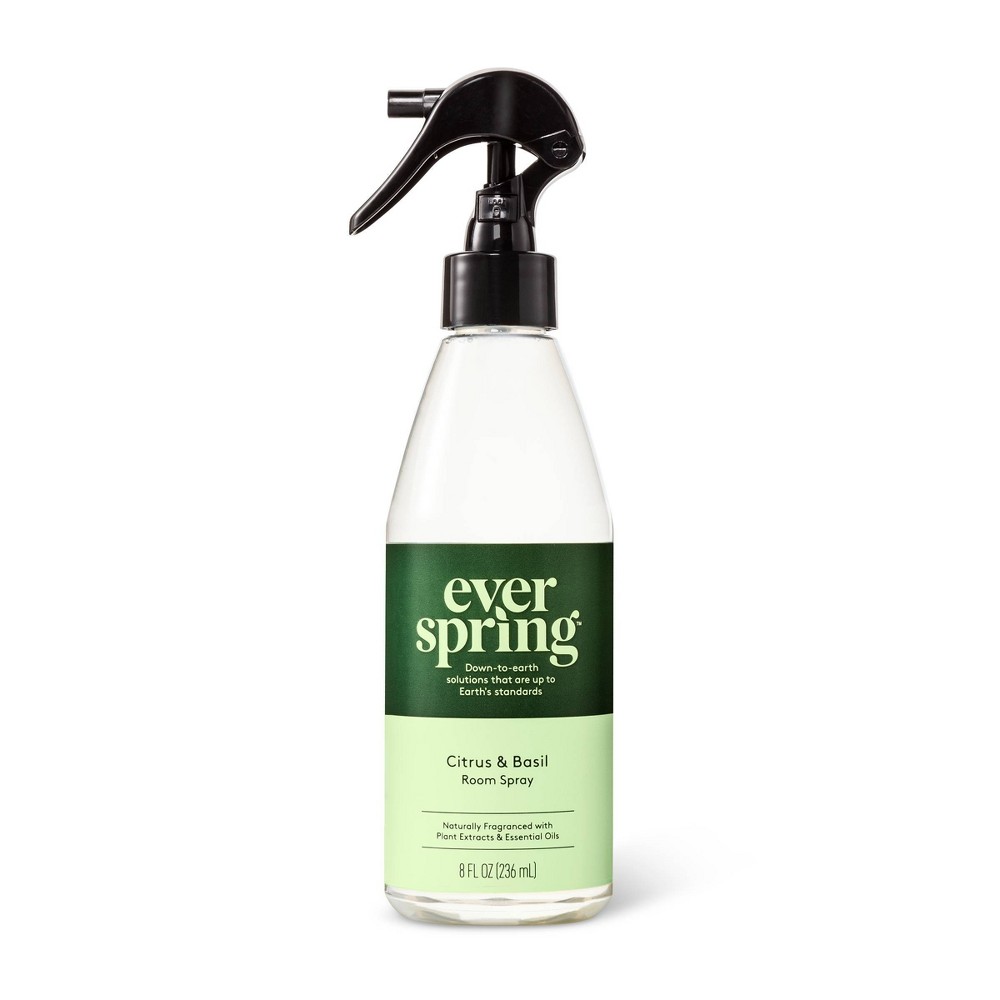

Room Spray - Citrus & Basil - 8 fl oz - Everspring™: Non-Powered, Liquid Spray
Summary
This room spray contains several natural essential oils such as lemon, bergamot, lavandin, orange, and basil oils, which are beneficial for their aromatic and potential antibacterial properties. However, the presence of synthetic preservatives like methylchloroisothiazolinone and methylisothiazolinone, which are associated with skin sensitization and allergic reactions, impacts its overall safety and environmental friendliness. The product's processing level also limits its score, as it includes both natural and synthetic components.
At a glance
Key ingredients 12
WaterNeutral
Water is a common solvent used in many products. It helps to dissolve other ingredients and distribute them evenly. It is generally considered safe and non-toxic.
Risks
There are no significant risks associated with water in this context.
Benefits
Water is essential for dissolving and mixing other ingredients effectively.
EthanolNeutral
Ethanol is used as a solvent and preservative in many products. It helps to dissolve oils and other ingredients. It is generally safe in the concentrations used in air fresheners.
Risks
Inhalation of high concentrations can cause irritation or dizziness.
Benefits
Ethanol is effective in dissolving essential oils and other components.
PEG-40 Hydrogenated Castor OilNeutral
PEG-40 Hydrogenated Castor Oil is used as an emulsifier to help mix oil and water. It is a derivative of castor oil and is commonly used in personal care products. It is generally considered safe for topical use.
Risks
There is a potential for skin irritation in sensitive individuals.
Benefits
It helps to stabilize the mixture of ingredients, ensuring even distribution.
Natural FragranceNeutral
Natural fragrance is used to provide a pleasant scent to the product. It is derived from natural sources such as essential oils. It is generally considered safer than synthetic fragrances.
Risks
Some individuals may experience allergic reactions to certain natural fragrances.
Benefits
Natural fragrances are less likely to contain harmful chemicals compared to synthetic ones.
Lemon OilVery Good
Lemon oil is a natural essential oil known for its fresh scent and antibacterial properties. It is derived from the peel of lemons. It is considered safe and beneficial in air fresheners.
Risks
May cause skin irritation if applied directly in high concentrations.
Benefits
Lemon oil provides a refreshing scent and has natural antibacterial properties.
Bergamot OilVery Good
Bergamot oil is a natural essential oil with a citrusy scent. It is derived from the peel of bergamot oranges. It is valued for its uplifting aroma and potential mood-enhancing effects.
Risks
Can cause skin sensitivity when exposed to sunlight.
Benefits
Bergamot oil offers a pleasant scent and may improve mood.
Lavandin OilVery Good
Lavandin oil is a natural essential oil with a floral scent. It is derived from the hybrid plant Lavandula x intermedia. It is known for its calming and relaxing properties.
Risks
May cause skin irritation in sensitive individuals.
Benefits
Lavandin oil provides a soothing aroma and may promote relaxation.
Orange OilVery Good
Orange oil is a natural essential oil with a sweet, citrusy scent. It is extracted from the peel of oranges. It is known for its refreshing aroma and potential antibacterial properties.
Risks
Can cause skin irritation if not properly diluted.
Benefits
Orange oil offers a pleasant scent and may have antibacterial effects.
Basil OilVery Good
Basil oil is a natural essential oil with a spicy, herbal scent. It is extracted from the leaves of the basil plant. It is valued for its aromatic properties and potential antimicrobial effects.
Risks
May cause skin irritation in some individuals.
Benefits
Basil oil provides a unique scent and may have antimicrobial benefits.
Isopropyl AlcoholNeutral
Isopropyl alcohol is used as a solvent and disinfectant. It helps to dissolve oils and other ingredients. It is effective in killing bacteria and viruses on surfaces.
Risks
Inhalation of high concentrations can cause respiratory irritation.
Benefits
Isopropyl alcohol is effective in dissolving ingredients and disinfecting surfaces.
MethylchloroisothiazolinoneBad
Methylchloroisothiazolinone is a synthetic preservative used to prevent microbial growth. It is effective in low concentrations. However, it is associated with skin sensitization and allergic reactions.
Risks
Can cause skin irritation and allergic reactions in sensitive individuals.
Benefits
It helps to preserve the product by preventing microbial growth.
MethylisothiazolinoneBad
Methylisothiazolinone is a synthetic preservative used to inhibit microbial growth. It is effective in small amounts. However, it is known to cause skin sensitization and allergic reactions.
Risks
May cause skin irritation and allergic reactions.
Benefits
It helps to extend the shelf life of the product by preventing microbial contamination.
Processing
Processed Foods
Get the full breakdown in the Scout app
Scan any product to see lab results, healthy alternatives, and your personalized analysis.
Download on theApp Store