
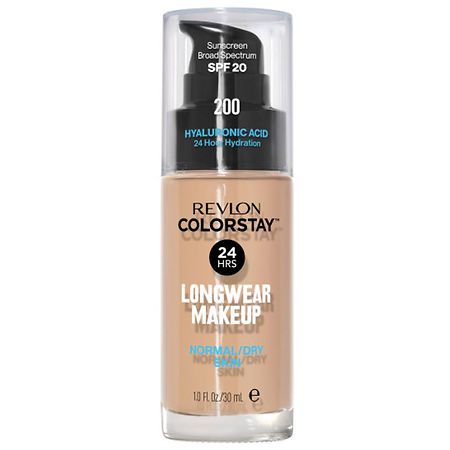


Revlon ColorStay Makeup for Normal/Dry Skin - SPF 20 - 200 Nude - 1 fl oz
Summary
This foundation contains a mix of safe and concerning ingredients. While it includes beneficial components like sunscreen agents, it also has synthetic fragrance, which can be irritating and is often associated with allergic reactions. The presence of preservatives and other synthetic compounds contributes to its moderate processing level, impacting its overall safety profile.
At a glance
Key ingredients 13
Aqua
Aqua, or water, is a common solvent used in cosmetics to dissolve other ingredients. It helps in the application and spreadability of the product. It is generally considered safe and non-irritating.
Risks
There are no significant risks associated with water in cosmetics.
Benefits
Water helps in hydrating the skin and acts as a base for other ingredients.
Cyclopentasiloxane
Cyclopentasiloxane is a silicone-based compound used to provide a smooth application and silky feel. It evaporates quickly, leaving a non-greasy finish. It is generally considered safe for use in cosmetics.
Risks
There are minimal risks, but some individuals may experience mild irritation.
Benefits
It helps in improving the texture and spreadability of the product.
Dimethicone
Dimethicone is a silicone that forms a protective barrier on the skin, preventing moisture loss. It is widely used in cosmetics for its smoothing properties. It is considered safe and effective for most skin types.
Risks
Rarely, it may cause skin irritation in sensitive individuals.
Benefits
It provides a smooth, silky feel and helps to lock in moisture.
Trimethylsiloxysilicate
Trimethylsiloxysilicate is a film-forming agent that helps in long-lasting wear of makeup products. It provides water resistance and enhances the durability of the product. It is generally considered safe for use in cosmetics.
Risks
There are minimal risks, but it may cause mild irritation in sensitive skin.
Benefits
It enhances the longevity and water resistance of the makeup.
Butylene Glycol
Butylene Glycol is a common humectant used to retain moisture in the skin. It also helps in improving the texture and spreadability of the product. It is generally considered safe for use in cosmetics.
Risks
In rare cases, it may cause irritation or allergic reactions.
Benefits
It helps in keeping the skin hydrated and improves product application.
Boron Nitride
Boron Nitride is used in cosmetics for its soft focus effect, which helps in blurring imperfections. It also provides a silky texture to the product. It is considered safe for use in cosmetics.
Risks
There are minimal risks associated with Boron Nitride.
Benefits
It enhances the appearance of the skin by blurring imperfections.
Alcohol Denat.
Alcohol Denat. is used as a solvent and astringent in cosmetics. It helps in quick drying of the product and provides a matte finish. However, it can be drying and irritating to the skin.
Risks
It may cause dryness and irritation, especially in sensitive skin.
Benefits
It helps in quick drying and provides a matte finish.
PEG/PPG-18/18 Dimethicone
PEG/PPG-18/18 Dimethicone is a silicone-based polymer used as an emulsifier and conditioning agent. It helps in improving the texture and spreadability of the product. It is generally considered safe for use in cosmetics.
Risks
There are minimal risks, but it may cause mild irritation in sensitive skin.
Benefits
It enhances the texture and application of the product.
Titanium Dioxide
Titanium Dioxide is a mineral used as a sunscreen agent and pigment in cosmetics. It provides broad-spectrum UV protection and is considered safe for use. It is often used in products with SPF.
Risks
There are minimal risks, but inhalation of its powder form can be harmful.
Benefits
It offers UV protection and acts as a whitening agent in cosmetics.
Zinc Oxide
Zinc Oxide is a mineral used for its UV protective properties in sunscreens and cosmetics. It provides broad-spectrum protection and is considered safe for use. It is often used in products with SPF.
Risks
There are minimal risks, but inhalation of its powder form can be harmful.
Benefits
It offers effective UV protection and is soothing to the skin.
Iron Oxides (CI 77491, CI 77492)
Iron Oxides are pigments used to provide color in cosmetics. They are stable and non-toxic, making them safe for use in various products. They are commonly used in foundations and other makeup products.
Risks
There are minimal risks associated with Iron Oxides.
Benefits
They provide natural-looking color and are safe for use in cosmetics.
Hyaluronic Acid
Hyaluronic Acid is a powerful humectant that attracts and retains moisture in the skin. It is widely used in skincare and cosmetics for its hydrating properties. It is considered safe and beneficial for all skin types.
Risks
There are minimal risks, but overuse can lead to skin imbalance.
Benefits
It provides deep hydration and plumps the skin, reducing the appearance of fine lines.
Disteardimonium Hectorite
Disteardimonium Hectorite is a thickening agent used to stabilize emulsions in cosmetics. It helps in improving the texture and consistency of the product. It is generally considered safe for use in cosmetics.
Risks
There are minimal risks associated with Disteardimonium Hectorite.
Benefits
It enhances the stability and texture of the product.
Processing
Processed Foods
Get the full breakdown in the Scout app
Scan any product to see lab results, healthy alternatives, and your personalized analysis.
Download on theApp Store