
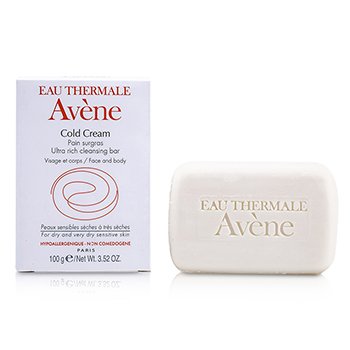

Avene Cold Cream Ultra-Rich Cleansing Bar 3.52 Oz
Summary
The Avene Cold Cream Ultra-Rich Cleansing Bar contains a mix of beneficial and concerning ingredients. While it includes moisturizing agents that are gentle on the skin, it also contains synthetic components that may not be ideal for sensitive skin. The product is processed, which limits its score, and the presence of synthetic fragrance further impacts its rating negatively.
At a glance
Key ingredients 14
Sodium cocoyl isethionate
Sodium cocoyl isethionate is a mild surfactant derived from coconut oil, often used in cleansing products for its gentle cleansing properties. It helps to create a rich lather without stripping the skin of its natural oils. It is generally considered safe and non-irritating for most skin types.
Risks
There are minimal risks associated with this ingredient, though some individuals with very sensitive skin may experience mild irritation.
Benefits
It is beneficial for its ability to cleanse the skin gently while maintaining moisture balance.
Stearic acid
Stearic acid is a fatty acid used as an emulsifier and thickener in cosmetic formulations. It helps to stabilize products and improve texture. It is naturally found in animal and plant fats, making it a common ingredient in skincare products.
Risks
Stearic acid is generally safe, but in rare cases, it may cause mild irritation or allergic reactions in sensitive individuals.
Benefits
It benefits the skin by providing a smooth texture and helping to maintain the integrity of the skin barrier.
Sodium laurate
Sodium laurate is a surfactant and cleansing agent that helps to remove dirt and oil from the skin. It is derived from lauric acid, a component of coconut oil. It is effective in creating a foaming action in cleansing products.
Risks
It may cause skin irritation in some individuals, especially those with sensitive skin.
Benefits
It is beneficial for its cleansing properties and ability to produce a rich lather.
Sodium stearate
Sodium stearate is a sodium salt of stearic acid, used as a surfactant and emulsifying agent in cosmetics. It helps to stabilize formulations and improve texture. It is commonly used in soaps and deodorants.
Risks
There are minimal risks, though it may cause mild irritation in sensitive skin types.
Benefits
It benefits formulations by providing stability and a smooth texture.
Paraffin
Paraffin is a mineral oil derivative used as a moisturizing agent in cosmetics. It forms a protective barrier on the skin to prevent moisture loss. It is commonly used in skincare products for its emollient properties.
Risks
Paraffin can potentially clog pores and cause acne in some individuals, especially those with oily skin.
Benefits
It is beneficial for its ability to lock in moisture and provide a protective barrier on the skin.
Sodium myristate
Sodium myristate is a fatty acid salt used as a surfactant and emulsifier in cosmetic formulations. It helps to cleanse the skin by breaking down oils and dirt. It is derived from myristic acid, found in nutmeg and palm oil.
Risks
It may cause skin irritation in sensitive individuals, though it is generally considered safe.
Benefits
It is beneficial for its cleansing properties and ability to stabilize formulations.
Water (aqua)
Water is a universal solvent used in cosmetics to dissolve other ingredients and provide hydration. It is essential for the formulation of most skincare products. It helps to deliver active ingredients to the skin.
Risks
There are no significant risks associated with water in cosmetic formulations.
Benefits
It is beneficial for its hydrating properties and ability to dissolve other ingredients.
Fragrance
Fragrance is added to cosmetic products to provide a pleasant scent. It is a mixture of aromatic compounds that can enhance the user experience. However, it is often associated with allergic reactions and skin sensitivities.
Risks
Fragrance can cause skin irritation, allergic reactions, and sensitization, especially in sensitive individuals.
Benefits
While it provides a pleasant scent, it offers no direct skin benefits and is primarily used for aesthetic purposes.
Beeswax (cera alba)
Beeswax is a natural wax produced by honeybees, used in cosmetics for its emollient and thickening properties. It helps to form a protective barrier on the skin, locking in moisture. It is valued for its natural origin and skin-friendly properties.
Risks
Beeswax is generally safe, but it may cause allergic reactions in individuals allergic to bee products.
Benefits
It is beneficial for its moisturizing properties and ability to protect the skin barrier.
Cetyl alcohol
Cetyl alcohol is a fatty alcohol used as an emollient and thickener in cosmetic formulations. It helps to soften and smooth the skin while providing a creamy texture to products. It is derived from natural oils and is considered safe for most skin types.
Risks
Cetyl alcohol is generally non-irritating, but it may cause mild irritation in very sensitive skin.
Benefits
It benefits the skin by providing moisture and improving the texture of formulations.
Glyceryl stearate
Glyceryl stearate is an emulsifier and emollient used in cosmetics to stabilize formulations and provide a smooth texture. It is derived from glycerin and stearic acid, both of which are naturally occurring substances. It helps to maintain the skin's moisture balance.
Risks
It is generally safe, but in rare cases, it may cause mild irritation or allergic reactions.
Benefits
It is beneficial for its moisturizing properties and ability to improve product texture.
Mineral oil (paraffinum liquidum)
Mineral oil is a highly refined petroleum derivative used as an emollient in cosmetics. It forms a barrier on the skin to prevent moisture loss. It is widely used for its moisturizing properties and low cost.
Risks
Mineral oil can potentially clog pores and cause acne in some individuals, especially those with oily skin.
Benefits
It is beneficial for its ability to lock in moisture and provide a protective barrier on the skin.
Titanium dioxide (ci 77891)
Titanium dioxide is a mineral used as a pigment and UV filter in cosmetics. It provides opacity and sun protection by reflecting UV rays. It is considered safe and effective for use in sunscreens and cosmetic products.
Risks
There are minimal risks, though inhalation of fine particles should be avoided.
Benefits
It is beneficial for its sun protection properties and ability to provide coverage in cosmetic formulations.
Tocopheryl acetate
Tocopheryl acetate is a form of vitamin E used as an antioxidant in cosmetics. It helps to protect the skin from free radical damage and improve skin health. It is commonly used for its skin conditioning properties.
Risks
It is generally safe, but in rare cases, it may cause mild irritation or allergic reactions.
Benefits
It is beneficial for its antioxidant properties and ability to improve skin health.
Processing
Processed Foods
Get the full breakdown in the Scout app
Scan any product to see lab results, healthy alternatives, and your personalized analysis.
Download on theApp Store