
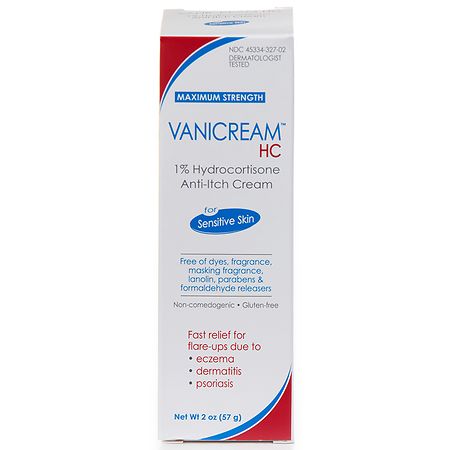
Vanicream 1% Hydrocortisone Anti-Itch Lotion for Sensitive Skin - Unscented - 2oz
Summary
This product is formulated for sensitive skin and does not contain synthetic fragrances, which is beneficial for reducing irritation. However, it includes hydrocortisone, a synthetic steroid, which is effective for anti-itch purposes but not a natural ingredient. The processing level and presence of synthetic components limit its score, despite the absence of harsh surfactants or known endocrine disruptors.
At a glance
Key ingredients 12
Hydrocortisone Acetate
Hydrocortisone Acetate is a corticosteroid used to reduce inflammation and alleviate itching. It is effective in treating various skin conditions by suppressing the immune response. However, prolonged use can lead to skin thinning and other side effects.
Risks
Potential risks include skin thinning, irritation, and systemic absorption if used excessively.
Benefits
It provides relief from itching and inflammation, improving skin comfort and appearance.
E Acetate
E Acetate, also known as Vitamin E Acetate, is an antioxidant that helps protect the skin from damage caused by free radicals. It is often used in skincare products for its moisturizing properties. However, it can cause skin irritation in some individuals.
Risks
Potential risks include skin irritation or allergic reactions in sensitive individuals.
Benefits
It helps in moisturizing the skin and protecting it from oxidative stress.
Ceteareth-20
Ceteareth-20 is an emulsifier that helps blend oil and water-based ingredients. It is commonly used in cosmetics to improve texture and stability. However, it may be contaminated with ethylene oxide and 1,4-dioxane, which are potential carcinogens.
Risks
Potential contamination with carcinogenic substances like 1,4-dioxane.
Benefits
It enhances the texture and stability of cosmetic formulations.
Cetearyl Alcohol
Cetearyl Alcohol is a fatty alcohol used as an emollient and thickener in skincare products. It helps to soften and smooth the skin. It is generally considered safe and non-irritating.
Risks
Minimal risks, though it can cause mild irritation in very sensitive skin.
Benefits
It provides moisturizing and smoothing effects on the skin.
Glyceryl Stearate
Glyceryl Stearate is an emulsifier and emollient that helps to form stable emulsions and moisturize the skin. It is derived from glycerin and stearic acid, both of which are naturally occurring substances. It is generally considered safe for use in cosmetics.
Risks
Minimal risks, though it can cause mild irritation in sensitive individuals.
Benefits
It helps to moisturize and stabilize formulations, improving skin feel.
PEG-30 Stearate
PEG-30 Stearate is an emulsifying agent that helps to mix oil and water components in formulations. It is derived from stearic acid and polyethylene glycol. There is a risk of contamination with ethylene oxide and 1,4-dioxane, which are potential carcinogens.
Risks
Potential contamination with carcinogenic substances like 1,4-dioxane.
Benefits
It improves the texture and stability of cosmetic products.
Petrolatum
Petrolatum is a moisturizing agent that forms a barrier on the skin to prevent moisture loss. It is widely used in skincare for its occlusive properties. However, it can be contaminated with polycyclic aromatic hydrocarbons (PAHs), which are potential carcinogens.
Risks
Potential contamination with PAHs, which are linked to cancer.
Benefits
It provides effective moisture retention and skin protection.
Propanediol
Propanediol is a glycol used as a solvent and skin-conditioning agent. It is derived from corn sugar and is considered a safer alternative to propylene glycol. It is generally well-tolerated by the skin.
Risks
Minimal risks, though it can cause irritation in very sensitive skin.
Benefits
It enhances skin hydration and improves product texture.
Purified Water
Purified Water is used as a solvent in cosmetic formulations. It helps to dissolve other ingredients and provides a base for the product. It is essential for the formulation but does not have direct skin benefits.
Benefits
It acts as a solvent and carrier for other ingredients.
Simethicone
Simethicone is an anti-foaming agent used to reduce surface tension and prevent foaming in formulations. It is commonly used in skincare to improve texture and application. It is considered safe for topical use.
Risks
Minimal risks, generally considered safe for use.
Benefits
It improves the texture and application of skincare products.
Sorbic Acid
Sorbic Acid is a preservative used to prevent the growth of mold and yeast in cosmetic products. It is effective at low concentrations and is considered safe for use. However, it can cause irritation in sensitive individuals.
Risks
Potential for skin irritation or allergic reactions in sensitive individuals.
Benefits
It helps to preserve the product and extend its shelf life.
Sorbitol
Sorbitol is a sugar alcohol used as a humectant and moisturizer in skincare products. It helps to retain moisture in the skin, improving hydration. It is generally considered safe and non-irritating.
Risks
Minimal risks, though it can cause mild irritation in very sensitive skin.
Benefits
It enhances skin hydration and provides a smooth feel.
Processing
Processed Foods
Get the full breakdown in the Scout app
Scan any product to see lab results, healthy alternatives, and your personalized analysis.
Download on theApp Store