
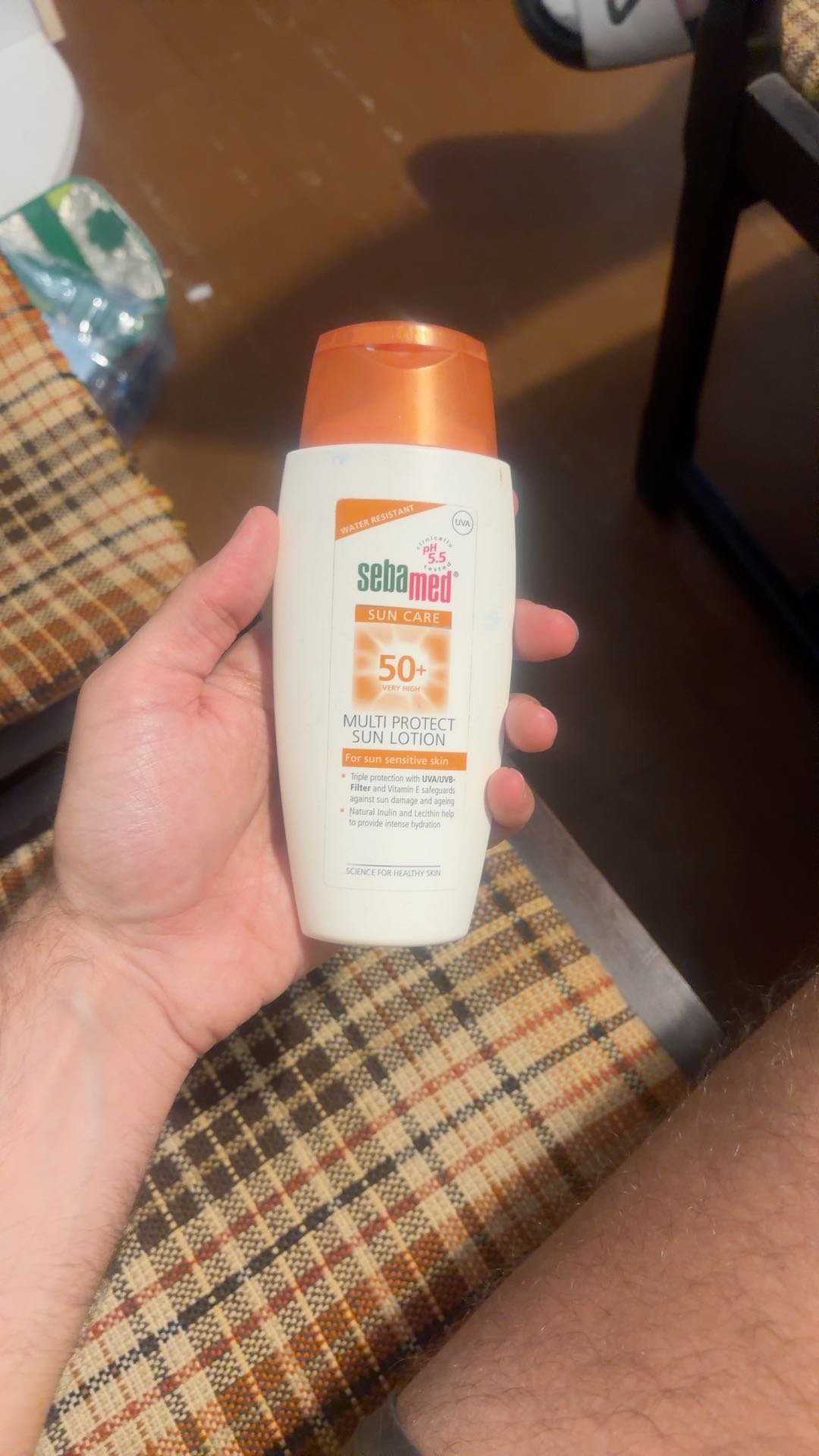

Sebamed Suncare Multi Protect Suncream Uva-uvb 50+ Vitamin E Ph5.5 01/2018
Summary
This sunscreen contains beneficial ingredients like glycerin, which helps to hydrate the skin. However, it also includes octocrylene, a chemical sunscreen agent that can cause skin irritation and has environmental concerns, as well as fragrance, which is a common allergen. The presence of these potentially harmful ingredients and the processed nature of the product impact its overall safety and quality.
At a glance
Key ingredients 11
AquaNeutral
Aqua, or water, is commonly used as a solvent in cosmetic formulations. It helps to dissolve other ingredients and provides a base for the product. It is generally considered safe and non-irritating.
Risks
There are no significant risks associated with water in cosmetic products.
Benefits
Water helps to hydrate the skin and is essential for the formulation of many cosmetic products.
OctocryleneBad
Octocrylene is a chemical sunscreen agent that absorbs UVB and short UVA rays. It is often used to stabilize other sunscreen ingredients. However, it can cause skin irritation and has been linked to potential environmental concerns.
Risks
Potential risks include skin irritation and environmental impact, particularly on aquatic life.
Benefits
It provides effective UV protection and helps stabilize other sunscreen agents.
Dibutyl AdipateNeutral
Dibutyl Adipate is used as a plasticizer and emollient in cosmetic formulations. It helps to improve the texture and spreadability of products. It is generally considered safe for use in cosmetics.
Risks
There are minimal risks associated with its use in cosmetics.
Benefits
It enhances the texture and application of the product, providing a smooth feel.
Titanium Dioxide (Nano)Neutral
Titanium Dioxide is a mineral sunscreen agent that provides broad-spectrum UV protection. In nano form, it is used for its transparency and effectiveness. There are concerns about its safety in nano form, particularly regarding inhalation.
Risks
Inhalation of nano particles can pose health risks, though topical application is generally considered safe.
Benefits
It offers effective protection against UV radiation and is less likely to cause skin irritation compared to chemical sunscreens.
C12-15 Alkyl BenzoateNeutral
C12-15 Alkyl Benzoate is an emollient and texture enhancer in cosmetics. It helps to improve the spreadability and feel of the product. It is considered safe for use in cosmetics.
Risks
There are no significant risks associated with its use in cosmetics.
Benefits
It provides a silky feel and enhances the application of the product.
GlycerinGood
Glycerin is a humectant that attracts moisture to the skin, helping to keep it hydrated. It is widely used in skincare products for its moisturizing properties. It is considered safe and beneficial for most skin types.
Risks
There are minimal risks associated with glycerin, though it may cause irritation in very sensitive individuals.
Benefits
It effectively hydrates the skin and improves skin barrier function.
Glyceryl StearateNeutral
Glyceryl Stearate is an emulsifier that helps to blend oil and water components in formulations. It also acts as a lubricant on the skin's surface. It is generally considered safe for use in cosmetics.
Risks
There are minimal risks associated with its use in cosmetics.
Benefits
It helps to stabilize formulations and provides a smooth application.
Diethylamino Hydroxybenzoyl Hexyl BenzoateNeutral
This is a chemical sunscreen agent that provides UVA protection. It is often used in combination with other UV filters for broad-spectrum protection. It is considered safe for use in cosmetics.
Risks
There are minimal risks associated with its use, though it may cause irritation in sensitive individuals.
Benefits
It offers effective UVA protection, contributing to broad-spectrum sunscreen efficacy.
Parfum / FragranceBad
Fragrance is used to impart scent to cosmetic products. However, it is a common cause of allergic reactions and skin irritation. The specific components of fragrance are often undisclosed, leading to concerns about potential allergens.
Risks
Fragrance can cause skin irritation and allergic reactions, especially in sensitive individuals.
Benefits
It enhances the sensory experience of the product by providing a pleasant scent.
Polyglyceryl-3 Polydimethylsiloxyethyl DimethiconeNeutral
This ingredient is a silicone-based emulsifier that helps to blend oil and water components. It provides a smooth application and enhances the texture of the product. It is considered safe for use in cosmetics.
Risks
There are minimal risks associated with its use in cosmetics.
Benefits
It improves the texture and spreadability of the product, providing a silky feel.
Diethylhexyl ButamidoNeutral
Diethylhexyl Butamido is used as a UV filter and emollient in cosmetic formulations. It helps to protect the skin from UV radiation and improve the texture of the product. It is considered safe for use in cosmetics.
Risks
There are minimal risks associated with its use in cosmetics.
Benefits
It provides UV protection and enhances the feel of the product on the skin.
Processing
Processed Foods
Get the full breakdown in the Scout app
Scan any product to see lab results, healthy alternatives, and your personalized analysis.
Download on theApp Store