

At a glance
Summary
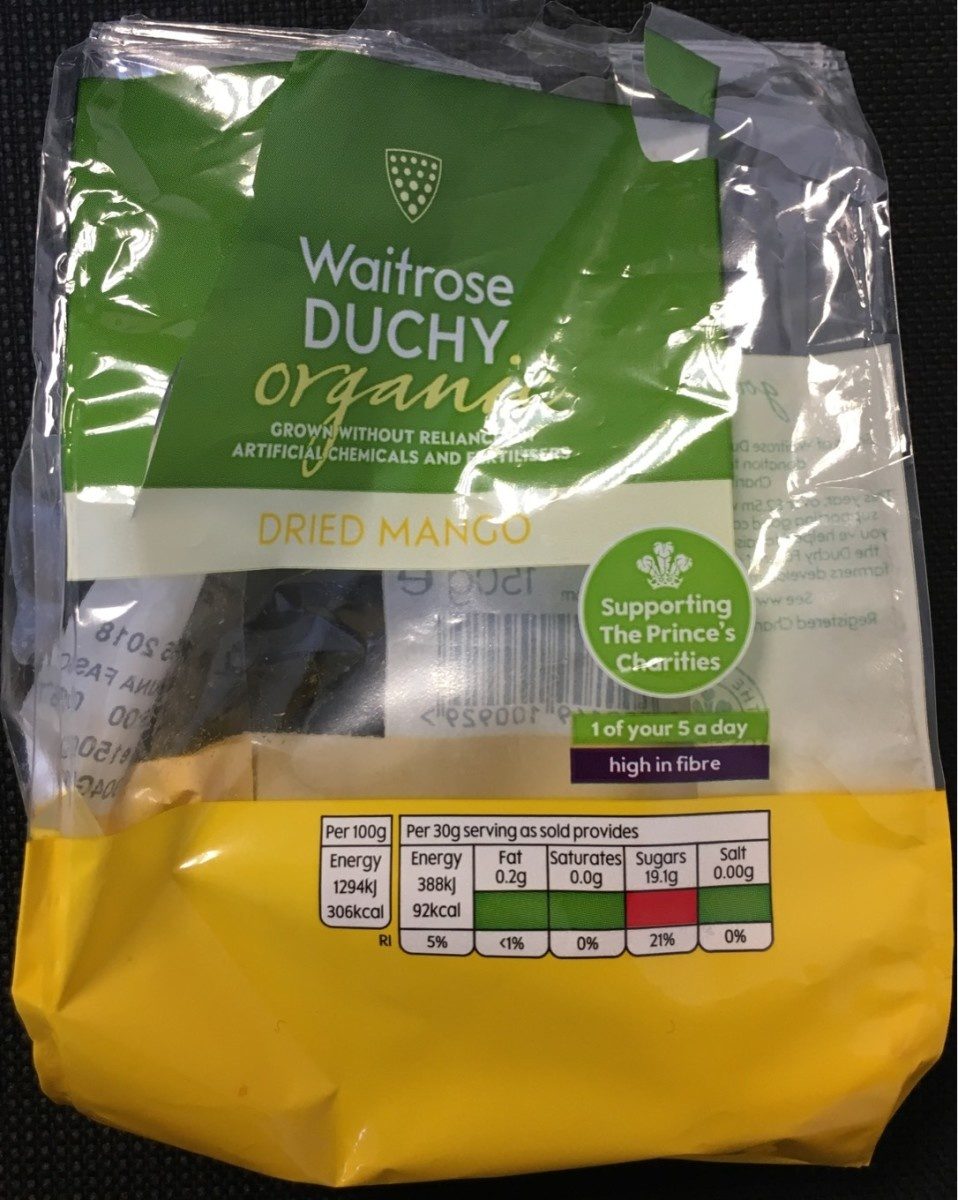
This dried mango product contains preservatives such as sodium metabisulphite and sulphur dioxide, which are used to maintain color and extend shelf life but can cause allergic reactions in sensitive individuals. The high sugar content is typical for dried fruits, but the presence of these synthetic additives and the processing level limit its healthiness compared to fresh or minimally processed alternatives.
Key ingredients 3
Dried mangoNeutral
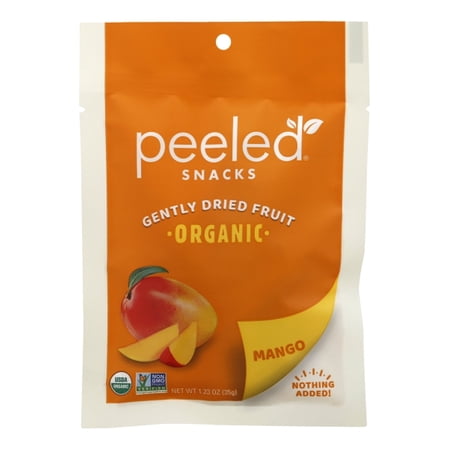
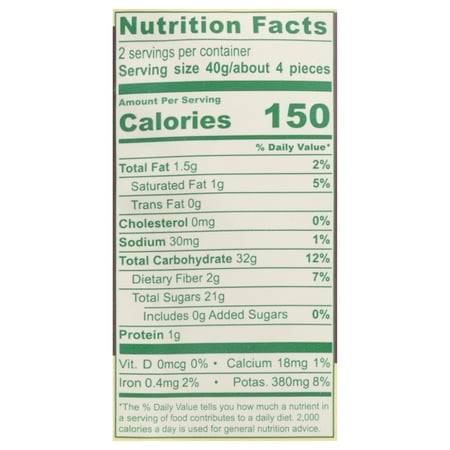
Dried mango is a natural fruit product that retains some of the nutrients of fresh mango. It is typically high in sugars due to the concentration process during drying. The drying process can lead to a loss of some vitamins and minerals.
Risks
High sugar content can contribute to increased calorie intake and potential blood sugar spikes.
Benefits
Provides dietary fiber and some vitamins such as vitamin A and C, although in reduced amounts compared to fresh mango.
Sodium metabisulphiteBad
Sodium metabisulphite is a preservative used to maintain color and extend shelf life. It is a synthetic additive that can cause allergic reactions in sensitive individuals. Its use is common in dried fruits to prevent browning.
Risks
May cause allergic reactions or respiratory issues in sensitive individuals, particularly those with asthma.
Sulphur dioxideBad
Sulphur dioxide is used as a preservative to prevent spoilage and maintain the color of dried fruits. It is a chemical compound that can cause adverse reactions in some people. Its use is regulated due to potential health concerns.
Risks
Can cause respiratory problems and allergic reactions, especially in individuals with asthma or sulphite sensitivity.
Processing
Processed Foods
Get the full breakdown in the Scout appTake Scout shopping
Scan any product to see lab results, healthy alternatives, and your personalized analysis.
Download on theApp Store GET IT ONGoogle Play