
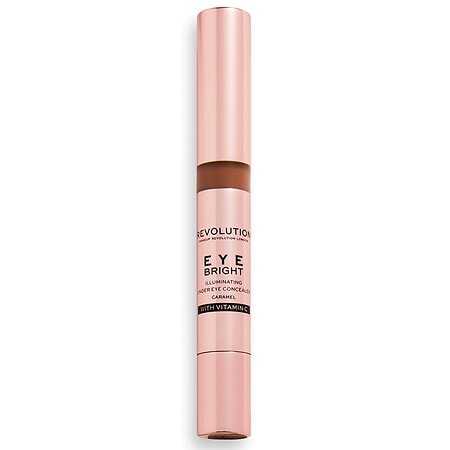

Makeup Revolution Eye Bright Concealer - Caramel - 0.10 fl oz
Summary
This concealer contains a mix of synthetic ingredients such as hydrogenated polydecene and polymethyl methacrylate, which are common in cosmetics but not considered natural. While it lacks harsh surfactants or known endocrine disruptors, the presence of several synthetic compounds and the processed nature of the product limit its score. The absence of natural oils or beneficial skin actives also impacts its overall rating.
At a glance
Key ingredients 9
aqua (water, eau)
Aqua, or water, is a common solvent used in cosmetics to dissolve other ingredients. It helps in forming emulsions by combining with oils. It is generally considered safe and non-irritating.
Risks
There are no significant risks associated with water in cosmetics.
Benefits
Water is essential for hydration and helps in the application of the product.
glycerin
Glycerin is a humectant that attracts moisture to the skin, helping to keep it hydrated. It is widely used in skincare products for its moisturizing properties. It is generally considered safe and beneficial for the skin.
Risks
There are minimal risks associated with glycerin, though it may cause irritation in very sensitive skin.
Benefits
Glycerin helps maintain skin hydration and improves skin barrier function.
hydrogenated polydecene
Hydrogenated polydecene is a synthetic emollient that provides a smooth application and a silky feel. It is used to improve the texture and spreadability of cosmetic products. It is generally considered safe for use in cosmetics.
Risks
There are no significant risks associated with hydrogenated polydecene.
Benefits
It enhances the texture of the product and provides a smooth, non-greasy finish.
diisostearyl malate
Diisostearyl malate is an emollient that helps to soften and smooth the skin. It is often used in lip products for its ability to provide a glossy finish. It is considered safe for use in cosmetics.
Risks
There are minimal risks associated with diisostearyl malate.
Benefits
It provides a smooth texture and enhances the product's spreadability.
isohexadecane
Isohexadecane is a lightweight emollient that provides a silky feel and helps to improve the spreadability of products. It is often used in cosmetics for its non-greasy texture. It is considered safe for use in cosmetics.
Risks
There are minimal risks associated with isohexadecane.
Benefits
It provides a lightweight, non-greasy feel and enhances product application.
trimethylsiloxysilicate
Trimethylsiloxysilicate is a silicone-based film-former that provides water resistance and long-lasting wear. It is commonly used in makeup products for its ability to enhance durability. It is considered safe for use in cosmetics.
Risks
There are minimal risks associated with trimethylsiloxysilicate.
Benefits
It provides long-lasting wear and water resistance to cosmetic products.
peg-30 dipolyhydroxystearate
PEG-30 dipolyhydroxystearate is an emulsifier that helps to blend oil and water-based ingredients. It is used to stabilize formulations and improve texture. It is generally considered safe for use in cosmetics.
Risks
There is a potential risk of contamination with 1,4-dioxane, a byproduct of ethoxylation.
Benefits
It helps to stabilize emulsions and improve product texture.
isododecane
Isododecane is a volatile solvent that provides a lightweight feel and quick-drying finish. It is often used in long-wear makeup products for its ability to enhance spreadability. It is considered safe for use in cosmetics.
Risks
There are minimal risks associated with isododecane.
Benefits
It provides a lightweight, non-greasy feel and enhances product application.
polymethyl methacrylate
Polymethyl methacrylate is a synthetic polymer used as a film-former and texture enhancer. It provides a smooth finish and helps to fill in fine lines. It is considered safe for use in cosmetics.
Risks
There are minimal risks associated with polymethyl methacrylate.
Benefits
It provides a smooth finish and helps to improve the appearance of the skin.
Processing
Processed Foods
Get the full breakdown in the Scout app
Scan any product to see lab results, healthy alternatives, and your personalized analysis.
Download on theApp Store