
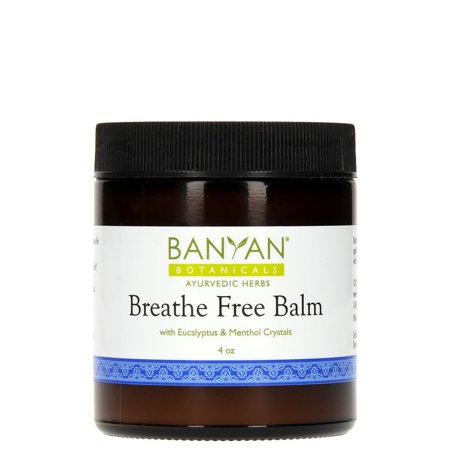


Banyan Botanicals Breathe Free Balm – 99% Organic Natural Chest Rub with Eucalyptus & Menthol Crystals – for Respiratory Relief & Easy Breathing – 4 oz. – Non GMO Sustainably Sourced Vegetarian
Analysis updated August 2026 · How Scout scores
At a glance
Summary
This product features a high-quality blend of natural oils and botanicals, such as sesame seed oil, castor seed oil, and beeswax, which are known for their moisturizing and protective properties. The inclusion of eucalyptus and menthol crystals provides additional benefits for respiratory relief. The formulation is minimally processed and free from synthetic chemicals, making it a clean and safe choice for skincare.
Key ingredients 16
Refined Sesame seed oil (Sesamum indicum)Very Good
Sesame seed oil is a natural oil known for its moisturizing properties and ability to improve skin barrier function. It contains antioxidants and essential fatty acids that nourish the skin.
Risks
There is a low risk of allergic reactions in individuals sensitive to sesame.
Benefits
It provides deep hydration and has anti-inflammatory properties that can soothe irritated skin.
Sunflower seed oil (Helianthus annuus)Very Good
Sunflower seed oil is a non-comedogenic oil that is high in vitamin E and fatty acids, making it excellent for skin hydration and protection. It helps maintain the skin's natural barrier.
Risks
Rarely, it may cause allergic reactions in sensitive individuals.
Benefits
It is known for its ability to soothe and moisturize the skin without clogging pores.
BeeswaxVery Good
Beeswax is a natural wax that forms a protective barrier on the skin, helping to lock in moisture. It is also known for its anti-inflammatory and antibacterial properties.
Risks
There is a minimal risk of allergic reactions, particularly in individuals allergic to bee products.
Benefits
It provides a protective layer on the skin and helps to retain moisture, making it an excellent ingredient for dry skin.
Licorice root (Glycyrrhiza glabra)Very Good
Licorice root is known for its skin-brightening and anti-inflammatory properties. It contains glabridin, which can help reduce hyperpigmentation and soothe irritated skin.
Risks
Overuse may lead to skin irritation or sensitivity in some individuals.
Benefits
It is effective in reducing redness and pigmentation, making it beneficial for uneven skin tone.
Castor seed oil (Ricinus communis)Good
Castor oil is a natural emollient that helps to lock in moisture and promote skin softness. It is rich in ricinoleic acid, which has anti-inflammatory and antimicrobial properties.
Risks
Some individuals may experience allergic reactions or skin irritation.
Benefits
It is beneficial for its moisturizing effects and can help reduce inflammation and bacterial growth on the skin.
Kalmegh (Andrographis) aerials (Andrographis paniculata)Good
Kalmegh is known for its anti-inflammatory and antioxidant properties, which can benefit skin health. It is often used in traditional medicine for its healing properties.
Risks
There is limited research on its topical use, and it may cause irritation in sensitive individuals.
Benefits
It can help reduce inflammation and protect the skin from oxidative stress.
Eucalyptus leaf (Eucalyptus globulus)Good
Eucalyptus leaf is known for its antimicrobial and anti-inflammatory properties. It is often used in skincare for its refreshing and clarifying effects.
Risks
It may cause skin irritation or allergic reactions in sensitive individuals.
Benefits
It can help cleanse the skin and reduce inflammation, providing a cooling sensation.
Ginger rhizome (Zingiber officinale)Good
Ginger rhizome is rich in antioxidants and has anti-inflammatory properties, making it beneficial for soothing and protecting the skin. It is also known for its warming effect.
Risks
It may cause irritation or allergic reactions in some individuals.
Benefits
It helps improve circulation and can provide a warming sensation that soothes sore muscles.
Fennel seed (Foeniculum vulgare)Good
Fennel seed is known for its antioxidant and anti-inflammatory properties. It is often used in skincare for its soothing and toning effects.
Risks
It may cause allergic reactions or irritation in sensitive individuals.
Benefits
It can help soothe and tone the skin, reducing inflammation and redness.
Menthol crystalsGood
Menthol crystals provide a cooling sensation and are known for their analgesic and anti-inflammatory properties. They are often used to relieve minor aches and pains.
Risks
Menthol can cause irritation or allergic reactions in some individuals, especially in high concentrations.
Benefits
It provides a cooling effect that can soothe irritated skin and relieve minor discomfort.
Clove bud (Syzygium aromaticum)Good
Clove bud is known for its antimicrobial and antioxidant properties. It is often used in skincare for its ability to cleanse and protect the skin.
Risks
It may cause irritation or allergic reactions in sensitive skin.
Benefits
It helps cleanse the skin and provides antioxidant protection.
Eucalyptus essential oil (Eucalyptus radiata)Good
Eucalyptus essential oil is known for its antimicrobial and anti-inflammatory properties. It is often used in skincare for its refreshing and clarifying effects.
Risks
It may cause skin irritation or allergic reactions in sensitive individuals.
Benefits
It can help cleanse the skin and reduce inflammation, providing a cooling sensation.
Camphor essential oil (Cinnamomum camphora)Good
Camphor essential oil is known for its cooling and anti-inflammatory properties. It is often used to relieve pain and reduce inflammation.
Risks
Camphor can be irritating to the skin and should be used with caution, especially in high concentrations.
Benefits
It provides a cooling effect that can soothe irritated skin and relieve minor discomfort.
Calamus rhizome (Acorus calamus)Neutral
Calamus rhizome is traditionally used in herbal medicine for its aromatic properties. It is believed to have calming effects on the skin.
Risks
There are concerns about its safety due to potential carcinogenic compounds in some varieties.
Benefits
It may provide a soothing effect on the skin and contribute to the product's fragrance.
Pippali (Long Pepper) fruit (Piper longum)Neutral
Pippali is traditionally used in Ayurvedic medicine for its warming and stimulating properties. It is believed to enhance circulation and provide a warming effect.
Risks
There is limited research on its topical use, and it may cause irritation in sensitive skin.
Benefits
It may help improve circulation and provide a warming sensation.
Cedar (Thuja) leaf essential oil (Thuja occidentalis)Neutral
Cedar leaf essential oil is known for its aromatic properties and is often used for its potential antimicrobial effects. It is traditionally used in herbal medicine.
Risks
There is limited research on its topical use, and it may cause irritation in sensitive skin.
Benefits
It may provide a pleasant aroma and contribute to the product's antimicrobial properties.
Get the full breakdown in the Scout appTake Scout shopping
Scan any product to see lab results, healthy alternatives, and your personalized analysis.
Download on theApp Store GET IT ONGoogle PlayAmazon pricing & content
Amazon price as of . Product prices and availability are accurate as of the date/time indicated and are subject to change. Any price and availability information displayed on Amazon.com at the time of purchase will apply to the purchase of this product.
CERTAIN CONTENT THAT APPEARS ON THIS SITE COMES FROM AMAZON. THIS CONTENT IS PROVIDED “AS IS” AND IS SUBJECT TO CHANGE OR REMOVAL AT ANY TIME.