
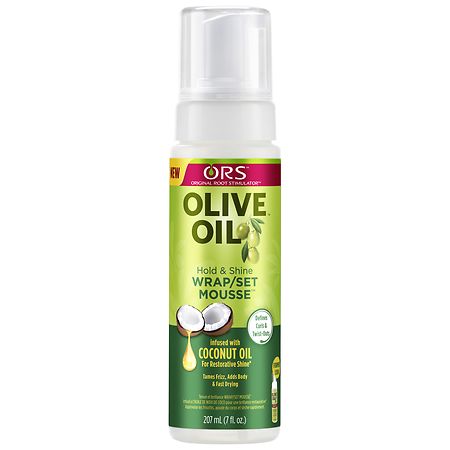


ORS Olive Oil Wrap/Set Mousse - 7 fl oz
Summary
This product contains beneficial ingredients like olive oil and panthenol, which provide nourishment and moisture to the hair. However, it also includes non-water-soluble silicones and synthetic fragrance, which can lead to buildup and potential irritation. The presence of these ingredients, along with other synthetic additives, affects the overall safety and health impact on hair and scalp.
At a glance
Key ingredients 24
AquaNeutral
Aqua, or water, is the primary solvent in many cosmetic products. It helps to dissolve other ingredients and provides a base for the formulation. It is generally considered safe and non-irritating.
Risks
There are no significant risks associated with water in cosmetic formulations.
Benefits
Water helps to hydrate and deliver other beneficial ingredients to the hair and scalp.
Cocamidopropyl BetaineGood
Cocamidopropyl Betaine is a mild surfactant derived from coconut oil. It is used to create foam and cleanse the hair without stripping natural oils. It is considered gentle and suitable for sensitive skin.
Risks
In rare cases, it may cause irritation or allergic reactions in sensitive individuals.
Benefits
It provides gentle cleansing and helps maintain the hair's natural moisture balance.
Polyquaternium-11Neutral
Polyquaternium-11 is a film-forming agent that provides hold and conditioning to hair. It helps to reduce static and improve hair manageability. It is widely used in styling products for its conditioning properties.
Risks
There are minimal risks, though it may cause buildup with excessive use.
Benefits
It enhances hair texture and provides a smooth, conditioned feel.
Olea Europaea Olive Fruit OilVery Good
Olive oil is a natural emollient rich in vitamins and antioxidants. It helps to moisturize and nourish the hair, improving its elasticity and shine. It is highly regarded for its conditioning properties.
Risks
There are minimal risks, though it may weigh down fine hair if used in excess.
Benefits
It deeply conditions and strengthens hair, promoting a healthy scalp.
PanthenolGood
Panthenol, also known as provitamin B5, is a moisturizing agent that penetrates the hair shaft. It helps to improve hair elasticity and moisture retention. It is beneficial for maintaining healthy hair and scalp.
Risks
There are no significant risks associated with panthenol.
Benefits
It enhances hair moisture and adds shine, making hair appear fuller and healthier.
Hydrolyzed CollagenGood
Hydrolyzed collagen is a protein that helps to strengthen and repair hair. It provides a protective barrier that reduces damage and improves hair texture. It is valued for its ability to enhance hair strength and elasticity.
Risks
There are no significant risks associated with hydrolyzed collagen.
Benefits
It strengthens hair and reduces breakage, promoting healthier hair growth.
PEG-75 LanolinNeutral
PEG-75 Lanolin is an emollient that provides moisture and softness to hair. It is derived from lanolin, a natural substance obtained from sheep's wool. It is used to enhance the texture and feel of hair products.
Risks
There is a potential for allergic reactions in individuals sensitive to lanolin.
Benefits
It helps to condition and soften hair, improving manageability.
PEG-12 DimethiconeBad
PEG-12 Dimethicone is a silicone-based compound used for its smoothing properties. It helps to reduce frizz and add shine to hair. However, it is a non-water-soluble silicone that can cause buildup over time.
Risks
It may lead to product buildup, making hair feel heavy and greasy.
Benefits
It provides a smooth, shiny finish to hair, reducing frizz and flyaways.
Cetrimonium ChlorideNeutral
Cetrimonium Chloride is a conditioning agent that helps to detangle and soften hair. It is commonly used in hair care products for its antistatic properties. It is effective in improving hair manageability.
Risks
There are minimal risks, though it may cause irritation in sensitive individuals.
Benefits
It enhances hair smoothness and reduces static, making hair easier to style.
Quaternium-80Bad
Quaternium-80 is a conditioning agent that provides slip and detangling benefits. It is a quaternary ammonium compound that can cause buildup on hair. It is used for its ability to improve hair texture and manageability.
Risks
It may cause buildup and potential irritation with prolonged use.
Benefits
It helps to detangle and condition hair, improving its overall feel.
Oleth-20Neutral
Oleth-20 is an emulsifier that helps to blend oil and water-based ingredients. It is used to stabilize formulations and improve product consistency. It is generally considered safe for use in cosmetics.
Risks
There are minimal risks associated with Oleth-20.
Benefits
It helps to create a stable and uniform product texture.
Propylene GlycolNeutral
Propylene Glycol is a humectant that helps to retain moisture in hair products. It is used to improve the texture and spreadability of formulations. It is widely used in cosmetics for its moisturizing properties.
Risks
There is a potential for irritation in sensitive individuals.
Benefits
It helps to maintain moisture levels in hair, preventing dryness.
PhenoxyethanolBad
Phenoxyethanol is a preservative used to prevent microbial growth in cosmetics. It is effective in extending the shelf life of products. However, it is associated with potential skin irritation and allergic reactions.
Risks
It may cause irritation or allergic reactions in sensitive individuals.
Benefits
It helps to preserve the product and prevent contamination.
Benzoic AcidNeutral
Benzoic Acid is a preservative that helps to prevent microbial growth in cosmetics. It is used to extend the shelf life of products and maintain their safety. It is generally considered safe for use in cosmetics.
Risks
There are minimal risks, though it may cause irritation in sensitive individuals.
Benefits
It helps to preserve the product and ensure its safety for use.
EthylhexylglycerinNeutral
Ethylhexylglycerin is a preservative and skin-conditioning agent. It is used to enhance the efficacy of other preservatives and improve product texture. It is considered safe for use in cosmetics.
Risks
There are minimal risks associated with ethylhexylglycerin.
Benefits
It helps to preserve the product and improve its overall feel.
Glycereth-2 CocoateNeutral
Glycereth-2 Cocoate is an emollient and surfactant derived from coconut oil. It is used to improve the texture and spreadability of hair products. It is generally considered safe and non-irritating.
Risks
There are minimal risks associated with glycereth-2 cocoate.
Benefits
It helps to condition and soften hair, enhancing product application.
ParfumBad
Parfum, or fragrance, is used to add scent to cosmetic products. It is a synthetic blend that can cause allergic reactions and skin irritation. It is often criticized for its lack of transparency regarding ingredient composition.
Risks
It may cause irritation or allergic reactions in sensitive individuals.
Benefits
It provides a pleasant scent to the product.
Alpha-Isomethyl IononeNeutral
Alpha-Isomethyl Ionone is a fragrance ingredient used to impart scent to products. It is commonly used in cosmetics for its floral aroma. It is generally considered safe for use in cosmetics.
Risks
There is a potential for allergic reactions in sensitive individuals.
Benefits
It adds a pleasant floral scent to the product.
Benzyl AlcoholBad
Benzyl Alcohol is used as a preservative and solvent in cosmetics. It is effective in preventing microbial growth but can be drying to the hair and scalp. It is associated with potential irritation and allergic reactions.
Risks
It may cause dryness and irritation, particularly in sensitive individuals.
Benefits
It helps to preserve the product and prevent contamination.
Benzyl SalicylateNeutral
Benzyl Salicylate is a fragrance ingredient used to add scent to products. It is commonly used in cosmetics for its floral aroma. It is generally considered safe for use in cosmetics.
Risks
There is a potential for allergic reactions in sensitive individuals.
Benefits
It adds a pleasant floral scent to the product.
Butylphenyl MethylpropionalBad
Butylphenyl Methylpropional, also known as Lilial, is a fragrance ingredient. It is used to impart a floral scent to products but is associated with potential allergenic effects. It has been restricted in some regions due to safety concerns.
Risks
It may cause allergic reactions and has been restricted in some regions.
Benefits
It provides a floral scent to the product.
Hexyl CinnamalNeutral
Hexyl Cinnamal is a fragrance ingredient used to add scent to products. It is commonly used in cosmetics for its jasmine-like aroma. It is generally considered safe for use in cosmetics.
Risks
There is a potential for allergic reactions in sensitive individuals.
Benefits
It adds a pleasant jasmine-like scent to the product.
LimoneneNeutral
Limonene is a fragrance ingredient derived from citrus oils. It is used to impart a fresh, citrus scent to products. It is generally considered safe but can oxidize and cause skin irritation.
Risks
It may cause irritation if oxidized, particularly in sensitive individuals.
Benefits
It provides a fresh, citrus scent to the product.
LinaloolNeutral
Linalool is a fragrance ingredient used to add a floral scent to products. It is commonly found in cosmetics for its pleasant aroma. It is generally considered safe but can cause allergic reactions in some individuals.
Risks
There is a potential for allergic reactions in sensitive individuals.
Benefits
It adds a pleasant floral scent to the product.
Processing
Ultra-Processed Foods
Get the full breakdown in the Scout app
Scan any product to see lab results, healthy alternatives, and your personalized analysis.
Download on theApp Store