

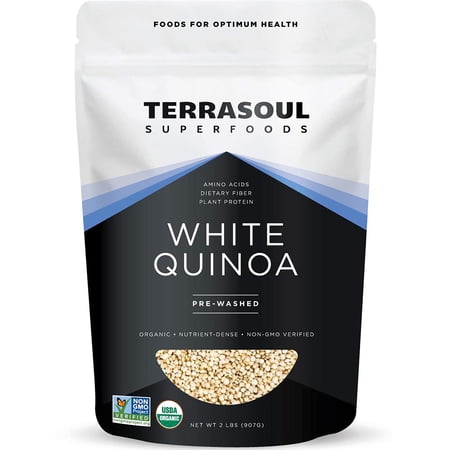
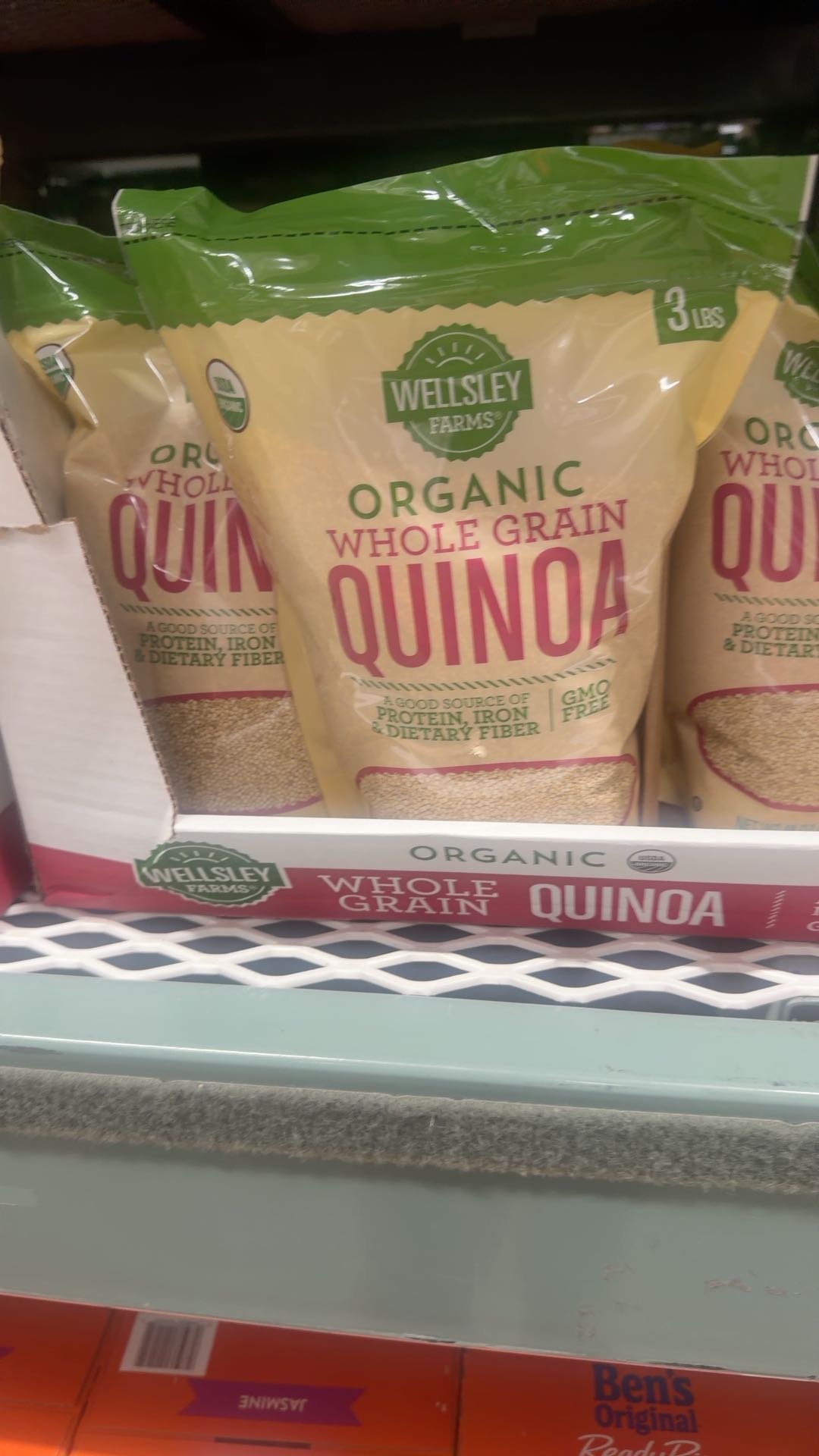
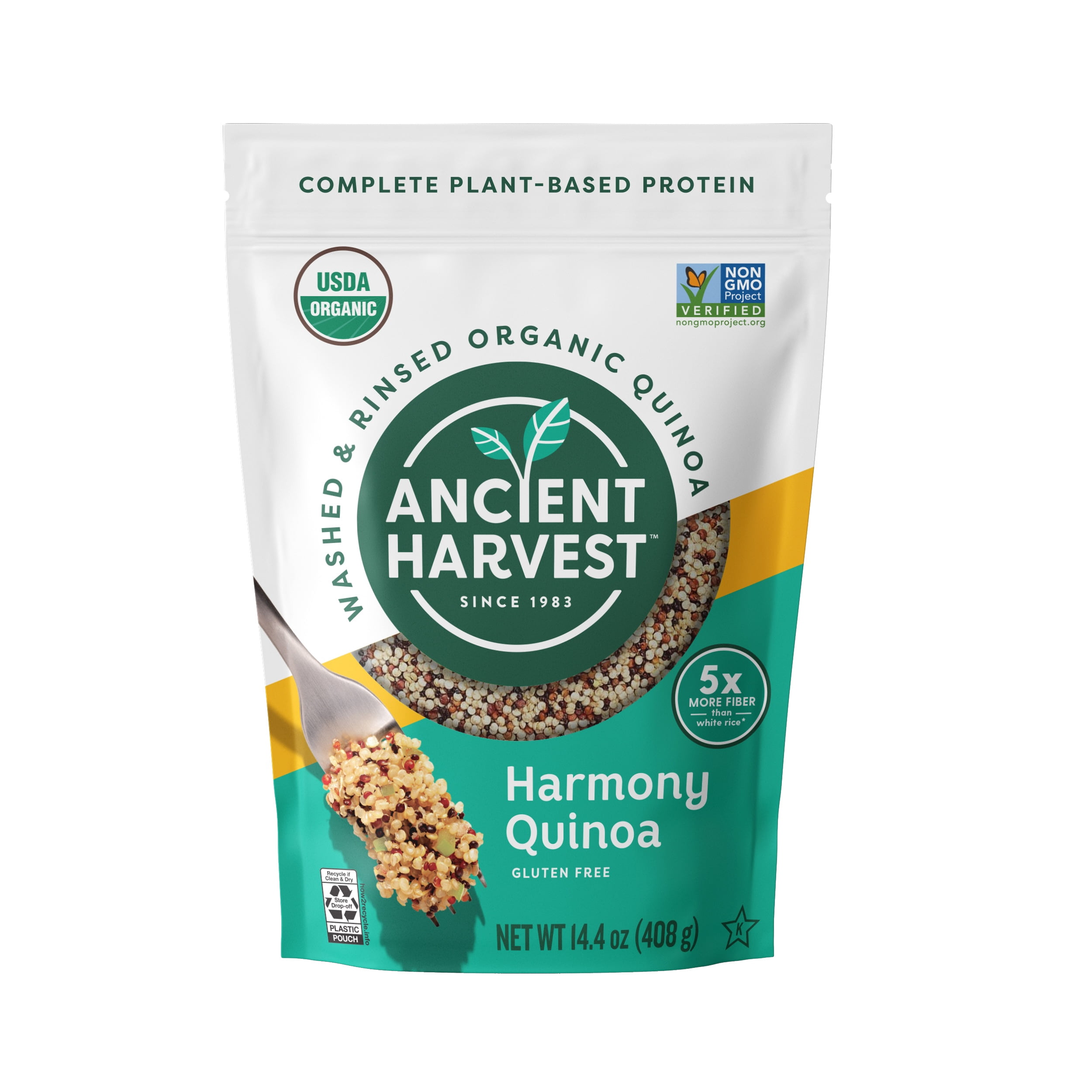
RED & WHITE QUINOA ORGANIC GRAIN BLEND
Summary
This product contains beneficial ingredients like organic white and red quinoa, which are high in protein and essential nutrients. However, the presence of organic safflower oil, a seed oil high in omega-6 fatty acids, and soy lecithin, a processed emulsifier, detracts from its healthiness. Additionally, the product is ultra-processed, which limits its overall score despite the inclusion of organic ingredients.
At a glance
Key ingredients 7
WaterNeutral
Water is a neutral ingredient used as a solvent and to provide moisture. It does not contribute any calories or nutrients. It is essential for the preparation and texture of the product.
See more about Water →Organic white quinoaVery Good
Organic white quinoa is a high-quality source of plant-based protein and essential amino acids. Being organic, it is free from synthetic pesticides and fertilizers. It is also rich in fiber, vitamins, and minerals, supporting overall health.
Benefits
Provides a complete protein source and is rich in fiber, aiding digestion and promoting satiety. Contains essential nutrients like magnesium and phosphorus.
Organic red quinoaVery Good
Organic red quinoa offers similar nutritional benefits to white quinoa, with a slightly nuttier flavor. It is also organic, ensuring it is free from harmful chemicals. Red quinoa is a good source of antioxidants, which help combat oxidative stress.
Benefits
Rich in antioxidants and provides a complete protein source, supporting muscle repair and growth. Contains fiber and essential nutrients that promote heart health.
Organic safflower oilVery Bad
Safflower oil is a seed oil high in omega-6 fatty acids, which can promote inflammation if consumed in excess. The oil is extracted through processes that may involve high heat and chemicals, reducing its nutritional quality. Despite being organic, it is still considered a poor choice compared to healthier fats.
Risks
High omega-6 content may promote inflammation when consumed in excess.
Sea saltGood
Unrefined sea salt — a minimally processed, natural source of sodium and essential trace minerals, and a legitimate whole-food seasoning. Treated as a positive ingredient.
Risks
Excessive sodium intake can lead to hypertension and cardiovascular issues.
Benefits
Provides trace minerals and enhances flavor.
Corn starchNeutral
Corn starch is a refined carbohydrate used as a thickening agent. It is highly processed and provides little nutritional value. It is generally considered safe but offers no significant health benefits.
See more about Corn starch →Soy lecithinBad
Soy lecithin is an emulsifier derived from soybeans, often used to improve texture and shelf life. It is a processed ingredient and may contain traces of allergens. While generally recognized as safe, it is not a necessary component of a healthy diet.
Risks
May contain traces of soy allergens and is a processed ingredient.
Processing
Ultra-Processed Foods
Get the full breakdown in the Scout app
Scan any product to see lab results, healthy alternatives, and your personalized analysis.
Download on theApp Store