
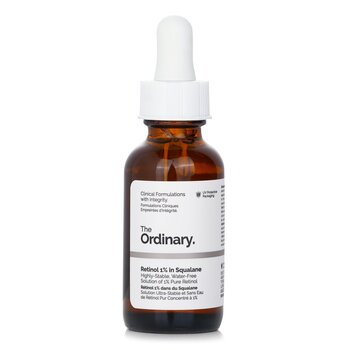
The Ordinary Retinol 1% in Squalane
Summary
This product contains several beneficial ingredients such as squalane, jojoba oil, and retinol, which are known for their moisturizing and anti-aging properties. However, the presence of BHT, a synthetic antioxidant with potential health concerns, slightly lowers the overall safety profile. The formulation is mostly natural and beneficial, but the inclusion of BHT prevents it from achieving a higher rating.
At a glance
Key ingredients 8
SqualaneVery Good
Squalane is a highly effective emollient and natural antioxidant. It mimics the skin's natural oils, making it an excellent moisturizer. It is non-comedogenic and suitable for all skin types.
Risks
There are minimal risks associated with squalane, as it is generally well-tolerated.
Benefits
Squalane helps to hydrate and protect the skin, improving its texture and appearance.
Caprylic/Capric TriglycerideGood
Caprylic/Capric Triglyceride is derived from coconut oil and glycerin, providing a silky texture to formulations. It acts as an emollient, helping to smooth and soften the skin. It also serves as a dispersing agent for active ingredients.
Risks
Rarely, it may cause irritation in sensitive individuals.
Benefits
It enhances the spreadability of products and helps to lock in moisture.
Simmondsia Chinensis (Jojoba) Seed OilVery Good
Jojoba oil is a natural oil that closely resembles the sebum of the skin. It is rich in vitamins and minerals that nourish the skin. It is non-comedogenic and helps to balance oil production.
Risks
Jojoba oil is generally safe, but in rare cases, it may cause allergic reactions.
Benefits
It provides deep hydration and has anti-inflammatory properties, making it beneficial for acne-prone skin.
RetinolVery Good
Retinol is a form of Vitamin A that promotes cell turnover and collagen production. It is widely used for its anti-aging benefits. It helps to reduce the appearance of fine lines and wrinkles.
Risks
Retinol can cause irritation, redness, and peeling, especially when first introduced to the skin.
Benefits
It improves skin texture and tone, and can help to clear acne.
Solanum Lycopersicum (Tomato) Fruit ExtractGood
Tomato fruit extract is rich in antioxidants, particularly lycopene, which helps to protect the skin from environmental damage. It has astringent properties that can help to tighten pores. It also provides a natural source of vitamins A and C.
Risks
There is a low risk of irritation or allergic reaction.
Benefits
It helps to brighten the skin and reduce signs of aging.
Rosmarinus Officinalis (Rosemary) Leaf ExtractGood
Rosemary leaf extract is known for its antioxidant and anti-inflammatory properties. It helps to protect the skin from free radical damage. It also has antimicrobial properties that can benefit acne-prone skin.
Risks
In rare cases, it may cause irritation or allergic reactions.
Benefits
It supports skin health by reducing inflammation and protecting against environmental stressors.
Hydroxymethoxyphenyl DecanoneNeutral
Hydroxymethoxyphenyl Decanone is a synthetic compound used for its antioxidant properties. It helps to stabilize formulations and protect the skin from oxidative stress. It is considered safe for use in cosmetics.
Risks
There are minimal risks associated with this ingredient.
Benefits
It helps to maintain the integrity of the product and provides some skin protection.
BHTBad
BHT (Butylated Hydroxytoluene) is a synthetic antioxidant used to extend the shelf life of products. It is controversial due to potential health concerns. Some studies suggest it may cause skin irritation and other adverse effects.
Risks
BHT has been linked to potential endocrine disruption and skin irritation.
Benefits
It helps to prevent the oxidation of ingredients, maintaining product stability.
Processing
Processed Foods
Get the full breakdown in the Scout app
Scan any product to see lab results, healthy alternatives, and your personalized analysis.
Download on theApp Store