
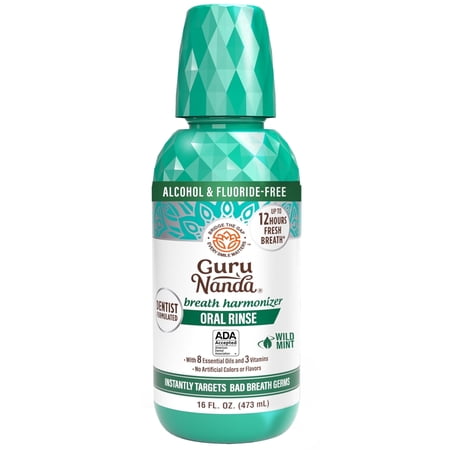

GuruNanda Fresh Breath Oral Rinse Alcohol-Free Fights Bad Breath 16 fl oz
Summary
This oral rinse is alcohol-free, which helps prevent dry mouth, and it is minimally processed, indicating a clean formulation. The absence of common irritants such as SLS, fluoride, and synthetic fragrances contributes to its high rating, making it a safe choice for oral care.
At a glance
Key ingredients 7
Water
Water is a neutral base used to dissolve other ingredients and ensure even distribution. It is essential for the formulation of liquid products like mouthwash. It does not contribute any active benefits or risks in oral care products.
Risks
There are no known risks associated with water in oral care products.
Benefits
Water helps in diluting and evenly distributing active ingredients, ensuring effective coverage.
Spearmint Oil
Spearmint oil is a natural mint oil known for its antimicrobial properties and ability to freshen breath. It is commonly used in oral care products for its pleasant taste and aroma. Spearmint oil can help reduce oral bacteria, contributing to better oral hygiene.
Risks
In rare cases, spearmint oil may cause allergic reactions or irritation in sensitive individuals.
Benefits
Spearmint oil provides a refreshing taste and helps reduce bacteria, promoting fresh breath and oral health.
Peppermint Oil
Peppermint oil is another natural mint oil with strong antimicrobial properties, often used to freshen breath and provide a cooling sensation. It is effective in reducing oral bacteria and is a popular flavoring agent in oral care products. Its menthol content contributes to its cooling and soothing effects.
Risks
Peppermint oil can cause irritation or allergic reactions in some individuals, especially in high concentrations.
Benefits
Peppermint oil helps maintain oral hygiene by reducing bacteria and providing a fresh, minty flavor.
Cardamom Oil
Cardamom oil is used for its aromatic properties and potential antimicrobial effects. It is less common in oral care but can contribute to freshening breath and adding a unique flavor. Cardamom oil may help in reducing oral bacteria, although its effects are less studied compared to mint oils.
Risks
Cardamom oil may cause allergic reactions or irritation in sensitive individuals.
Benefits
Cardamom oil can enhance flavor and potentially reduce bacteria, contributing to fresh breath.
Fennel Oil
Fennel oil is known for its sweet, licorice-like flavor and potential antimicrobial properties. It is used in oral care products to freshen breath and may help in reducing oral bacteria. Fennel oil can also provide a soothing effect on the gums.
Risks
Fennel oil may cause allergic reactions or irritation in some individuals.
Benefits
Fennel oil contributes to fresh breath and may help in maintaining oral hygiene by reducing bacteria.
Clove Oil
Clove oil is renowned for its strong antimicrobial and analgesic properties, often used to relieve toothache and freshen breath. It contains eugenol, which is effective in reducing oral bacteria and providing pain relief. Clove oil is a traditional remedy in oral care for its therapeutic effects.
Risks
Clove oil can cause irritation or allergic reactions, especially in high concentrations.
Benefits
Clove oil helps reduce bacteria, freshen breath, and provide pain relief, making it beneficial for oral health.
Oregano Oil
Oregano oil is known for its potent antimicrobial properties, attributed to compounds like carvacrol and thymol. It is used in oral care to help reduce bacteria and freshen breath. Oregano oil can contribute to overall oral hygiene by inhibiting the growth of harmful microorganisms.
Risks
Oregano oil may cause irritation or allergic reactions in sensitive individuals.
Benefits
Oregano oil supports oral health by reducing bacteria and providing a fresh, herbal flavor.
Processing
Unprocessed or Minimally Processed Foods
Get the full breakdown in the Scout app
Scan any product to see lab results, healthy alternatives, and your personalized analysis.
Download on theApp Store