
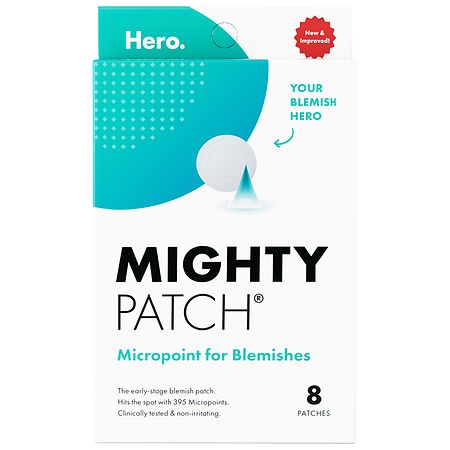
Hero Mighty Patch Micropoint for Blemishes - 8ct: Paraben-Free, Sulfate-Free, Contains Salicylic Acid, Acne-Prone Skin
Analysis updated August 2026 · How Scout scores
At a glance
Summary
This product features a clean ingredient list with beneficial components like sodium hyaluronate, niacinamide, and salicylic acid, which are known for their hydrating, soothing, and exfoliating properties. The absence of harmful substances such as parabens, sulfates, and synthetic fragrances contributes to its high rating, making it suitable for acne-prone skin without compromising safety or efficacy.
Key ingredients 11
Salix Alba (Willow) Bark ExtractVery Good
Willow Bark Extract is a natural source of salicin, which is a precursor to salicylic acid. It provides gentle exfoliation and has anti-inflammatory properties. It is valued in skincare for its ability to soothe irritated skin and reduce acne.
Risks
It is generally safe, but individuals with aspirin allergies should avoid it due to its salicin content.
Benefits
It offers gentle exfoliation and anti-inflammatory benefits, making it suitable for acne-prone skin.
Centella Asiatica ExtractVery Good
Centella Asiatica Extract is known for its wound-healing and anti-inflammatory properties. It helps soothe and repair damaged skin, making it a popular ingredient in skincare products. It is highly regarded for its ability to improve skin hydration and reduce redness.
Risks
There are minimal risks, though some individuals may experience mild irritation.
Benefits
It promotes skin healing, reduces inflammation, and enhances skin hydration.
Sodium HyaluronateGood
Sodium Hyaluronate is a form of hyaluronic acid known for its excellent hydrating properties. It helps retain moisture in the skin, making it plump and smooth. It is highly regarded in skincare for its ability to improve skin texture and reduce the appearance of fine lines.
Risks
There are minimal risks associated with Sodium Hyaluronate, though some individuals may experience mild irritation.
Benefits
It provides deep hydration and helps maintain skin elasticity, making it a beneficial ingredient for all skin types.
NiacinamideGood
Niacinamide is a form of Vitamin B3 that is known for its anti-inflammatory and skin-soothing properties. It helps improve skin barrier function and reduces redness and blotchiness. It is widely used in skincare for its ability to improve skin texture and tone.
Risks
Niacinamide is generally well-tolerated, but in rare cases, it may cause mild irritation or redness.
Benefits
It enhances skin barrier function, reduces inflammation, and improves overall skin appearance.
Salicylic AcidGood
Salicylic Acid is a beta hydroxy acid (BHA) that is effective in exfoliating the skin and unclogging pores. It is commonly used in acne treatments due to its ability to penetrate oily skin and reduce acne breakouts. It is a well-regarded ingredient for its exfoliating and anti-acne properties.
Risks
Overuse of Salicylic Acid can lead to skin dryness and irritation, especially in sensitive skin.
Benefits
It helps clear acne and prevent future breakouts by exfoliating the skin and unclogging pores.
MadecassosideGood
Madecassoside is a compound derived from Centella Asiatica known for its anti-inflammatory and skin-soothing properties. It helps repair and protect the skin barrier. It is beneficial for sensitive and irritated skin due to its calming effects.
Risks
There are minimal risks, though some individuals may experience mild irritation.
Benefits
It soothes and repairs the skin, making it ideal for sensitive skin types.
WaterNeutral
Water is a common solvent used in skincare products to dissolve other ingredients. It helps in the formulation of the product and ensures even distribution of active ingredients. It is a neutral ingredient with no direct benefits or risks.
Risks
There are no significant risks associated with water in skincare products.
Benefits
It acts as a solvent and helps in the even distribution of other ingredients.
Butylene GlycolNeutral
Butylene Glycol is a common humectant used in skincare products to retain moisture. It helps improve the texture and spreadability of the product. It is generally considered safe and non-irritating.
Risks
In rare cases, it may cause mild irritation or allergic reactions.
Benefits
It helps retain moisture and improves product texture and application.
Pentylene GlycolNeutral
Pentylene Glycol is a multifunctional ingredient used as a solvent and humectant in skincare products. It helps improve the texture and stability of the formulation. It is generally considered safe and non-irritating.
Risks
In rare cases, it may cause mild irritation or allergic reactions.
Benefits
It enhances product stability and provides moisturizing benefits.
1, 2-HexanediolNeutral
1, 2-Hexanediol is a synthetic preservative and humectant used in skincare products. It helps prevent microbial growth and enhances product shelf life. It is generally considered safe and non-irritating.
Risks
There are minimal risks, though some individuals may experience mild irritation.
Benefits
It acts as a preservative and provides moisturizing benefits.
Sodium DehydroacetateNeutral
Sodium Dehydroacetate is a preservative used to prevent the growth of bacteria and mold in skincare products. It helps extend the shelf life of the product. It is generally considered safe and effective as a preservative.
Risks
There are minimal risks, though some individuals may experience mild irritation.
Benefits
It effectively preserves the product and prevents microbial contamination.
Processing
Processed Culinary Ingredients
Get the full breakdown in the Scout appTake Scout shopping
Scan any product to see lab results, healthy alternatives, and your personalized analysis.
Download on theApp Store GET IT ONGoogle Play