
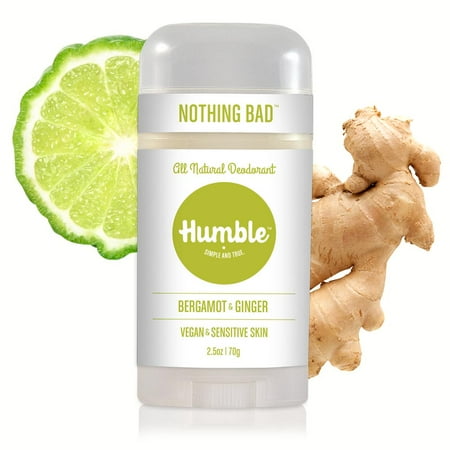
Humble Brands Vegan & Sensitive Skin Baking Soda Free Deodorant Bergamot & Ginger 2.5oz
Summary
This deodorant is free from aluminum, parabens, and synthetic fragrances, which are commonly associated with health concerns. It utilizes natural ingredients like coconut oil and shea butter, which are beneficial for sensitive skin. The absence of baking soda reduces the risk of irritation, making it a suitable choice for those with sensitive skin, although it is still a processed product.
At a glance
Key ingredients 14
Caprylic/Capric Triglyceride
Caprylic/Capric Triglyceride is a mixed triester derived from coconut oil and glycerin. It is used to improve the spreadability and absorption of the product. It is considered safe and non-irritating for most skin types.
Risks
There are minimal risks associated with this ingredient, primarily limited to rare cases of skin irritation.
Benefits
It provides a lightweight, non-greasy feel and helps to moisturize the skin.
Zea Mays Starch
Zea Mays Starch, commonly known as corn starch, is used for its moisture-absorbing properties. It helps to keep the skin dry and reduce wetness. It is a natural and safe ingredient for topical use.
Risks
There are minimal risks, though it may cause mild irritation in sensitive individuals.
Benefits
It effectively absorbs moisture, helping to keep the skin dry and comfortable.
Magnesium Hydroxide
Magnesium Hydroxide is a natural mineral used as a gentle odor neutralizer. It works by raising the pH of the skin, which inhibits the growth of odor-causing bacteria. It is a preferred alternative to baking soda for sensitive skin.
Risks
There are minimal risks, as it is generally well-tolerated and non-irritating.
Benefits
It effectively neutralizes odor without causing irritation, making it suitable for sensitive skin.
Wild-Harvested Euphorbia Cerifera Wax
Euphorbia Cerifera Wax, also known as candelilla wax, is used as a thickening agent and to provide structure to the product. It is derived from the leaves of the candelilla shrub. It is a vegan alternative to beeswax.
Risks
There are minimal risks, primarily limited to rare cases of skin sensitivity.
Benefits
It helps to stabilize the product and provides a smooth application.
Citrus Aurantium Bergamia Peel Oil
Citrus Aurantium Bergamia Peel Oil, or bergamot oil, is used for its pleasant fragrance and potential antibacterial properties. It is derived from the peel of the bergamot orange. It is often used in natural deodorants for its fresh scent.
Risks
There is a risk of photosensitivity, so it should be used with caution on sun-exposed skin.
Benefits
It provides a refreshing scent and may help to reduce bacteria on the skin.
Zingiber Officinale Root Oil
Zingiber Officinale Root Oil, or ginger oil, is used for its aromatic properties and potential anti-inflammatory effects. It is derived from the root of the ginger plant. It adds a warm, spicy scent to the product.
Risks
There are minimal risks, though it may cause irritation in sensitive individuals.
Benefits
It provides a warm, invigorating scent and may offer anti-inflammatory benefits.
Rosa Damascena Extract
Rosa Damascena Extract is derived from the petals of the damask rose. It is used for its fragrance and potential antioxidant properties. It is a luxurious ingredient often used in skincare for its soothing effects.
Risks
There are minimal risks, primarily limited to rare cases of allergic reactions.
Benefits
It provides a pleasant floral scent and may offer antioxidant benefits.
Pelargonium Graveolens Oil
Pelargonium Graveolens Oil, commonly known as geranium oil, is used for its fragrance and potential antimicrobial properties. It is derived from the leaves of the geranium plant. It is often used in natural deodorants for its balancing effects on the skin.
Risks
There are minimal risks, though it may cause irritation in sensitive individuals.
Benefits
It provides a sweet, floral scent and may help to balance the skin's oil production.
Lavandula Officinalis Oil
Lavandula Officinalis Oil, or lavender oil, is used for its calming fragrance and potential antimicrobial properties. It is derived from the flowers of the lavender plant. It is a popular ingredient in natural deodorants for its soothing effects.
Risks
There are minimal risks, though it may cause irritation in sensitive individuals.
Benefits
It provides a calming scent and may help to reduce bacteria on the skin.
Bursera Graveolens Wood Oil
Bursera Graveolens Wood Oil, also known as palo santo oil, is used for its aromatic properties and potential antimicrobial effects. It is derived from the wood of the palo santo tree. It is often used in natural products for its earthy scent.
Risks
There are minimal risks, primarily limited to rare cases of skin sensitivity.
Benefits
It provides an earthy, grounding scent and may offer antimicrobial benefits.
Boswellia Serrata Oil
Boswellia Serrata Oil, or frankincense oil, is used for its fragrance and potential anti-inflammatory properties. It is derived from the resin of the Boswellia tree. It is often used in skincare for its soothing effects.
Risks
There are minimal risks, primarily limited to rare cases of allergic reactions.
Benefits
It provides a warm, resinous scent and may offer anti-inflammatory benefits.
Dipteryx Odorata Seed Extract
Dipteryx Odorata Seed Extract, also known as tonka bean extract, is used for its sweet fragrance. It is derived from the seeds of the tonka bean tree. It is often used in perfumery for its vanilla-like scent.
Risks
There are minimal risks, though it may cause irritation in sensitive individuals.
Benefits
It provides a sweet, vanilla-like scent that enhances the fragrance profile of the product.
Pogostemon Cablin Leaf Oil
Pogostemon Cablin Leaf Oil, or patchouli oil, is used for its earthy fragrance and potential antimicrobial properties. It is derived from the leaves of the patchouli plant. It is often used in natural deodorants for its grounding scent.
Risks
There are minimal risks, though it may cause irritation in sensitive individuals.
Benefits
It provides an earthy, grounding scent and may help to reduce bacteria on the skin.
Copaifera Species Resin Oil
Copaifera Species Resin Oil, also known as copaiba oil, is used for its fragrance and potential anti-inflammatory properties. It is derived from the resin of the copaiba tree. It is often used in natural products for its soothing effects.
Risks
There are minimal risks, primarily limited to rare cases of skin sensitivity.
Benefits
It provides a warm, woody scent and may offer anti-inflammatory benefits.
Processing
Processed Foods
Get the full breakdown in the Scout app
Scan any product to see lab results, healthy alternatives, and your personalized analysis.
Download on theApp Store