
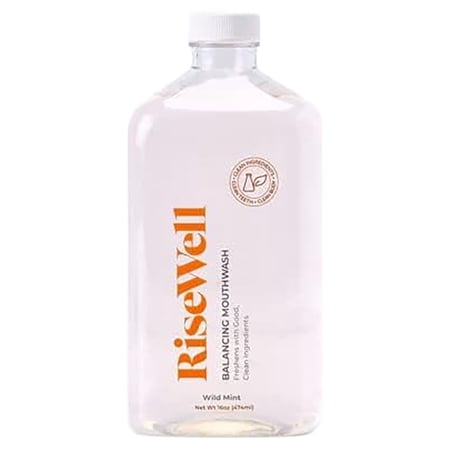
RiseWell All Natural Alkaline PH Balancing Mouthwash
Summary
This mouthwash features a clean formula with beneficial ingredients like xylitol, cinnamon extract, and eucalyptus oil, which are known for their antimicrobial and oral health-promoting properties. The absence of harmful chemicals such as SLS, fluoride, and alcohol contributes to its high rating, making it a safe and effective choice for oral care.
At a glance
Key ingredients 10
WaterNeutral
Water is a universal solvent and is used as a base in many oral care products. It helps to dissolve other ingredients and facilitates their application. It is generally considered safe and non-reactive.
Risks
There are no significant risks associated with water in oral care products.
Benefits
Water helps in maintaining the consistency and usability of the product.
XylitolVery Good
Xylitol is a natural sweetener that has been shown to reduce cavity-causing bacteria in the mouth. It helps in maintaining oral health by inhibiting the growth of harmful bacteria. It is often used in oral care products for its dental benefits.
Risks
Excessive consumption of xylitol can cause digestive issues, but this is not a concern in oral care products.
Benefits
Xylitol is beneficial for oral health as it reduces the risk of cavities and promotes a healthier oral environment.
Vegetable GlycerinNeutral
Vegetable glycerin is used as a humectant and sweetener in oral care products. It helps to retain moisture and improve the texture of the product. It is generally considered safe for use in oral care.
Risks
There are minimal risks associated with vegetable glycerin in oral care products.
Benefits
Vegetable glycerin helps in maintaining the moisture content and palatability of the product.
Cinnamon ExtractGood
Cinnamon extract is known for its antimicrobial properties, which can help reduce oral bacteria. It also provides a pleasant flavor to oral care products. Its natural origin makes it a preferred choice over synthetic additives.
Risks
Some individuals may experience allergic reactions to cinnamon extract.
Benefits
Cinnamon extract contributes to oral health by reducing bacteria and enhancing flavor.
Thyme ExtractGood
Thyme extract is valued for its natural antimicrobial properties, which can help in controlling oral bacteria. It is often used in natural oral care products for its health benefits. Its inclusion supports a healthier oral environment.
Risks
Thyme extract may cause allergic reactions in sensitive individuals.
Benefits
Thyme extract aids in reducing oral bacteria and supports overall oral hygiene.
Orange OilNeutral
Orange oil is used for its flavoring properties in oral care products. It provides a refreshing taste and is derived from natural sources. It is generally considered safe for use in oral care.
Risks
Orange oil may cause irritation in some individuals if used in high concentrations.
Benefits
Orange oil enhances the flavor profile of the product, making it more pleasant to use.
Lemon OilNeutral
Lemon oil is included for its flavor and potential antimicrobial properties. It adds a fresh taste to oral care products and is derived from natural sources. It is typically safe for use in oral care formulations.
Risks
Lemon oil can cause irritation or sensitivity in some individuals.
Benefits
Lemon oil contributes to a refreshing taste and may offer mild antimicrobial benefits.
Eucalyptus OilGood
Eucalyptus oil is known for its antimicrobial and anti-inflammatory properties, making it beneficial in oral care. It helps in reducing oral bacteria and inflammation. Its natural origin is an advantage over synthetic alternatives.
Risks
Eucalyptus oil can be irritating if used in high concentrations.
Benefits
Eucalyptus oil supports oral health by reducing bacteria and inflammation.
SteviaGood
Stevia is a natural sweetener that is used to enhance the taste of oral care products without contributing to tooth decay. It is derived from the leaves of the Stevia plant and is considered safe for oral use. Its use is preferred over artificial sweeteners.
Risks
Stevia is generally safe, but some individuals may experience digestive issues if consumed in large amounts.
Benefits
Stevia provides sweetness without the risk of cavities, making it a beneficial ingredient in oral care.
ErythritolGood
Erythritol is a sugar alcohol used as a sweetener in oral care products. It does not contribute to tooth decay and may help reduce oral bacteria. It is often used as a healthier alternative to sugar.
Risks
Erythritol is generally safe, but excessive consumption can cause digestive discomfort.
Benefits
Erythritol helps in maintaining oral health by reducing the risk of cavities and providing a sweet taste.
Processing
Unprocessed or Minimally Processed Foods
Get the full breakdown in the Scout app
Scan any product to see lab results, healthy alternatives, and your personalized analysis.
Download on theApp Store