
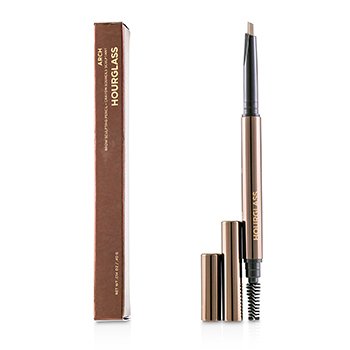

HOURGLASS Arch Brow Sculpting Pencil in Soft Brunette at Nordstrom
Summary
The HOURGLASS Arch Brow Sculpting Pencil contains a mix of synthetic and natural ingredients. While it avoids some of the most harmful chemicals like parabens and formaldehyde releasers, it does include synthetic components that contribute to its processing level. The presence of these synthetic ingredients, along with the product's processed nature, limits its score despite the absence of major harmful substances.
At a glance
Key ingredients 14
Hydrogenated Soybean Oil
Hydrogenated soybean oil is used as an emollient to provide smooth application. It is derived from soybeans and is hydrogenated to increase stability and shelf life. This process can alter the natural fatty acid profile.
Risks
Hydrogenation can lead to trans fats, which are undesirable in food but less concerning in cosmetics.
Benefits
Provides a smooth texture and helps in moisturizing the skin.
Hydrogenated Coco-Glycerides
Hydrogenated coco-glycerides are used as emollients and thickeners in cosmetics. They are derived from coconut oil and glycerin, providing a creamy texture. The hydrogenation process increases their stability.
Risks
May cause skin irritation in sensitive individuals.
Benefits
Helps in moisturizing and conditioning the skin.
Hydrogenated Vegetable Oil
Hydrogenated vegetable oil is used to improve texture and stability in cosmetic formulations. It is derived from various vegetable oils and hydrogenated to solidify the oil. This process can change the natural properties of the oil.
Risks
Potential for skin irritation or allergic reactions in sensitive individuals.
Benefits
Acts as an emollient, providing a smooth application.
Ozokerite
Ozokerite is a naturally occurring mineral wax used to thicken and stabilize formulations. It provides structure and consistency to cosmetic products. It is often used in lipsticks and other solid cosmetics.
Risks
Generally considered safe, but may cause irritation in sensitive skin.
Benefits
Provides a stable and consistent texture to the product.
Mica
Mica is a mineral used to add shimmer and shine to cosmetics. It is finely ground to create a sparkling effect. It is widely used in makeup for its reflective properties.
Risks
Inhalation of mica particles can be harmful, though this is more of a concern in loose powders.
Benefits
Adds a luminous finish to the product.
Ethylene/Propylene Copolymer
Ethylene/propylene copolymer is a synthetic polymer used as a film-former and thickener. It helps in providing a smooth application and enhances the durability of the product. It is commonly used in various cosmetic formulations.
Risks
Considered safe for use in cosmetics, but may cause irritation in some individuals.
Benefits
Improves the texture and longevity of the product.
Caprylic/Capric/Myristic/Stearic Triglyceride
This ingredient is a mixed triglyceride used as an emollient and thickener. It is derived from coconut oil and glycerin, providing a smooth and creamy texture. It is commonly used in cosmetics for its moisturizing properties.
Risks
Generally safe, but may cause irritation in sensitive skin.
Benefits
Helps in moisturizing and conditioning the skin.
Acrylates/Stearyl Acrylate/Dimethicone Methacrylate Copolymer
This copolymer is used as a film-former and thickener in cosmetics. It provides a smooth application and enhances the product's durability. It is a synthetic ingredient commonly used in various formulations.
Risks
May cause skin irritation in sensitive individuals.
Benefits
Improves the texture and longevity of the product.
Synthetic Wax
Synthetic wax is used to provide structure and consistency to cosmetic products. It is a man-made wax that mimics the properties of natural waxes. It is often used in lipsticks and other solid cosmetics.
Risks
Generally considered safe, but may cause irritation in sensitive skin.
Benefits
Provides a stable and consistent texture to the product.
Tocopheryl Acetate
Tocopheryl acetate is a form of vitamin E used as an antioxidant in cosmetics. It helps in protecting the skin from free radical damage. It is commonly used for its skin-conditioning properties.
Risks
May cause skin irritation in some individuals.
Benefits
Acts as an antioxidant, protecting the skin from damage.
Butylparaben
Butylparaben is a preservative used to prevent microbial growth in cosmetics. It is part of the paraben family, which is widely used for its effectiveness. However, parabens have been scrutinized for potential health risks.
Risks
Linked to endocrine disruption and potential allergic reactions.
Benefits
Effectively prevents microbial growth, extending product shelf life.
BHT
BHT (Butylated Hydroxytoluene) is an antioxidant used to prevent oxidation in cosmetics. It helps in maintaining the stability and shelf life of the product. It is a synthetic ingredient commonly used in various formulations.
Risks
Potential for skin irritation and concerns about long-term health effects.
Benefits
Prevents oxidation, maintaining product stability.
Titanium Dioxide (Ci 77891)
Titanium dioxide is a mineral used as a pigment and UV filter in cosmetics. It provides opacity and whiteness to products. It is widely used for its effectiveness in sun protection.
Risks
Inhalation of fine particles can be harmful, though this is more of a concern in loose powders.
Benefits
Provides sun protection and opacity to the product.
Iron Oxides (Ci 77491, Ci 77492, Ci 77499)
Iron oxides are pigments used to provide color in cosmetics. They are naturally occurring minerals that are processed for use in makeup. They are widely used for their safety and stability.
Risks
Generally considered safe, but may cause irritation in sensitive skin.
Benefits
Provides stable and safe color to the product.
Processing
Processed Foods
Get the full breakdown in the Scout app
Scan any product to see lab results, healthy alternatives, and your personalized analysis.
Download on theApp Store