
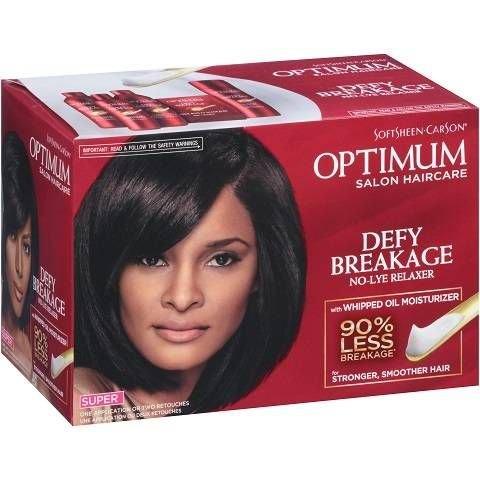


Optimum Salon Haircare No-Lye Relaxer
At a glance
Summary
Optimum Salon Haircare No-Lye Relaxer scores 5/100. Silent Spring Institute documented that this product carries the same chemical profile as the Dark & Lovely No-Lye Relaxer — parabens, phthalates hidden under generic 'Fragrance', and a formaldehyde-releasing preservative — alongside the caustic calcium hydroxide / lithium hydroxide relaxer chemistry. Like other lye and no-lye chemical relaxers, it permanently breaks hair disulfide bonds and is associated in epidemiological research (Boston University Black Women's Health Study, NIEHS Sister Study) with elevated uterine and breast cancer risk in frequent users.
Key ingredients 6
Parabens (methyl/ethyl/butyl — Silent Spring Institute confirmed profile)Very Bad
Silent Spring Institute documented that this product matches the chemical profile of Dark & Lovely's No-Lye Relaxer, which contains methylparaben, ethylparaben, and butylparaben. The paraben family is classified by the EU SCCS as suspected endocrine disruptors with estrogen-mimicking activity; butylparaben in particular is restricted in the EU.
See more about Parabens (methyl/ethyl/butyl — Silent Spring Institute confirmed profile) →Phthalates (DEP, DEHP — hidden under Fragrance, Silent Spring Institute confirmed profile)Very Bad
Silent Spring Institute documented that this product carries the same phthalate profile as Dark & Lovely's relaxer — DEP and DEHP hidden under the generic 'Fragrance' label. These phthalates are endocrine disruptors linked to reproductive toxicity; DEHP is on California Prop 65's list as a known reproductive toxicant.
See more about Phthalates (DEP, DEHP — hidden under Fragrance, Silent Spring Institute confirmed profile) →DMDM Hydantoin (formaldehyde-releaser)Very Bad
DMDM Hydantoin is a preservative that slowly releases formaldehyde — a Group 1 known human carcinogen (IARC) — to prevent microbial growth. The formaldehyde release exposes scalp and respiratory tract during application. Banned or restricted in cosmetics in the EU and several US states.
See more about DMDM Hydantoin (formaldehyde-releaser) →Parfum (Fragrance)Very Bad
Generic 'Parfum' is an undisclosed mixture documented by Silent Spring Institute to carry phthalates as fragrance fixatives in this product class.
See more about Parfum (Fragrance) →Calcium Hydroxide / Lithium Hydroxide (caustic relaxer system)Bad
The multi-mineral caustic chemistry permanently breaks hair disulfide bonds. The high pH formulation frequently causes scalp burns, lesions, and chemical injury. Epidemiological research (Boston University Black Women's Health Study, NIEHS Sister Study) has linked frequent chemical relaxer use to elevated risks of uterine and breast cancer.
See more about Calcium Hydroxide / Lithium Hydroxide (caustic relaxer system) →Mineral Oil / PetrolatumBad
Petroleum-derived occlusives that serve as carrier base. Cosmetic-grade versions are generally low-risk but provide no nutritional benefit and may contain trace polycyclic aromatic hydrocarbons depending on refining grade.
See more about Mineral Oil / Petrolatum →Get the full breakdown in the Scout appTake Scout shopping
Scan any product to see lab results, healthy alternatives, and your personalized analysis.
Download on theApp Store GET IT ONGoogle PlayAmazon pricing & content
Amazon price as of . Product prices and availability are accurate as of the date/time indicated and are subject to change. Any price and availability information displayed on Amazon.com at the time of purchase will apply to the purchase of this product.
CERTAIN CONTENT THAT APPEARS ON THIS SITE COMES FROM AMAZON. THIS CONTENT IS PROVIDED “AS IS” AND IS SUBJECT TO CHANGE OR REMOVAL AT ANY TIME.