


Powerade Mountain Berry Blast
At a glance
Summary
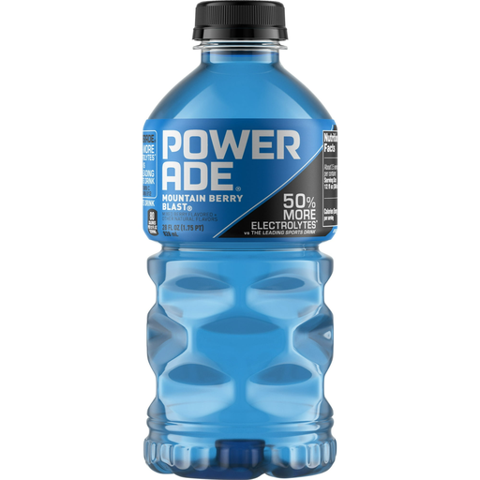
Powerade Mountain Berry Blast scores 5/100. Coca-Cola's answer to Gatorade and essentially the same formula — sugar water dyed blue and marketed as hydration. 21g added sugar per serving (41% DV) from high fructose corn syrup across 2.5 servings per bottle, totaling 52.5g sugar (over 13 teaspoons) if you drink the whole 28oz. The '50% More Electrolytes vs The Leading Sports Drink' claim masks the reality: 240mg sodium and 80mg potassium from cheap chloride and phosphate salt forms, paired with synthetic vitamins (cyanocobalamin B12, ascorbic acid C). The additive profile includes natural flavors, modified food starch (chemically altered), calcium disodium EDTA (an industrial chelating agent used to 'protect color'), sucrose acetate isobutyrate (a synthetic emulsifier), medium chain triglycerides (added for mouthfeel), and Blue 1 (petroleum-derived artificial dye). Owned by The Coca-Cola Company.
Key ingredients 14
High Fructose Corn Syrup21gVery Bad
21g added sugar per serving (52.5g per bottle) from the most controversial sweetener in the food industry. Linked to obesity, insulin resistance, fatty liver disease, and metabolic syndrome. The #2 ingredient after water.
See more about High Fructose Corn Syrup →Blue 1 (Brilliant Blue)Very Bad
Petroleum-derived artificial dye linked to allergic reactions and hyperactivity. Banned in several countries. Used purely for visual appeal with zero functional purpose.
See more about Blue 1 (Brilliant Blue) →Calcium Disodium EDTABad
Industrial chelating agent used to 'protect color.' A synthetic chemical preservative with no nutritional value. Raises concerns about mineral depletion in the body.
See more about Calcium Disodium EDTA →Modified Food StarchBad
Chemically altered starch — the modification process is opaque with zero transparency on the chemical treatment used. An unnecessary processed additive.
See more about Modified Food Starch →Sucrose Acetate IsobutyrateBad
Synthetic emulsifier used as a weighting agent to keep flavoring oils suspended. An industrial food additive with no nutritional purpose.
See more about Sucrose Acetate Isobutyrate →Natural FlavorsBad
Catch-all term with zero ingredient transparency. Could contain dozens of undisclosed compounds.
See more about Natural Flavors →Cyanocobalamin (Vitamin B12)Neutral
Cheapest synthetic form of B12 with poor bioavailability. Far inferior to methylcobalamin. Added for marketing, not meaningful nutrition.
See more about Cyanocobalamin (Vitamin B12) →SaltNeutral
Part of Electrolytes. Cheap chloride and phosphate salt forms with lower bioavailability than citrate or glycinate forms. The electrolyte value is real but minimal relative to the sugar load.
See more about Salt →Sodium CitrateNeutral
Part of Electrolytes. Cheap chloride and phosphate salt forms with lower bioavailability than citrate or glycinate forms. The electrolyte value is real but minimal relative to the sugar load.
See more about Sodium Citrate →Calcium ChloridesNeutral
Part of Electrolytes. Cheap chloride and phosphate salt forms with lower bioavailability than citrate or glycinate forms. The electrolyte value is real but minimal relative to the sugar load.
See more about Calcium Chlorides →Mono-Potassium PhosphateNeutral
Part of Electrolytes. Cheap chloride and phosphate salt forms with lower bioavailability than citrate or glycinate forms. The electrolyte value is real but minimal relative to the sugar load.
See more about Mono-Potassium Phosphate →Medium Chain TriglyceridesNeutral
MCTs are generally beneficial, but present here in trace amounts as a mouthfeel/texture agent, not for nutritional purpose.
See more about Medium Chain Triglycerides →Ascorbic Acid (Vitamin C)Good
Beneficial ingredient — whole-food or functional value in this product class.
See more about Ascorbic Acid (Vitamin C) →MagnesiumGood
Part of Electrolytes. Cheap chloride and phosphate salt forms with lower bioavailability than citrate or glycinate forms. The electrolyte value is real but minimal relative to the sugar load.
See more about Magnesium →Processing
Ultra-Processed Foods
Get the full breakdown in the Scout appTake Scout shopping
Scan any product to see lab results, healthy alternatives, and your personalized analysis.
Download on theApp Store GET IT ONGoogle PlayAmazon pricing & content
Amazon price as of . Product prices and availability are accurate as of the date/time indicated and are subject to change. Any price and availability information displayed on Amazon.com at the time of purchase will apply to the purchase of this product.
CERTAIN CONTENT THAT APPEARS ON THIS SITE COMES FROM AMAZON. THIS CONTENT IS PROVIDED “AS IS” AND IS SUBJECT TO CHANGE OR REMOVAL AT ANY TIME.