
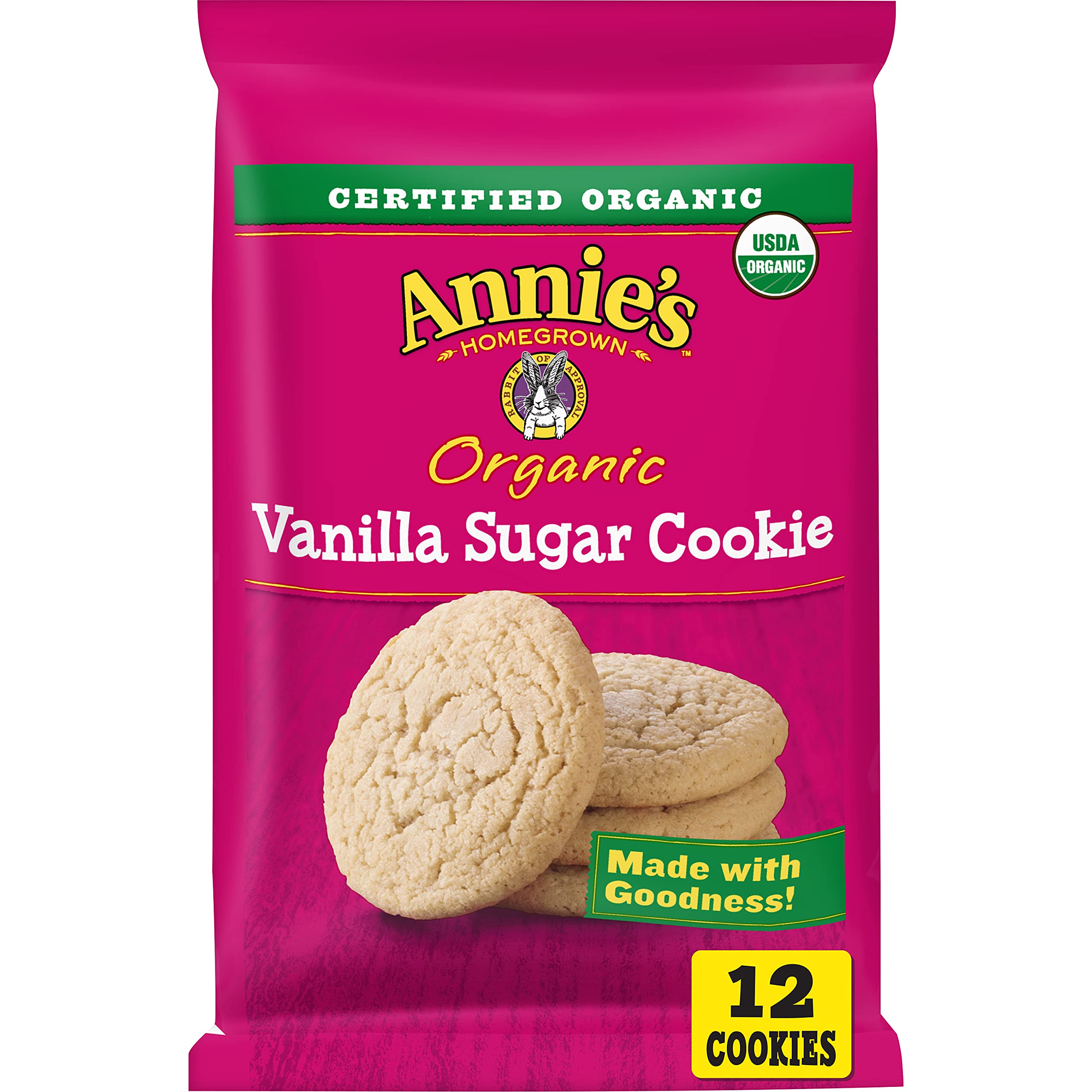


Annie's Organic Vanilla Sugar Bake & Share Cookie Dough 12 Count
Analysis updated May 2026 · How Scout scores
At a glance
Summary
This cookie dough is made with organic ingredients like wheat flour and eggs, which are positive aspects. However, it contains organic palm oil, which is a saturated fat with environmental concerns, and natural flavors, which lack transparency. The product is highly processed, which limits its healthiness despite the organic certification.
Key ingredients 9
Organic eggsVery Good
Organic eggs are a high-quality protein source that also provide essential vitamins and minerals. Being organic, they are produced without synthetic pesticides or antibiotics, enhancing their nutritional profile. They contribute to the structure and richness of baked goods.
Risks
Potential allergen for some individuals.
Benefits
Rich in high-quality protein and essential nutrients like vitamin B12 and choline.
Sea saltGood
Unrefined sea salt — a minimally processed, natural source of sodium and essential trace minerals, and a legitimate whole-food seasoning. Treated as a positive ingredient.
Risks
High sodium intake is linked to increased blood pressure and cardiovascular risk.
Benefits
Enhances flavor and provides trace minerals.
Organic wheat flourNeutral
Standard formulation ingredient — neither beneficial nor harmful at typical use.
Risks
Contains gluten, which can be problematic for individuals with celiac disease or gluten intolerance.
Benefits
Provides essential carbohydrates for energy and is a cleaner option due to its organic certification.
WaterNeutral
Water is a basic ingredient used to hydrate and mix other ingredients. It is essential for the baking process but does not contribute any nutritional value. It is a neutral ingredient with no direct health impacts.
Benefits
Essential for hydration and mixing of ingredients in baking.
Baking sodaNeutral
Baking soda is a leavening agent that helps baked goods rise. It is a common ingredient in baking with no significant health impacts when used in moderation. It reacts with acidic components to produce carbon dioxide, aiding in the leavening process.
Risks
Excessive consumption can lead to alkalosis, but this is unlikely in typical food use.
Benefits
Essential for leavening and improving texture in baked goods.
Cream of tartarNeutral
Cream of tartar is an acidic compound used to stabilize egg whites and act as a leavening agent. It is a byproduct of wine production and is generally considered safe in food applications. It helps improve the texture and volume of baked goods.
Benefits
Stabilizes egg whites and enhances the texture of baked goods.
Organic cane sugarBad
Processed additive flagged under Scout's ingredient doctrine.
Risks
High sugar intake is associated with increased risk of obesity, type 2 diabetes, and dental cavities.
Benefits
Provides a quick source of energy and is a cleaner option compared to refined sugars due to its organic nature.
Organic palm oilBad
Organic palm oil is a saturated fat used for texture and shelf stability in baked goods. While organic, palm oil production is often linked to environmental concerns such as deforestation. It is a source of saturated fats, which should be consumed in moderation.
Risks
High intake of saturated fats can contribute to cardiovascular disease.
Benefits
Provides a stable fat source that enhances texture and shelf life of products.
Natural flavorBad
Natural flavor is a catch-all term for flavoring agents derived from natural sources. It lacks transparency, making it difficult to assess its exact composition and potential health impacts. It is often used to enhance taste without providing nutritional benefits.
Risks
Lack of transparency can be concerning for individuals with allergies or sensitivities.
Benefits
Enhances flavor profile of products without adding calories.
Processing
Ultra-Processed Foods
Get the full breakdown in the Scout appTake Scout shopping
Scan any product to see lab results, healthy alternatives, and your personalized analysis.
Download on theApp Store GET IT ONGoogle Play