
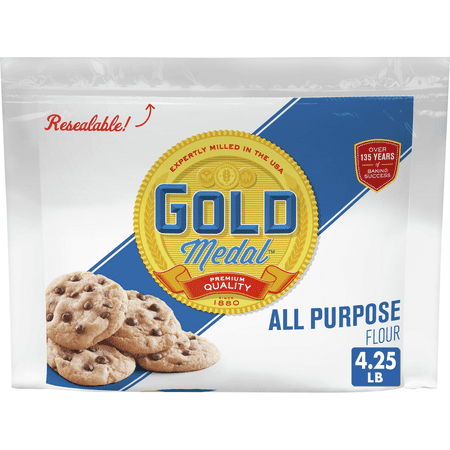


Gold Medal All-Purpose Flour Resealable Bag
Summary
Gold Medal All-Purpose Flour is a processed product with a relatively simple ingredient list, primarily consisting of bleached wheat flour and added vitamins. While it lacks harmful additives like artificial colors or seed oils, the bleaching process and enrichment with synthetic vitamins indicate a moderate level of processing. This results in a fair score, reflecting its basic ingredient quality and processing level.
At a glance
Key ingredients 7
Bleached wheat flourNeutral
Bleached wheat flour is a refined flour that has been chemically treated to improve texture and color. The bleaching process can reduce some nutritional content compared to unbleached flour. It is commonly used in baking for its fine texture and white appearance.
Risks
The refining and bleaching process removes some nutrients and fiber, potentially impacting nutritional value.
Benefits
Provides a fine texture suitable for a variety of baked goods, enhancing their appearance and consistency.
NiacinNeutral
Niacin, also known as vitamin B3, is added to flour to enrich its nutritional profile. It plays a role in energy metabolism and maintaining healthy skin. The enrichment process helps restore some vitamins lost during flour refining.
Benefits
Supports energy metabolism and contributes to overall nutritional value of the flour.
IronNeutral
Iron is an essential mineral added to flour to prevent deficiencies and support oxygen transport in the body. Enrichment with iron helps address potential nutrient losses during processing. It is crucial for maintaining healthy blood and energy levels.
Risks
Excessive iron intake can lead to toxicity, but this is unlikely from flour consumption alone.
Benefits
Essential for oxygen transport and energy production, contributing to the nutritional adequacy of the flour.
Thiamine mononitrateNeutral
Thiamine mononitrate is a form of vitamin B1 added to flour to enhance its nutritional content. It is vital for carbohydrate metabolism and nerve function. The enrichment process compensates for nutrient losses during flour refining.
Benefits
Supports carbohydrate metabolism and nerve function, enhancing the nutritional profile of the flour.
RiboflavinNeutral
Riboflavin, or vitamin B2, is added to flour to improve its nutritional value. It is important for energy production and cellular function. Enrichment helps replenish vitamins lost during the milling process.
Benefits
Contributes to energy production and cellular health, enhancing the nutritional content of the flour.
EnzymesNeutral
Enzymes are added to flour to improve dough handling and baking performance. They help break down starches and proteins, enhancing texture and volume. The use of enzymes is common in baking to achieve consistent results.
Benefits
Improves dough handling and baking quality, contributing to better texture and volume in baked goods.
Folic acidNeutral
Folic acid, a form of vitamin B9, is added to flour to prevent deficiencies and support cell division. It is particularly important for pregnant women to prevent neural tube defects. Enrichment with folic acid helps restore vitamins lost during processing.
Benefits
Supports cell division and is crucial for preventing neural tube defects during pregnancy.
Processing
Processed Foods
Get the full breakdown in the Scout app
Scan any product to see lab results, healthy alternatives, and your personalized analysis.
Download on theApp Store