
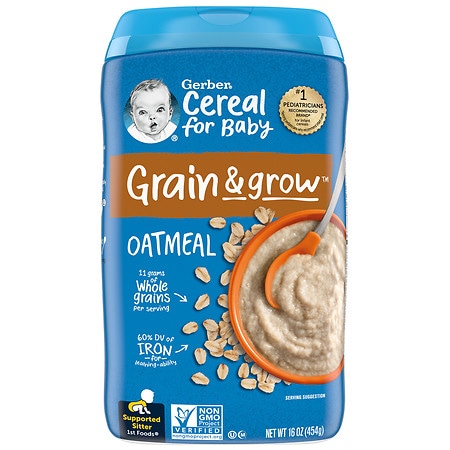
Gerber Non-GMO Baby Food Stage 1 Single Grain Oatmeal Baby Cereal - 16oz: Kosher, Cholesterol Free, Fat Free
Summary
This baby cereal is made from minimally processed whole grain oat flour, which is rich in dietary fiber and essential nutrients, supporting digestive health. The product contains beneficial vitamins and minerals like calcium, vitamin C, and iron, with only one additive detected, indicating a clean ingredient list. The presence of wheat, a common allergen, is a minor concern, but overall, the product maintains high nutritional quality with minimal processing.
At a glance
Key ingredients 14
Whole Grain Oat FlourVery Good
Whole grain oat flour is a minimally processed ingredient rich in dietary fiber and essential nutrients. It supports digestive health and provides a steady release of energy. The whole grain nature ensures retention of vitamins and minerals.
Benefits
Rich in dietary fiber, which aids in digestion and helps maintain stable blood sugar levels. Provides essential vitamins and minerals such as magnesium and iron.
Oat FlourGood
Oat flour is a nutritious ingredient that provides carbohydrates and protein. It is less processed than refined flours, retaining more nutrients. Oat flour is beneficial for energy and muscle maintenance.
Risks
Contains gluten, which may be a concern for individuals with celiac disease or gluten sensitivity.
Benefits
Provides a good source of carbohydrates and protein, supporting energy levels and muscle health. Contains beta-glucans, which may help lower cholesterol.
Potassium PhosphateNeutral
Potassium phosphate is used as a stabilizer and pH control agent in foods. It is generally recognized as safe when used in moderation. It helps maintain the product's texture and shelf life.
Risks
Excessive consumption may lead to imbalances in mineral levels, particularly in individuals with kidney issues.
Benefits
Provides a source of potassium, an essential mineral that supports nerve function and muscle contraction.
Calcium CarbonateGood
Calcium carbonate is a common dietary supplement used to increase calcium intake. It supports bone health and is essential for various bodily functions. It is a cost-effective source of calcium.
Risks
Excessive intake may lead to hypercalcemia, particularly in individuals with certain health conditions.
Benefits
Provides a significant source of calcium, which is crucial for maintaining strong bones and teeth. Supports muscle function and nerve signaling.
Vitamin C (Ascorbic Acid)Very Good
Vitamin C is a vital nutrient that acts as an antioxidant and supports immune function. It enhances iron absorption and promotes healthy skin. Ascorbic acid is a stable form used in food fortification.
Benefits
Boosts immune system function and acts as a powerful antioxidant. Enhances iron absorption from plant-based foods.
Iron (Electrolytic)Good
Electrolytic iron is used to fortify foods with iron, an essential mineral for oxygen transport in the blood. It is a bioavailable form that helps prevent iron deficiency anemia. Fortification ensures adequate intake in populations at risk.
Risks
Excessive iron intake can lead to toxicity, particularly in individuals with hemochromatosis.
Benefits
Essential for the production of hemoglobin and myoglobin, supporting oxygen transport and energy metabolism. Helps prevent iron deficiency anemia.
Vitamin E (Alpha Tocopheryl Acetate)Good
Vitamin E is a fat-soluble antioxidant that protects cells from oxidative damage. Alpha tocopheryl acetate is a stable form used in supplements and fortified foods. It supports immune function and skin health.
Benefits
Acts as an antioxidant, protecting cells from damage. Supports immune function and skin health.
NiacinamideGood
Niacinamide is a form of vitamin B3 that supports energy metabolism and skin health. It is commonly used in fortified foods to prevent niacin deficiency. It is well-tolerated and effective in small doses.
Benefits
Supports energy production and helps maintain healthy skin. Prevents niacin deficiency, which can lead to pellagra.
Vitamin B2 (Riboflavin)Good
Riboflavin is a water-soluble vitamin essential for energy production and cellular function. It is commonly added to foods to ensure adequate intake. Riboflavin is crucial for the metabolism of fats, drugs, and steroids.
Benefits
Supports energy production and cellular function. Helps maintain healthy skin and eyes.
Vitamin B1 (Thiamin Mononitrate)Good
Thiamin mononitrate is a stable form of vitamin B1 used in food fortification. It is essential for carbohydrate metabolism and nerve function. Thiamin helps convert nutrients into energy.
Benefits
Supports energy metabolism and nerve function. Prevents thiamin deficiency, which can lead to beriberi.
Vitamin B6 (Pyridoxine Hydrochloride)Good
Pyridoxine hydrochloride is a form of vitamin B6 that supports amino acid metabolism and neurotransmitter synthesis. It is used in fortified foods to prevent deficiency. Vitamin B6 is crucial for brain health and immune function.
Benefits
Supports brain health and immune function. Essential for amino acid metabolism and neurotransmitter synthesis.
Folic AcidGood
Folic acid is a synthetic form of folate used in food fortification to prevent neural tube defects. It is essential for DNA synthesis and cell division. Folic acid is particularly important during pregnancy.
Risks
Excessive intake may mask vitamin B12 deficiency symptoms.
Benefits
Prevents neural tube defects and supports DNA synthesis. Essential for cell division and growth, particularly during pregnancy.
Vitamin B12Good
Vitamin B12 is essential for red blood cell formation and neurological function. It is commonly added to fortified foods to prevent deficiency, especially in vegetarians and vegans. Vitamin B12 supports DNA synthesis and energy production.
Benefits
Supports red blood cell formation and neurological function. Essential for DNA synthesis and energy production.
WheatBad
Wheat is a common allergen and source of gluten, which can cause adverse reactions in sensitive individuals. It is a staple grain but may contribute to digestive issues for those with gluten intolerance. Wheat is often refined, reducing its nutritional value.
Risks
Contains gluten, which can cause digestive issues and allergic reactions in sensitive individuals.
Benefits
Provides carbohydrates and some protein, supporting energy levels. Whole wheat contains fiber and essential nutrients.
Processing
Unprocessed or Minimally Processed Foods
Get the full breakdown in the Scout app
Scan any product to see lab results, healthy alternatives, and your personalized analysis.
Download on theApp Store