


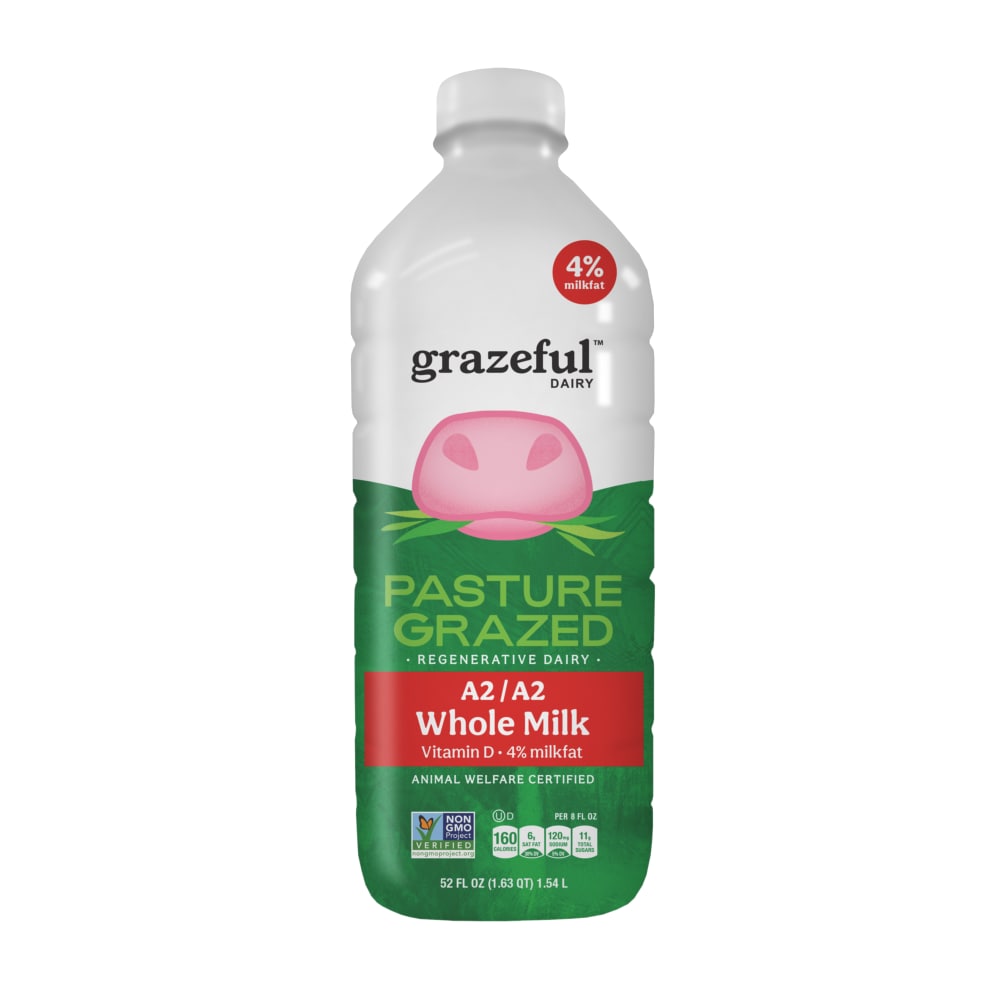
At a glance
Summary
This whole milk product is minimally processed and contains essential nutrients such as calcium, vitamin D, and protein. The ingredient list is short and clean, consisting mainly of milk and added vitamin D, which supports bone health. Its low level of processing and absence of harmful additives contribute to its high score.
Key ingredients 3
MilkGood
Milk is a natural source of essential nutrients such as calcium, vitamin D, and protein. It is minimally processed and provides a balanced profile of macronutrients. The presence of natural fats and proteins supports overall health and development.
Risks
Some individuals may be lactose intolerant, leading to digestive discomfort.
Benefits
Rich in calcium and vitamin D, which are crucial for bone health. Provides high-quality protein necessary for muscle maintenance and growth.
Nonfat milkNeutral
Nonfat milk is milk with the fat removed, retaining most of the nutrients like protein and calcium. It is often used to reduce the calorie and fat content of dairy products. While it lacks the beneficial fats found in whole milk, it still provides essential nutrients.
Benefits
Provides protein and calcium without the added calories from fat, suitable for low-fat diets.
Vitamin DNeutral
Vitamin D is added to milk to enhance its nutritional profile, supporting bone health and immune function. It is a common fortification in dairy products to prevent deficiencies. While beneficial, it is not naturally occurring in milk and is added during processing.
Benefits
Essential for calcium absorption and bone health, helping to prevent osteoporosis and other bone-related conditions.
Processing
Unprocessed or Minimally Processed Foods
Get the full breakdown in the Scout appTake Scout shopping
Scan any product to see lab results, healthy alternatives, and your personalized analysis.
Download on theApp Store GET IT ONGoogle Play