
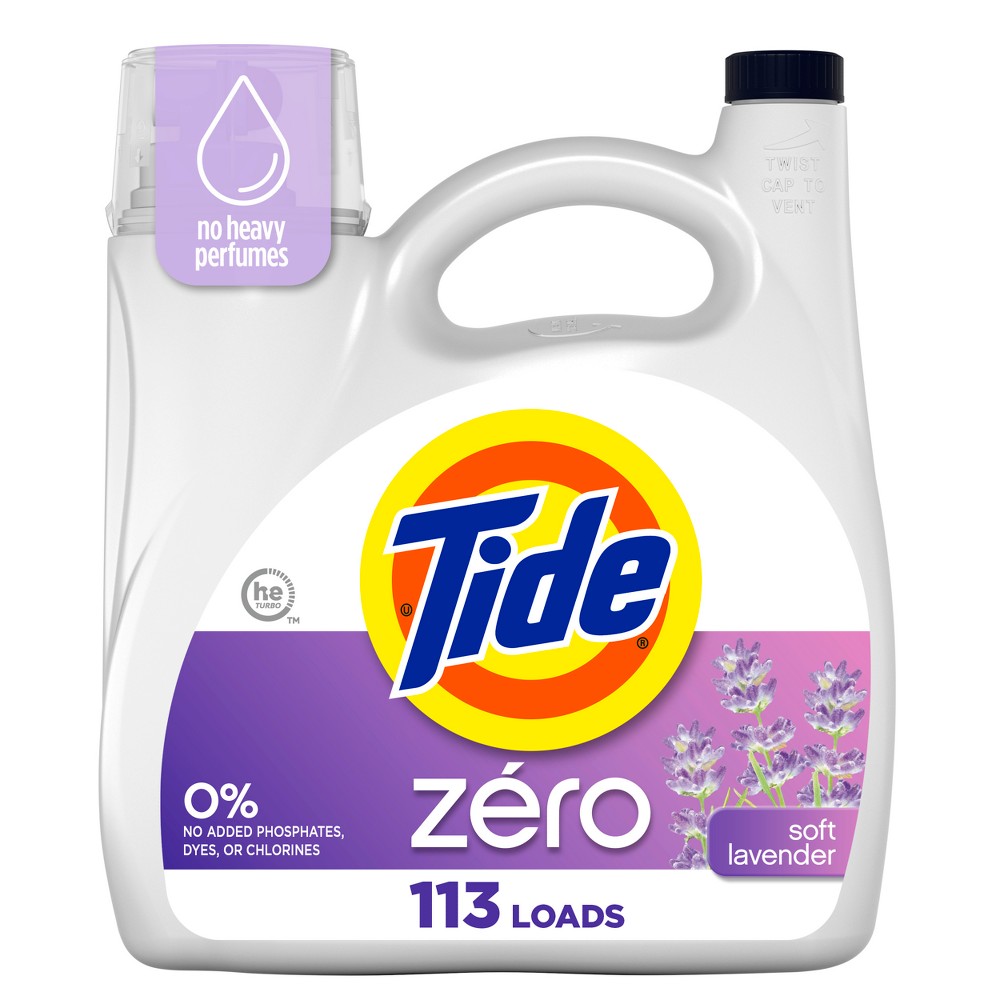
Tide Zero Soft Lavender HE Deep Cleaning Concentrated Liquid Laundry Detergent 113 Loads - 149 fl oz
Analysis updated August 2026 · How Scout scores
At a glance
Summary
This laundry detergent contains beneficial ingredients such as sodium salts of fatty acids and enzymes like subtilisin, amylase, and mannanase, which enhance cleaning efficiency and are biodegradable. However, the presence of butylphenyl methylpropional, a synthetic fragrance known to be a potential allergen and skin sensitizer, impacts its safety profile. The product's formulation includes a mix of plant-derived and synthetic components, leading to a moderate processing level.
Key ingredients 29
Sodium Salts of C12-18 Fatty AcidsGood
Sodium salts of C12-18 fatty acids are derived from natural fats and oils. They act as surfactants, helping to emulsify and remove dirt. They are considered safe and biodegradable.
Risks
Minimal risks, generally safe for use.
Benefits
Biodegradable and derived from natural sources, making them environmentally friendly.
SubtilisinGood
Subtilisin is an enzyme used in detergents for its ability to break down proteins. It enhances the cleaning power of the product by removing protein-based stains. It is considered safe and effective.
Risks
Minimal risks, generally safe for use.
Benefits
Highly effective in removing protein-based stains, improving cleaning performance.
Amylase enzymeGood
Amylase enzyme is used in detergents for its ability to break down starches. It enhances the cleaning power of the product by removing starch-based stains. It is considered safe and effective.
Risks
Minimal risks, generally safe for use.
Benefits
Highly effective in removing starch-based stains, improving cleaning performance.
Mannanase enzymeGood
Mannanase enzyme is used in detergents for its ability to break down mannans. It enhances the cleaning power of the product by removing mannan-based stains. It is considered safe and effective.
Risks
Minimal risks, generally safe for use.
Benefits
Highly effective in removing mannan-based stains, improving cleaning performance.
WaterNeutral
Water is a common solvent used in many cleaning products. It helps to dissolve other ingredients and facilitate the cleaning process. It is generally considered safe and non-toxic.
Risks
There are no significant risks associated with water in cleaning products.
Benefits
Water acts as a carrier for other ingredients, aiding in their distribution and effectiveness.
C10-16 ParethNeutral
C10-16 Pareth is a nonionic surfactant used for its cleaning and emulsifying properties. It helps to break down and remove dirt and oils. It is generally considered safe for use in cleaning products.
Risks
May cause mild skin irritation in sensitive individuals.
Benefits
Effective in removing grease and dirt, enhancing the cleaning power of the detergent.
Sodium C10-16 AlkylbenzenesulfonateNeutral
Sodium C10-16 Alkylbenzenesulfonate is an anionic surfactant known for its strong cleaning abilities. It is commonly used in detergents for its effectiveness in removing stains. It is considered safe for use in cleaning products.
Risks
Can cause skin irritation with prolonged exposure.
Benefits
Highly effective in breaking down and removing tough stains and dirt.
Sodium CitrateNeutral
Standard formulation ingredient — neither beneficial nor harmful at typical use.
Benefits
Improves cleaning performance by softening water and is environmentally friendly.
Polyethyleneimines AlkoxylatedNeutral
Polyethyleneimines alkoxylated are used as dispersing agents in detergents. They help to prevent redeposition of dirt on fabrics. They are considered safe for use in cleaning products.
Risks
May cause mild irritation if in contact with skin.
Benefits
Enhances the cleaning process by preventing dirt from settling back onto fabrics.
Sodium BorateNeutral
Sodium borate, also known as borax, is used as a cleaning agent and pH buffer. It helps to enhance the cleaning power of detergents. It is generally considered safe in controlled amounts.
Risks
Can be irritating to skin and eyes in concentrated forms.
Benefits
Improves cleaning efficiency and acts as a natural disinfectant.
C10-16 Alkyldimethylamine OxideNeutral
C10-16 alkyldimethylamine oxide is a surfactant used for its foaming and cleaning properties. It helps to remove dirt and grease effectively. It is considered safe for use in cleaning products.
Risks
May cause mild skin irritation with prolonged exposure.
Benefits
Effective in enhancing the cleaning power of detergents.
Sodium CumenesulfonateNeutral
Sodium cumenesulfonate is used as a solubilizer and hydrotrope in cleaning products. It helps to improve the solubility of other ingredients. It is generally considered safe for use.
Risks
Minimal risks associated with its use.
Benefits
Enhances the effectiveness of the detergent by improving ingredient solubility.
2,6-dimethyl-7-octen-2-olNeutral
2,6-dimethyl-7-octen-2-ol is a fragrance ingredient used to impart a pleasant scent. It is commonly used in cleaning products for its aromatic properties. It is considered safe in low concentrations.
Risks
Potential allergen for sensitive individuals.
Benefits
Provides a fresh scent to the cleaning product.
2-t-butylcyclohexyl acetateNeutral
2-t-butylcyclohexyl acetate is a fragrance compound used to add scent to cleaning products. It is widely used for its pleasant aroma. It is considered safe when used in appropriate amounts.
Risks
May cause allergic reactions in sensitive individuals.
Benefits
Enhances the sensory experience of using the product with a pleasant fragrance.
3a,4,5,6,7,7a-hexahydro-4,7-methano-1h-indenyl acetateNeutral
This compound is used as a fragrance ingredient in cleaning products. It provides a distinctive scent to enhance the product's appeal. It is generally considered safe for use.
Risks
Potential allergen for some individuals.
Benefits
Contributes to the overall fragrance profile of the product.
3-octanol, 3,7-dimethyl-Neutral
3-octanol, 3,7-dimethyl- is a fragrance ingredient used for its aromatic properties. It is commonly used in cleaning products to impart a pleasant scent. It is considered safe in low concentrations.
Risks
May cause allergic reactions in sensitive individuals.
Benefits
Adds a fresh and appealing scent to the cleaning product.
4-tert-butylcyclohexyl acetateNeutral
4-tert-butylcyclohexyl acetate is a fragrance compound used to provide scent in cleaning products. It is widely used for its aromatic properties. It is considered safe when used in appropriate amounts.
Risks
Potential allergen for sensitive individuals.
Benefits
Enhances the sensory experience with a pleasant fragrance.
8-cyclohexadecen-1-oneNeutral
8-cyclohexadecen-1-one is a fragrance ingredient used to impart a scent to cleaning products. It is commonly used for its aromatic properties. It is considered safe in low concentrations.
Risks
May cause allergic reactions in sensitive individuals.
Benefits
Provides a distinctive scent to the cleaning product.
cyclamen aldehydeNeutral
Cyclamen aldehyde is a fragrance ingredient used for its floral scent. It is commonly used in cleaning products to enhance their aroma. It is considered safe in low concentrations.
Risks
Potential allergen for some individuals.
Benefits
Contributes to the overall fragrance profile of the product.
gamma-undecalactoneNeutral
Gamma-undecalactone is a fragrance compound used for its fruity scent. It is commonly used in cleaning products to impart a pleasant aroma. It is considered safe in low concentrations.
Risks
May cause allergic reactions in sensitive individuals.
Benefits
Adds a fruity and appealing scent to the cleaning product.
hexyl salicylateNeutral
Hexyl salicylate is a fragrance ingredient used for its floral and fruity scent. It is commonly used in cleaning products to enhance their aroma. It is considered safe in low concentrations.
Risks
Potential allergen for some individuals.
Benefits
Contributes to the overall fragrance profile of the product.
isobutyl methyl tetrahydropyranolNeutral
Isobutyl methyl tetrahydropyranol is a fragrance compound used to provide scent in cleaning products. It is widely used for its aromatic properties. It is considered safe when used in appropriate amounts.
Risks
Potential allergen for sensitive individuals.
Benefits
Enhances the sensory experience with a pleasant fragrance.
linalyl acetateNeutral
Linalyl acetate is a fragrance ingredient used for its floral and fruity scent. It is commonly used in cleaning products to enhance their aroma. It is considered safe in low concentrations.
Risks
May cause allergic reactions in sensitive individuals.
Benefits
Adds a floral and fruity scent to the cleaning product.
methyldihydrojasmonateNeutral
Methyldihydrojasmonate is a fragrance compound used for its jasmine-like scent. It is commonly used in cleaning products to impart a pleasant aroma. It is considered safe in low concentrations.
Risks
Potential allergen for some individuals.
Benefits
Provides a jasmine-like fragrance to the product.
phenethyl alcoholNeutral
Phenethyl alcohol is a fragrance ingredient used for its floral scent. It is commonly used in cleaning products to enhance their aroma. It is considered safe in low concentrations.
Risks
May cause allergic reactions in sensitive individuals.
Benefits
Contributes to the overall fragrance profile of the product.
propanoic acid, 2-methyl-, 2-phenoxyethyl esterNeutral
This compound is used as a fragrance ingredient in cleaning products. It provides a distinctive scent to enhance the product's appeal. It is generally considered safe for use.
Risks
Potential allergen for some individuals.
Benefits
Contributes to the overall fragrance profile of the product.
tetramethyl acetyloctahydronaphthalenesNeutral
Tetramethyl acetyloctahydronaphthalenes are fragrance compounds used for their woody scent. They are commonly used in cleaning products to impart a pleasant aroma. They are considered safe in low concentrations.
Risks
May cause allergic reactions in sensitive individuals.
Benefits
Adds a woody and appealing scent to the cleaning product.
Propylene GlycolBad
Processed additive flagged under Scout's ingredient doctrine.
Risks
May cause skin irritation in sensitive individuals.
Benefits
Helps to maintain product consistency and effectiveness.
butylphenyl methylpropionalBad
Butylphenyl methylpropional is a synthetic fragrance compound used for its floral scent. It is known to be a potential allergen and skin sensitizer. It is restricted in some regions due to safety concerns.
Risks
Can cause allergic reactions and skin irritation.
Benefits
Adds a floral fragrance to the product.
Get the full breakdown in the Scout appTake Scout shopping
Scan any product to see lab results, healthy alternatives, and your personalized analysis.
Download on theApp Store GET IT ONGoogle Play