
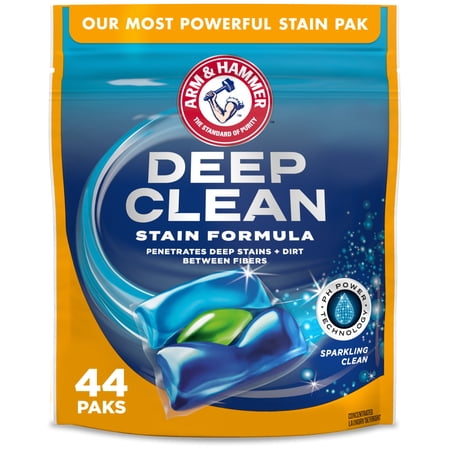
ARM & HAMMER™ Deep Clean Stain Formula Detergent Power Paks Sparkling Clean Scent 44 Count
Summary
This detergent contains beneficial ingredients like sodium bicarbonate, hydrogen peroxide, and citric acid, which are effective and safer alternatives for cleaning. However, the presence of sulfuric acid, a highly corrosive substance, and synthetic fragrance, which can cause irritation and allergic reactions, negatively impacts its safety profile. The product's processing level and inclusion of potentially harmful ingredients limit its overall rating.
At a glance
Key ingredients 18
MEA dodecylbenzenesulfonateNeutral
MEA dodecylbenzenesulfonate is a surfactant used for its cleaning properties. It helps to break down and remove dirt and stains from surfaces. While effective, it can be irritating to the skin in high concentrations.
Risks
Potential skin irritation with prolonged exposure.
Benefits
Effective in removing dirt and stains due to its surfactant properties.
C10-16 parethNeutral
C10-16 pareth is a nonionic surfactant used for its ability to emulsify and clean. It is commonly used in detergents for its effectiveness in removing grease and oils. It is generally considered safe but can cause irritation in sensitive individuals.
Risks
May cause skin irritation in sensitive individuals.
Benefits
Effective in emulsifying and removing grease and oils.
Dipropylene glycolNeutral
Dipropylene glycol is a solvent and viscosity-decreasing agent. It helps to dissolve other ingredients and maintain the consistency of the product. It is generally considered safe for use in cleaning products.
Risks
Minimal risk, though can cause mild irritation if in contact with skin or eyes.
Benefits
Helps dissolve other ingredients and maintain product consistency.
WaterNeutral
Water is used as a solvent and carrier for other ingredients in the formula. It helps to dilute and distribute the active ingredients evenly. It is safe and non-toxic.
Benefits
Acts as a solvent and carrier for other ingredients.
Polyvinyl alcohol filmNeutral
Polyvinyl alcohol film is used to encapsulate the detergent, allowing for easy dosing and handling. It dissolves in water, releasing the detergent. It is generally considered safe for use in cleaning products.
Risks
Minimal risk, though ingestion should be avoided.
Benefits
Allows for easy dosing and handling of the detergent.
Palm kernel acidNeutral
Palm kernel acid is a fatty acid derived from palm kernel oil. It is used as a surfactant and cleansing agent. While effective, its sourcing can raise environmental concerns.
Risks
Environmental concerns related to palm oil production.
Benefits
Effective as a surfactant and cleansing agent.
C12-18 and C18-unsaturated fatty acidsNeutral
These fatty acids are used as surfactants and emulsifiers in cleaning products. They help to break down and remove dirt and oils. They are generally considered safe but can be irritating to sensitive skin.
Risks
Potential skin irritation in sensitive individuals.
Benefits
Effective in breaking down and removing dirt and oils.
Alcohols, C12-15, ethoxylatedNeutral
These ethoxylated alcohols are used as surfactants for their ability to emulsify and clean. They are effective in removing grease and oils. However, they can be irritating to the skin and eyes.
Risks
May cause skin and eye irritation.
Benefits
Effective in emulsifying and removing grease and oils.
Alcohols, C12-16, ethoxylatedNeutral
Similar to other ethoxylated alcohols, these are used as surfactants for cleaning and emulsifying. They are effective in removing dirt and oils. They can cause irritation with prolonged exposure.
Risks
Potential skin and eye irritation with prolonged exposure.
Benefits
Effective in cleaning and emulsifying.
Poly(oxy-1,2-ethanediyl), .alpha.-sulfo-.omega.-hydroxy-, C10-16-alkyl ethers, sodium saltsNeutral
This ingredient is a surfactant used for its cleaning properties. It helps to break down and remove dirt and stains. It is generally considered safe but can cause irritation in sensitive individuals.
Risks
May cause skin irritation in sensitive individuals.
Benefits
Effective in breaking down and removing dirt and stains.
Benzenesulfonic acid, C10-16-alkyl derivativesNeutral
This is a surfactant used for its ability to clean and emulsify. It is effective in removing dirt and oils from surfaces. It can be irritating to the skin and eyes.
Risks
Potential skin and eye irritation.
Benefits
Effective in cleaning and emulsifying.
Sulfuric acidBad
Sulfuric acid is a strong acid used in small amounts for pH adjustment. It is highly corrosive and can cause severe burns. Its use in cleaning products is limited due to its hazardous nature.
Risks
Highly corrosive and can cause severe burns upon contact.
Benefits
Used for pH adjustment in very small, controlled amounts.
Sodium bicarbonateGood
Sodium bicarbonate, also known as baking soda, is used for its deodorizing and mild abrasive properties. It is safe and non-toxic, making it a popular choice in cleaning products. It helps to neutralize odors and clean surfaces gently.
Risks
Generally considered safe with minimal risks.
Benefits
Effective in neutralizing odors and gently cleaning surfaces.
Hydrogen peroxideGood
Hydrogen peroxide is used for its bleaching and disinfecting properties. It is effective in breaking down stains and killing bacteria. It is considered a safer alternative to chlorine bleach.
Risks
Can cause skin and eye irritation if not handled properly.
Benefits
Effective in bleaching and disinfecting without the harshness of chlorine bleach.
Calcium chlorideNeutral
Calcium chloride is used as a drying agent and to control moisture. It helps to maintain the stability and effectiveness of the product. It is generally considered safe for use in cleaning products.
Risks
Minimal risk, though ingestion should be avoided.
Benefits
Helps control moisture and maintain product stability.
CarboxymethylcelluloseNeutral
Carboxymethylcellulose is used as a thickener and stabilizer in cleaning products. It helps to maintain the consistency and effectiveness of the formula. It is generally considered safe and non-toxic.
Risks
Minimal risk, though ingestion should be avoided.
Benefits
Helps maintain consistency and stability of the product.
Citric AcidGood
Citric acid is used for its ability to break down mineral deposits and enhance cleaning. It is a natural and biodegradable ingredient, making it a preferred choice in eco-friendly products. It also helps to adjust the pH of the formula.
Risks
Generally considered safe with minimal risks.
Benefits
Effective in breaking down mineral deposits and adjusting pH.
FragranceBad
Fragrance is used to impart a pleasant scent to the product. However, synthetic fragrances can contain a variety of undisclosed chemicals that may cause allergic reactions or irritation. The lack of transparency in fragrance ingredients is a concern for sensitive individuals.
Risks
Potential for allergic reactions and irritation due to undisclosed chemicals.
Benefits
Provides a pleasant scent to the product.
Processing
Processed Foods
Get the full breakdown in the Scout app
Scan any product to see lab results, healthy alternatives, and your personalized analysis.
Download on theApp Store