
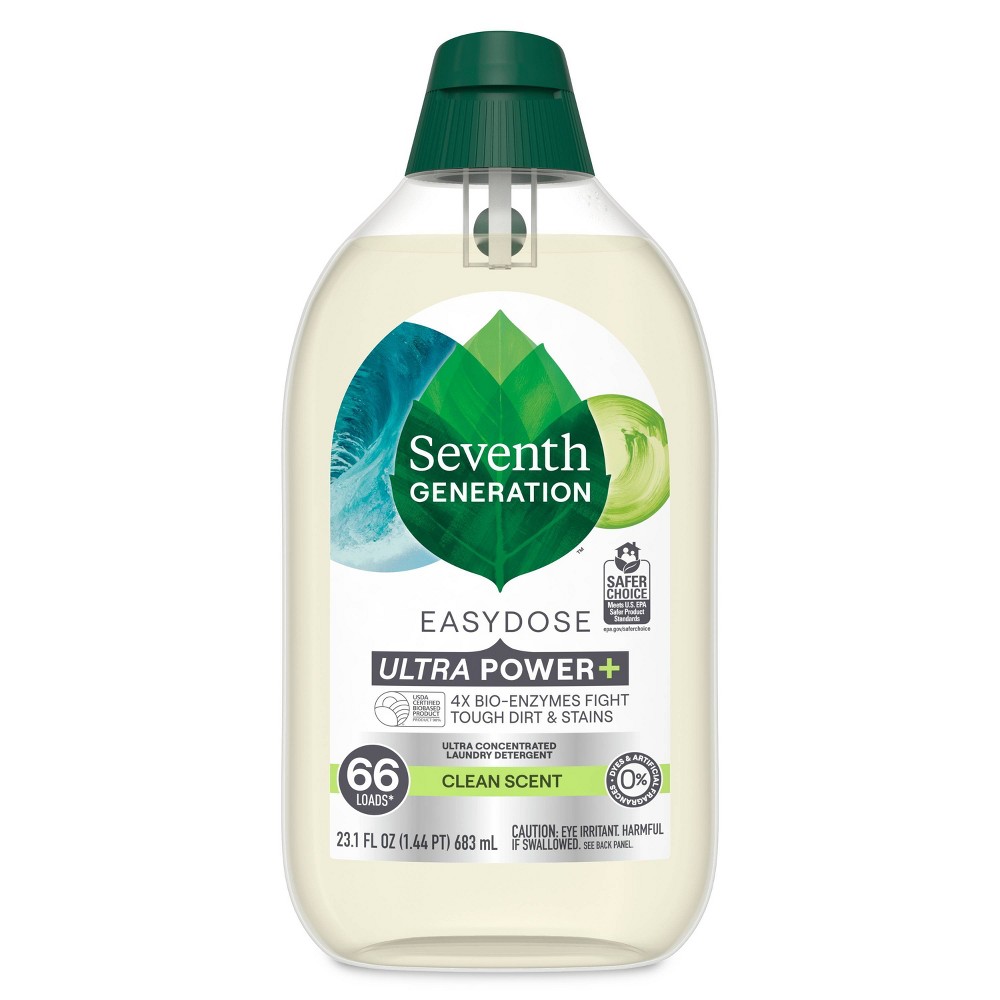
Seventh Generation Power Plus Laundry Detergent - Clean Scent - 23.1oz: High Efficiency, Concentrated Formula, Dye-Free
At a glance
Summary
This laundry detergent features a concentrated formula with beneficial plant-derived ingredients such as octyl/decyl glucoside and enzymes, which enhance cleaning efficiency while being biodegradable. The absence of harmful chemicals like SLS, synthetic fragrances, and phosphates contributes to its safety for indoor use and environmental friendliness. The product's minimal processing level and dye-free formulation further support its high rating.
Key ingredients 10
Octyl/decyl glucosideGood
Octyl/decyl glucoside is a plant-derived surfactant known for its mildness. It is biodegradable and considered safe for use in cleaning products. It is effective in removing dirt and grease.
Risks
There are minimal risks associated with this ingredient.
Benefits
Provides effective cleaning while being gentle on the skin and the environment.
Protease enzyme blendGood
Protease enzymes help break down protein-based stains. They are derived from natural sources and are biodegradable. They enhance the cleaning efficiency of the detergent.
Risks
There are minimal risks associated with protease enzymes.
Benefits
Effective in breaking down protein stains, improving cleaning performance.
Pectinase enzyme blendGood
Pectinase enzymes help break down pectin-based stains. They are derived from natural sources and are biodegradable. They improve the overall cleaning efficiency of the detergent.
Risks
There are minimal risks associated with pectinase enzymes.
Benefits
Effective in breaking down pectin stains, enhancing cleaning performance.
WaterNeutral
Water is a common solvent used in many cleaning products. It helps dissolve other ingredients and facilitates the cleaning process. It is generally safe and non-toxic.
Risks
There are no significant risks associated with water in cleaning products.
Benefits
Water acts as a carrier for other ingredients and helps in the even distribution of the product.
Laureth-6Neutral
Laureth-6 is a surfactant used to help remove dirt and oils. It is milder than sodium lauryl sulfate but can still cause irritation in some individuals. It is generally considered safe in low concentrations.
Risks
Potential skin irritation for sensitive individuals.
Benefits
Effective in breaking down oils and dirt, enhancing the cleaning power of the detergent.
GlycerinNeutral
Standard formulation ingredient — neither beneficial nor harmful at typical use.
Risks
There are no significant risks associated with glycerin in cleaning products.
Benefits
Helps maintain moisture and improves the product's texture.
Sodium oleateNeutral
Sodium oleate is a surfactant and emulsifier used in cleaning products. It helps in breaking down oils and dirt. It is generally considered safe for use.
Risks
May cause mild irritation in sensitive individuals.
Benefits
Effective in emulsifying oils and enhancing the cleaning power of the detergent.
Sodium chlorideNeutral
Sodium chloride, or table salt, is used to adjust the viscosity of the product. It is safe and non-toxic. It is commonly used in various formulations.
Risks
There are no significant risks associated with sodium chloride in cleaning products.
Benefits
Helps in adjusting the product's viscosity and stability.
Citric acidNeutral
Common acidulant and preservative — safe at typical use levels, neither beneficial nor harmful.
Risks
There are minimal risks associated with citric acid.
Benefits
Enhances cleaning power and helps in removing mineral deposits.
Propylene glycolBad
Processed additive flagged under Scout's ingredient doctrine.
Risks
May cause skin irritation in sensitive individuals.
Benefits
Helps maintain moisture and improves the texture of the product.
Get the full breakdown in the Scout appTake Scout shopping
Scan any product to see lab results, healthy alternatives, and your personalized analysis.
Download on theApp Store GET IT ONGoogle PlayAmazon pricing & content
Amazon price as of . Product prices and availability are accurate as of the date/time indicated and are subject to change. Any price and availability information displayed on Amazon.com at the time of purchase will apply to the purchase of this product.
CERTAIN CONTENT THAT APPEARS ON THIS SITE COMES FROM AMAZON. THIS CONTENT IS PROVIDED “AS IS” AND IS SUBJECT TO CHANGE OR REMOVAL AT ANY TIME.