
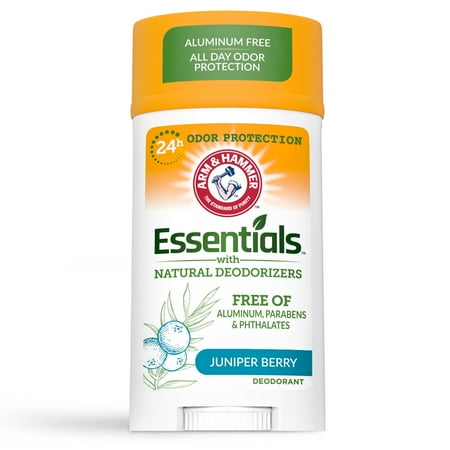
ARM & HAMMER Essentials Deodorant Aluminum Free Solid Juniper Berry 2.5 oz
Summary
This deodorant is aluminum-free, which is a positive aspect for ingredient safety. However, it contains propylene glycol and synthetic fragrance, which are less desirable ingredients. The presence of natural components like baking soda and essential oils is beneficial, but the inclusion of some synthetic chemicals affects its overall rating.
At a glance
Key ingredients 13
Dipropylene Glycol
Dipropylene Glycol is a solvent and carrier used to improve the texture and spreadability of products. It is generally considered safe for use in cosmetics. However, it is a synthetic compound derived from petroleum.
Risks
Potential skin irritation in sensitive individuals.
Benefits
Helps in the even distribution of other ingredients.
Water
Water is a universal solvent used in many cosmetic products to dissolve other ingredients. It acts as a base for the formulation. It is essential for hydrating the skin.
Benefits
Provides hydration and helps in the application of the product.
Propylene Glycol
Propylene Glycol is a humectant that helps retain moisture in the skin. It is a synthetic compound derived from petroleum. It can enhance the absorption of other ingredients.
Risks
May cause skin irritation or allergic reactions in some individuals.
Benefits
Improves skin hydration and texture.
Sodium Stearate
Sodium Stearate is a fatty acid salt used as a thickener and stabilizer in cosmetics. It helps to form a solid stick in deodorants. It is generally considered safe for use.
Risks
Minimal risk of skin irritation.
Benefits
Contributes to the solid form and stability of the product.
Sodium Bicarbonate
Sodium Bicarbonate, commonly known as baking soda, is used for its odor-neutralizing properties. It is a natural ingredient that helps control body odor. It is effective in maintaining a neutral pH.
Risks
May cause skin irritation or dryness in sensitive individuals.
Benefits
Effective natural odor neutralizer.
Citrus Medica Limonum Peel Oil
Citrus Medica Limonum Peel Oil is derived from lemon peel and is used for its fragrance and potential antimicrobial properties. It is a natural ingredient that can enhance the scent of the product. It may also have astringent properties.
Risks
Potential skin irritation or photosensitivity.
Benefits
Provides a fresh scent and may have antimicrobial benefits.
Citrus Grandis Peel Extract
Citrus Grandis Peel Extract, also known as grapefruit peel extract, is used for its fragrance and potential antioxidant properties. It is a natural ingredient that can enhance the scent of the product. It may also have antimicrobial properties.
Risks
Potential skin irritation or photosensitivity.
Benefits
Provides a fresh scent and may have antioxidant benefits.
Juniperus Virginiana Oil
Juniperus Virginiana Oil, also known as cedarwood oil, is used for its fragrance and potential antimicrobial properties. It is a natural ingredient that can enhance the scent of the product. It may also have calming effects.
Risks
Potential skin irritation in sensitive individuals.
Benefits
Provides a woody scent and may have antimicrobial benefits.
Fragrance
Fragrance is a mixture of various scent compounds used to impart a pleasant smell to products. It is often synthetic and can contain phthalates. The exact composition is usually proprietary.
Risks
Potential skin irritation and allergic reactions; may contain phthalates.
Benefits
Enhances the sensory experience of the product.
Ethylhexylglycerin
Ethylhexylglycerin is used as a skin conditioning agent and preservative enhancer. It is a synthetic compound that helps improve the efficacy of preservatives. It is generally considered safe for use in cosmetics.
Risks
Minimal risk of skin irritation.
Benefits
Improves skin feel and enhances preservative efficacy.
Octenidine Hcl
Octenidine Hcl is an antimicrobial agent used to prevent bacterial growth in products. It is effective in low concentrations and is considered a safer alternative to triclosan. It is used in various personal care products.
Risks
Potential skin irritation in sensitive individuals.
Benefits
Provides antimicrobial protection.
Tetrasodium EDTA
Tetrasodium EDTA is a chelating agent used to improve the stability and efficacy of cosmetic products. It binds to metal ions, preventing them from affecting the product's stability. It is a synthetic compound.
Risks
Minimal risk of skin irritation; environmental concerns due to persistence.
Benefits
Enhances product stability and efficacy.
Allantoin
Allantoin is used for its skin-soothing and conditioning properties. It is a naturally occurring compound that helps to protect and heal the skin. It is widely used in skincare products for its beneficial effects.
Risks
Generally considered safe with minimal risk.
Benefits
Soothes and protects the skin.
Processing
Processed Foods
Get the full breakdown in the Scout app
Scan any product to see lab results, healthy alternatives, and your personalized analysis.
Download on theApp Store