
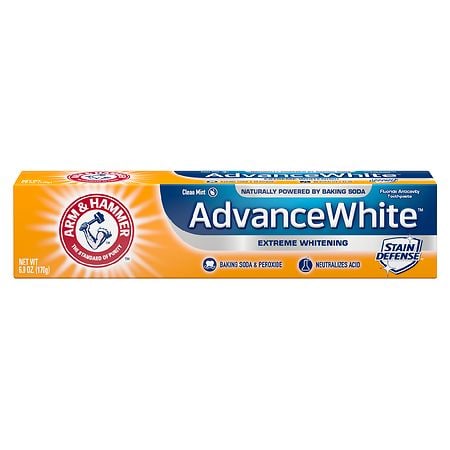
ARM & HAMMER Advance White Extreme Whitening Toothpaste Fluoride Toothpaste Clean Mint 6 oz
Summary
This toothpaste contains beneficial ingredients like sodium bicarbonate and sodium carbonate peroxide, which are effective for whitening and oral health. However, it also includes synthetic compounds such as PEG/PPG-116/66 copolymer, sodium saccharin, and sodium lauryl sulfate, which raise concerns due to potential irritation and environmental impact. The presence of these artificial ingredients and the level of processing limit the overall score.
At a glance
Key ingredients 11
Sodium BicarbonateGood
Sodium bicarbonate is a mild abrasive that helps remove surface stains from teeth. It is minimally processed and naturally sourced, making it a safer choice for oral care. Additionally, it helps neutralize acids in the mouth, promoting oral health.
Benefits
It helps in whitening teeth and maintaining oral pH balance.
Peg-8Neutral
PEG-8 is used as a humectant to retain moisture in toothpaste. It is a synthetic polymer derived from petroleum, which raises concerns about purity and potential contamination. However, it is generally considered safe for topical use in oral care products.
Risks
Potential contamination with ethylene oxide and 1,4-dioxane during manufacturing.
Benefits
Helps maintain moisture in the toothpaste, ensuring a smooth texture.
Tetrasodium PyrophosphateNeutral
Tetrasodium pyrophosphate is used to prevent tartar buildup on teeth. It is synthetically produced and acts as a chelating agent to bind calcium and magnesium ions. While effective in oral care, it does not offer nutritional benefits.
Risks
Excessive ingestion may lead to an imbalance in phosphate levels.
Benefits
Helps in reducing tartar formation, contributing to oral hygiene.
Peg/Ppg-116/66 CopolymerBad
PEG/PPG-116/66 copolymer is used as a surfactant and emulsifier in toothpaste. It is a synthetic compound that may contain impurities from the manufacturing process. Concerns arise from potential skin irritation and environmental impact.
Risks
May cause skin irritation and has potential environmental concerns due to its synthetic nature.
Sodium Carbonate PeroxideGood
Sodium carbonate peroxide acts as a whitening agent by releasing oxygen to remove stains. It is a compound that breaks down into safe byproducts, making it effective for teeth whitening. Its use in oral care is well-regarded for its efficacy.
Benefits
Effective in whitening teeth by breaking down stains.
SilicaNeutral
Silica is used as an abrasive to help clean and polish teeth. It is a naturally occurring mineral that is processed for use in toothpaste. While effective for cleaning, it does not provide nutritional benefits.
Benefits
Helps in cleaning and polishing teeth surfaces.
Sodium SaccharinBad
Sodium saccharin is an artificial sweetener used to enhance the taste of toothpaste. It is synthetically produced and has been controversial due to past health concerns. Although deemed safe by regulatory bodies, its artificial nature is a concern for some consumers.
Risks
May cause allergic reactions in sensitive individuals and has been linked to health concerns in high doses.
FlavorNeutral
Flavor is added to improve the taste of toothpaste, making it more palatable. The specific composition is often proprietary, which can include both natural and artificial components. While it enhances user experience, it does not contribute to oral health.
Risks
Potential for allergic reactions depending on the specific flavor compounds used.
Benefits
Improves the taste and user experience of the toothpaste.
WaterNeutral
Water is used as a solvent to dissolve other ingredients and provide the desired consistency. It is typically purified to ensure safety and quality in oral care products. While essential for formulation, it does not provide direct health benefits.
Benefits
Essential for dissolving ingredients and achieving the desired product consistency.
Sodium Lauroyl SarcosinateNeutral
Sodium lauroyl sarcosinate is a mild surfactant used to create foam and aid in cleaning. It is derived from sarcosine, a natural amino acid, and is considered safe for use in oral care. Its mild nature makes it suitable for sensitive users.
Benefits
Helps in foaming and cleaning without being overly harsh.
Sodium Lauryl SulfateBad
Sodium lauryl sulfate is a surfactant used to create foam and enhance cleaning. It is a synthetic compound known for its potential to cause irritation in some individuals. Its use in oral care is controversial due to concerns about mucosal irritation.
Risks
May cause irritation to the oral mucosa and is a known irritant for sensitive individuals.
Processing
Processed Foods
Get the full breakdown in the Scout app
Scan any product to see lab results, healthy alternatives, and your personalized analysis.
Download on theApp Store